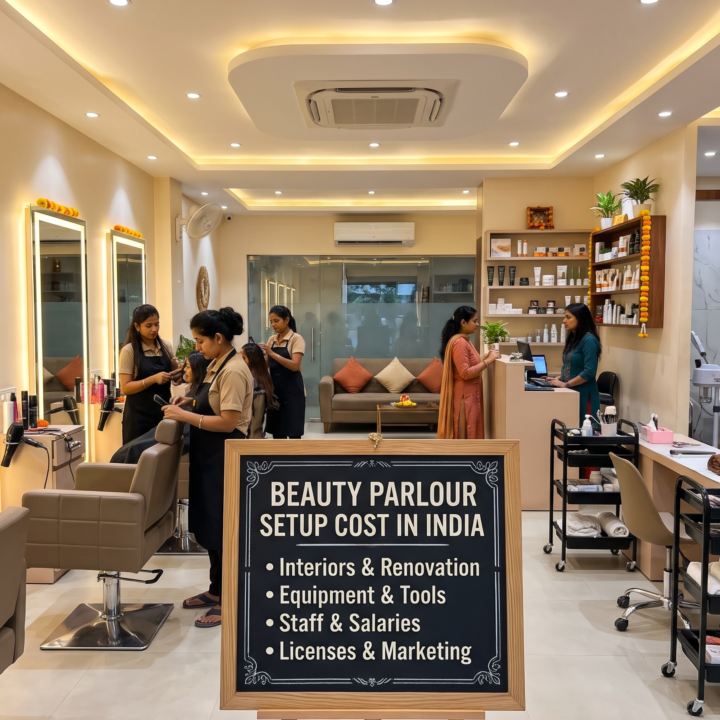
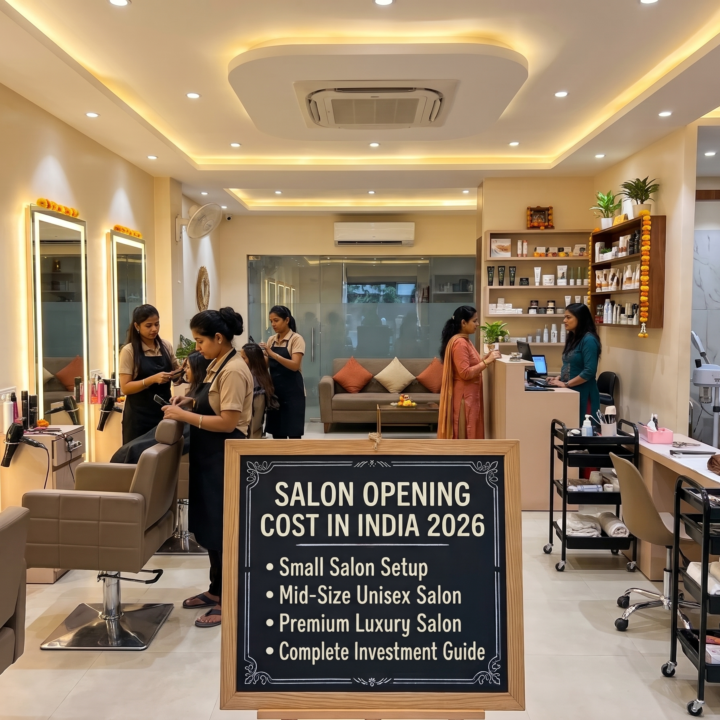
Opening a hair salon in India can be a rewarding business opportunity for entrepreneurs who want to enter the growing beauty and personal care industry. With increasing awareness of grooming, hair care, styling, professional treatments and personal appearance, customers are looking for salons that offer quality services, trained professionals and a comfortable experience.
However, starting a successful hair salon requires more than renting a commercial space and purchasing salon equipment. We need a clear business plan, the right location, professional staff, suitable interiors, quality products, effective marketing and proper financial management.
Whether we want to open a small hair salon, premium unisex salon, luxury beauty salon or branded salon franchise, understanding the investment and operational requirements is essential.
In this complete guide, we will explain how to open a hair salon in India, the estimated salon startup cost, required equipment, licenses, staff requirements, monthly expenses, marketing strategies and potential profitability.
1. Understand the Hair Salon Business in India
Before investing money, we should understand the salon business model and identify the type of salon we want to establish.
The Indian salon industry serves customers across different income groups, locations and age categories. Customers increasingly seek professional haircuts, hair colouring, hair treatments, keratin, smoothening, hair spas, styling and grooming services.
We can choose from several salon business models.
Small Hair Salon
A small hair salon generally focuses on essential grooming services, including:
-
Haircuts and hairstyling
-
Hair washing and conditioning
-
Beard trimming and shaving
-
Basic hair colouring
-
Hair spa and conditioning treatments
This model is suitable for entrepreneurs with limited investment who want to start with a compact setup.
Unisex Hair and Beauty Salon
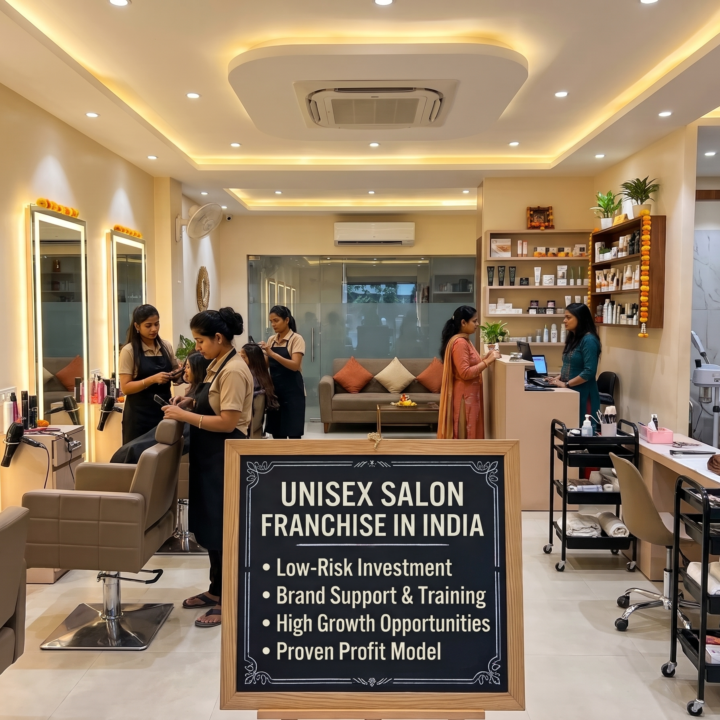
A unisex salon serves both male and female customers and offers a broader range of services.
Typical services include:
-
Haircuts and hairstyling
-
Hair colouring and highlights
-
Keratin and smoothening
-
Hair spa and hair repair treatments
-
Facial and skincare services
-
Waxing and threading
-
Manicure and pedicure
-
Bridal and party makeup
This business model provides multiple revenue opportunities and can attract a wider customer base.
Premium or Luxury Salon
A premium salon focuses on an enhanced customer experience, professional consultations, premium products, advanced treatments and luxurious interiors.
This model generally requires higher investment but allows us to target customers willing to pay more for specialised services.
Salon Franchise Business
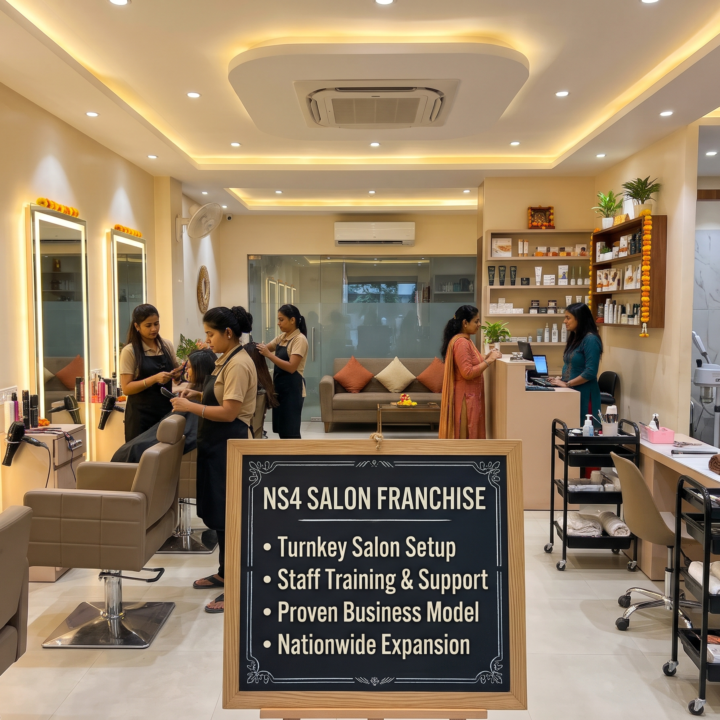
A salon franchise allows entrepreneurs to operate under an established brand name with an existing business model, branding support, training and operational guidance.
For first-time entrepreneurs, a franchise can provide a structured starting point, provided the franchise agreement, investment requirements and commercial terms are carefully evaluated.
2. Create a Proper Hair Salon Business Plan
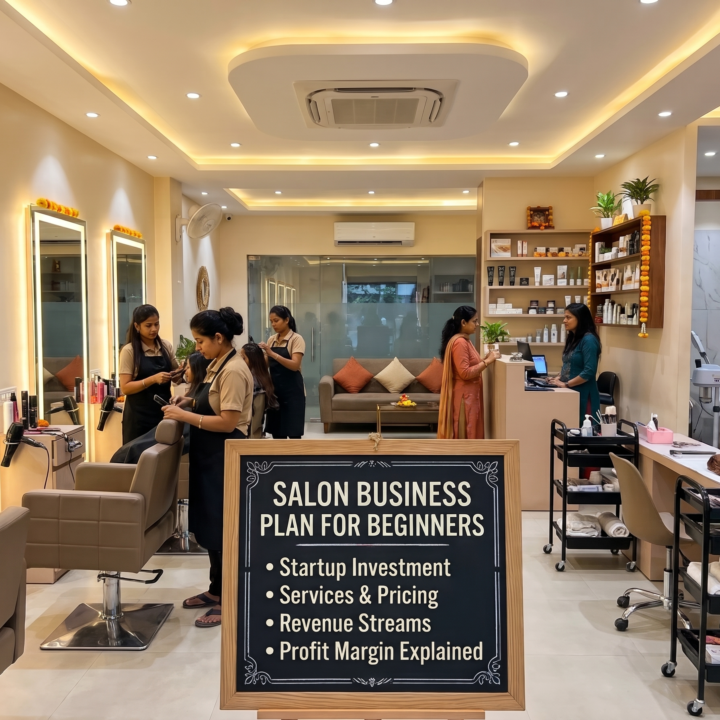
A detailed business plan helps us understand the financial requirements and operational responsibilities before opening the salon.
Our business plan should cover the following areas:
Business objectives: Define whether we want to operate a neighbourhood salon, premium unisex salon or multi-outlet salon brand.
Target customers: Identify the age group, income level, lifestyle and grooming requirements of customers in the selected area.
Service selection: Decide which services we will initially offer and which advanced services we may introduce later.
Investment planning: Calculate the cost of interiors, equipment, furniture, products, staff recruitment, rent and marketing.
Revenue planning: Estimate the number of daily customers, average billing value and monthly sales.
Competition analysis: Study nearby salons, their pricing, customer reviews, services and promotional offers.
A realistic business plan helps us avoid unnecessary expenses and manage working capital effectively.
3. Choose the Right Location for Your Hair Salon
Location plays an important role in determining the success of a salon.
Even a professionally designed salon may struggle if it is located in an area with limited customer demand or poor accessibility.
Before selecting a commercial property, we should evaluate:
-
Residential population and customer density.
-
Visibility from the main road.
-
Parking availability.
-
Accessibility through public transportation.
-
Nearby shopping centres and commercial markets.
-
Existing salons and their service pricing.
-
Monthly rental costs.
-
Availability of electricity and water.
-
Competition within the surrounding area.
How Much Space Is Required to Open a Salon?
The required area depends on the salon category and services.
| Salon Category | Approximate Space |
|---|---|
| Small salon | 200–400 sq. ft. |
| Standard salon | 500–800 sq. ft. |
| Unisex salon | 800–1,200 sq. ft. |
| Premium salon | 1,200–2,000 sq. ft. |
For a standard unisex salon, approximately 800–1,200 square feet can provide sufficient space for multiple styling stations, shampoo stations, treatment areas, reception and customer waiting space.
We should also ensure that the property permits commercial salon operations and meets applicable local building and safety requirements.
4. Hair Salon Startup Cost in India: Complete Investment Breakdown
One of the most important questions entrepreneurs ask is: How much investment is required to open a hair salon in India?
The answer depends on the salon’s size, location, interiors, equipment, services and business model.
A small neighbourhood salon may require approximately ₹5–12 lakh, while a standard unisex salon may require ₹12–25 lakh. A premium salon with advanced facilities and luxury interiors may require ₹25–50 lakh or more. These are indicative planning estimates, not fixed market prices.
The Saral+2
Estimated Salon Investment by Business Category
| Salon Type | Estimated Investment |
|---|---|
| Small hair salon | ₹5–12 lakh |
| Standard unisex salon | ₹12–25 lakh |
| Premium unisex salon | ₹25–35 lakh |
| Luxury salon | ₹35–50 lakh+ |
Detailed Hair Salon Setup Cost
Consider the following estimated budget for a standard salon in India.
| Expense Category | Estimated Cost |
|---|---|
| Shop security deposit | ₹1–3 lakh |
| Interior designing and renovation | ₹4–8 lakh |
| Salon furniture and chairs | ₹1–2 lakh |
| Professional equipment | ₹1–2 lakh |
| Initial product inventory | ₹50,000–1 lakh |
| Reception and billing setup | ₹30,000–50,000 |
| Branding and signage | ₹30,000–60,000 |
| Licences and registrations | ₹15,000–40,000 |
| Opening marketing | ₹30,000–50,000 |
| Initial working capital | ₹2–4 lakh |
| Estimated Total | ₹11.55–21.10 lakh |
These figures are illustrative. Actual costs depend on local rental rates, contractor quotations, equipment quality and the number of salon stations.
Important: We should always maintain a separate working capital reserve. Spending the entire investment on interiors and equipment can create financial pressure during the first few months.
5. Essential Salon Equipment and Furniture
Professional equipment directly affects service quality, employee productivity and customer satisfaction.
Before opening a salon, we should prepare an equipment checklist according to the services we intend to offer.
Hair Styling Equipment
-
Professional hydraulic salon chairs
-
Large styling mirrors
-
Hair cutting scissors
-
Professional hair clippers and trimmers
-
Hair dryers
-
Hair straighteners
-
Curling machines
-
Hair brushes and combs
-
Hair sectioning clips
-
Styling trolleys
-
Hair washing stations
Hair Treatment Equipment
-
Hair spa machines
-
Hair steamers
-
Professional blow dryers
-
Colour mixing bowls
-
Application brushes
-
Treatment bowls
-
Hair processing equipment
-
Towels and protective capes
Reception and Customer Management
-
Reception desk
-
Waiting chairs or sofa
-
Computer or laptop
-
Billing software
-
Appointment management system
-
CCTV cameras
-
UPI and card payment facilities
We should purchase equipment from reliable suppliers and compare product warranties, maintenance requirements and after-sales service before making payments.
6. Salon Interior Design and Layout Planning
A salon’s interior creates the first impression and influences the overall customer experience.
We should design the salon in a way that combines functionality, hygiene, comfort and visual appeal.
A well-planned salon layout generally includes:
Reception Area: A welcoming reception desk where customers can enquire about services, book appointments and complete payments.
Hair Styling Area: A dedicated section with mirrors, styling chairs, trolleys and sufficient lighting.
Hair Wash Area: Comfortable shampoo stations with proper plumbing and drainage.
Hair Treatment Area: A separate area for hair spa, keratin, smoothening and other chemical treatments.
Beauty Section: If we provide facial, waxing, threading, manicure and pedicure services, we should allocate a suitable dedicated space.
Storage Area: Proper storage for professional products, towels, equipment and consumables.
We should also invest in good ventilation, air conditioning, washable surfaces, sufficient electrical points and appropriate lighting.
A premium appearance is useful, but we should avoid unnecessary interior expenses that do not improve service delivery or customer experience.
7. Salon Licences and Registrations Required in India
Before starting salon operations, we must complete the applicable business registrations and local permissions.
The exact requirements depend on the state, municipality, property type, business structure and nature of services.
Common registrations and permissions may include:
1. Business Registration
We can establish the business as:
-
Sole proprietorship
-
Partnership firm
-
Limited Liability Partnership (LLP)
-
Private Limited Company
The appropriate structure depends on ownership, investment, liability and future expansion plans.
2. Shop and Establishment Registration
Businesses operating from commercial premises may need registration under the applicable state Shops and Establishments legislation.
3. GST Registration
GST registration requirements depend on applicable turnover thresholds, business activities and compulsory registration provisions.
We should consult a chartered accountant to determine the correct registration requirements and tax treatment.
4. Municipal Trade Licence
Depending on the local municipal rules, a trade licence or other local permission may be required to operate a salon.
5. Fire Safety Compliance
We should check whether the premises require a Fire NOC or other fire-safety approval based on building use, size and local regulations.
6. Udyam Registration
Eligible salon businesses can consider Udyam registration as an MSME. It can help businesses access applicable MSME-related benefits and schemes.
7. Employee and Labour Compliance
As the business grows, we must comply with applicable employment, wage, professional tax, EPF and ESI requirements wherever relevant.
We should verify all applicable requirements with the local authorities and a qualified CA before opening the salon.
The Saral+2
8. Hire Skilled Hair Stylists and Salon Professionals
The success of a salon depends heavily on the skills and behaviour of its employees.
Even the best salon interiors and equipment cannot compensate for poor service quality.
For a standard unisex salon, an initial team may include:
| Job Role | Number of Employees |
|---|---|
| Senior Hair Stylist | 1 |
| Junior Hair Stylist | 1–2 |
| Beautician | 1 |
| Hair Assistant | 1 |
| Receptionist | 1 |
| Housekeeping Staff | 1 |
The team size should match the number of stations and expected customer volume.
How to Hire the Right Salon Staff
We should evaluate candidates based on:
-
Professional training and practical experience.
-
Hair cutting and styling techniques.
-
Knowledge of hair colouring and chemical treatments.
-
Customer communication skills.
-
Product knowledge.
-
Hygiene and workplace discipline.
-
Ability to recommend suitable services.
-
Professional behaviour and teamwork.
We should also establish clear salary structures, incentives, service targets and employee responsibilities.
Regular training is important because beauty trends, hairstyles, colouring techniques and customer expectations continue to evolve.
9. Decide Which Hair and Beauty Services to Offer
A carefully designed service menu helps customers understand our offerings and makes revenue planning easier.
We can divide salon services into different categories.
Hair Services
-
Basic haircut
-
Advanced haircut
-
Hair wash and blow dry
-
Hair colouring
-
Global hair colour
-
Highlights and balayage
-
Hair spa
-
Keratin treatment
-
Hair smoothening
-
Hair repair treatments
Skin and Beauty Services
-
Cleanup
-
Basic facial
-
Hydra facial
-
D-Tan treatment
-
Skin polishing
-
Waxing
-
Threading
-
Bleach
Grooming Services
-
Beard trimming
-
Hair setting
-
Head massage
-
Shaving
-
Grooming packages
Premium Services
-
Bridal makeup
-
Party makeup
-
Advanced hair treatments
-
Nail extensions
-
Hair extensions
-
Special occasion hairstyling
We should initially focus on services that have strong local demand and can be delivered consistently by our team.
10. How to Decide Salon Service Pricing
Pricing should cover product consumption, employee costs, operating expenses and the desired profit margin.
We should study the pricing of competing salons in our locality before finalising our service menu.
For example, an illustrative pricing structure could be:
| Salon Service | Example Price |
|---|---|
| Basic Haircut | ₹199–399 |
| Hair Wash | ₹149–299 |
| Hair Spa | ₹699–1,499 |
| Global Hair Colour | ₹1,499–3,999 |
| Keratin Treatment | ₹2,999–5,999 |
| Smoothening | ₹3,999–7,999 |
| Advanced Facial | ₹999–2,499 |
These are sample pricing ranges, not fixed recommended prices. Actual prices should reflect hair length, product quantity, service complexity, local purchasing power and competition.
We can also introduce:
-
Monthly membership cards.
-
Haircut and hair spa packages.
-
Couple grooming packages.
-
Bridal packages.
-
Seasonal promotional offers.
-
Loyalty rewards for repeat customers.
Membership programmes can encourage repeat visits and improve customer retention when the benefits and redemption rules are clearly communicated.
11. Monthly Operating Expenses of a Hair Salon
Before opening, we must calculate recurring expenses to understand the minimum revenue required every month.
An example monthly expense structure for a standard salon is:
| Monthly Expense | Estimated Amount |
|---|---|
| Shop Rent | ₹40,000 |
| Employee Salaries | ₹1,50,000 |
| Electricity and Utilities | ₹20,000 |
| Product Consumption | ₹40,000 |
| Marketing | ₹15,000 |
| Maintenance and Miscellaneous | ₹15,000 |
| Software and Administration | ₹5,000 |
| Total Monthly Expenses | ₹2,85,000 |
These amounts are illustrative assumptions. Actual expenses will vary according to location, staff strength and business size.
We should also account for taxes, payment processing charges, equipment replacement, loan repayments and other applicable expenses.
12. How Much Profit Can a Hair Salon Make in India?
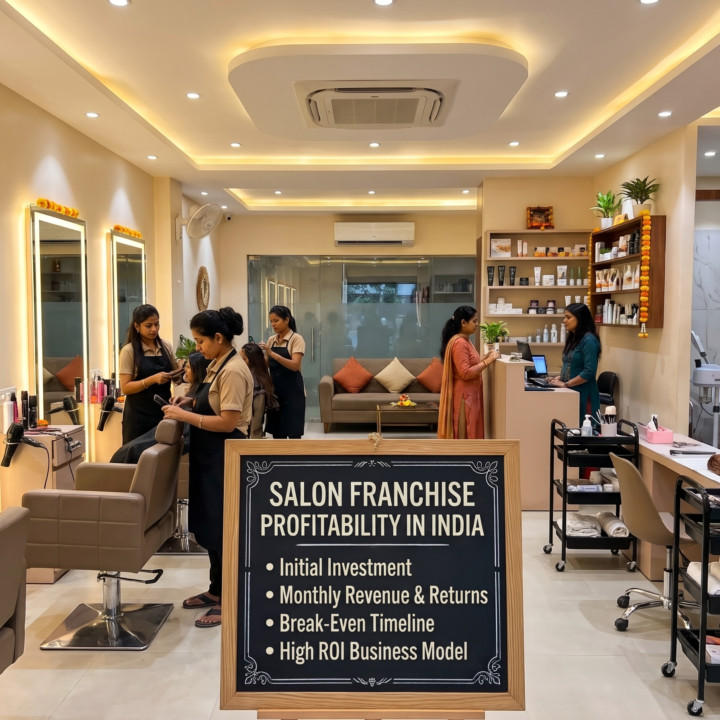
Salon profitability depends on customer volume, average billing value, service margins, repeat visits and expense management.
Let us consider an example.
Assume our salon serves an average of 20 customers per day.
-
Average customer billing: ₹500
-
Daily customers: 20
-
Operating days: 26
-
Monthly revenue: ₹2,60,000
Monthly Revenue Calculation:
20 × ₹500 × 26 = ₹2,60,000
If the monthly operating expenses are ₹2,00,000, the estimated operating surplus would be ₹60,000 before applicable taxes, financing costs, depreciation and other excluded expenses.
This is a simplified financial illustration, not a guaranteed profit projection.
How to Increase Salon Profitability
We can improve salon profitability through:
-
Increasing repeat customer visits.
-
Offering high-value hair treatments.
-
Improving average customer billing.
-
Reducing unnecessary product wastage.
-
Managing employee productivity.
-
Introducing membership programmes.
-
Promoting retail hair and skincare products.
-
Building a strong local brand reputation.
The goal should not simply be to increase the number of customers. We should build a business that consistently delivers quality services and generates repeat revenue.
13. Marketing Strategies to Promote a New Hair Salon
Marketing is essential for attracting customers, building brand awareness and generating bookings.
A new salon should develop an online and offline marketing strategy before its opening.
Google Business Profile
We should create and optimise a Google Business Profile with:
-
Correct salon name and address.
-
Contact number and business hours.
-
Professional salon interior photographs.
-
Service descriptions.
-
Customer reviews.
-
Appointment and website links.
This helps potential customers discover the salon when searching for hair salons and beauty services nearby.
Instagram and Facebook Marketing
Social media platforms are powerful tools for promoting salon services.
We should regularly publish:
-
Hair transformation reels.
-
Before-and-after photographs.
-
Hair colouring videos.
-
Customer testimonials.
-
Hair treatment demonstrations.
-
Special offers and seasonal promotions.
-
Salon team introductions.
-
Educational haircare content.
Short-form videos showing actual service results can help establish trust and encourage enquiries.
WhatsApp Marketing
WhatsApp can help us maintain relationships with existing customers.
We can use it for:
-
Appointment confirmations.
-
Birthday greetings.
-
Festival offers.
-
Membership promotions.
-
Service reminders.
-
Customer feedback.
-
New service announcements.
We should obtain appropriate customer consent before sending promotional communications.
Local Marketing
Offline marketing is particularly useful during the initial launch.
We can distribute promotional flyers, collaborate with nearby businesses, run introductory offers and organise local promotional activities.
Paid Advertising
Facebook and Instagram advertisements can help us reach customers within our salon’s target area.
We should create separate campaigns for haircuts, hair treatments, bridal makeup, beauty services and salon memberships.
A small test budget can help us identify which campaigns generate genuine enquiries and bookings before increasing advertising expenditure.
14. How to Open a Hair Salon Franchise in India
Starting a salon independently is not the only option. Entrepreneurs can also consider opening a salon franchise.
A franchise model provides access to an established brand identity and an existing business framework.
Depending on the franchise agreement, support may include:
-
Brand name and identity.
-
Salon interior planning.
-
Equipment guidance.
-
Staff training.
-
Service menu development.
-
Product sourcing.
-
Marketing assistance.
-
Operational guidelines.
-
Business launch support.
Advantages of Opening a Salon Franchise
1. Established Brand Identity
An established brand can help create customer awareness and improve initial brand recognition.
2. Business Guidance
Franchise partners may receive assistance with location selection, salon setup, operations and service planning.
3. Staff Training
Professional training can help maintain consistent service quality across different outlets.
4. Marketing Support
Brand-level marketing campaigns and promotional materials can help franchise partners promote their outlets.
5. Structured Business Operations
A standardised operating model can make daily salon management easier.
What Should We Check Before Buying a Salon Franchise?
Before signing a franchise agreement, we should carefully evaluate:
-
Total investment required.
-
Brand franchise fees.
-
Royalty and other recurring charges.
-
Interior and equipment costs.
-
Product purchasing conditions.
-
Training and operational support.
-
Territory exclusivity.
-
Agreement duration.
-
Renewal and exit conditions.
-
Actual performance of existing franchise outlets.
We should also speak with existing franchise partners and independently verify the brand’s business claims.
15. NS4 Salon: A Franchise Opportunity for Aspiring Salon Entrepreneurs
For entrepreneurs who want to enter the professional salon industry with an established brand, NS4 Salon offers a franchise business opportunity.
Established in 2008, NS4 Salon has developed its presence in the Indian beauty and haircare industry through professional salon services and franchise expansion.
The brand focuses on professional grooming, hair treatments, beauty services and customer experience.
Why Consider an NS4 Salon Franchise?
-
Established salon brand identity.
-
Professional salon setup guidance.
-
Structured business operating model.
-
Training and development support.
-
Salon service and pricing guidance.
-
Branding and promotional assistance.
-
Opportunity to build a salon business in your city.
NS4 Salon Franchise Investment
The investment depends on the salon format, location, space requirements, interiors, equipment and selected business model.
Entrepreneurs should evaluate the complete investment requirement, including setup expenses and working capital, before proceeding.
We encourage interested entrepreneurs to discuss the franchise model, commercial terms and operational support directly with the NS4 Salon team.
Start Your Own Salon Business with NS4 Salon
Turn your entrepreneurial vision into a professional salon business with an established salon brand.
Interested in opening an NS4 Salon franchise?
-
Explore franchise opportunities.
-
Understand the investment requirements.
-
Discuss location and setup planning.
-
Connect with the franchise team.
Visit NS4 Salon Website
16. Common Mistakes to Avoid When Opening a Hair Salon
Many new salon businesses face challenges because of poor financial planning and inconsistent operations.
We should avoid these common mistakes:
1. Selecting the Wrong Location: A low-rent property may not generate sufficient customer footfall.
2. Overspending on Interiors: Expensive interiors do not automatically translate into higher revenue.
3. Hiring Untrained Staff: Poor service quality can damage customer trust and brand reputation.
4. Ignoring Marketing: A new salon needs consistent promotional activities to generate awareness and enquiries.
5. Offering Too Many Services Initially: We should focus on services that our team can deliver professionally.
6. Poor Financial Management: Daily sales, product consumption, salaries and monthly expenses must be monitored.
7. Ignoring Customer Retention: Acquiring new customers is important, but encouraging existing customers to return is equally valuable.
8. Not Maintaining Hygiene: Clean tools, fresh towels, sanitised workstations and proper product handling are essential.
17. Step-by-Step Checklist to Open a Hair Salon in India
Here is a practical checklist to help us organise the complete salon opening process.
18. Frequently Asked Questions About Opening a Hair Salon in India
Q1. How much does it cost to open a hair salon in India?
A small hair salon may require approximately ₹5–12 lakh, while a standard unisex salon may require ₹12–25 lakh. Premium and luxury salons can require ₹25–50 lakh or more depending on location, interiors, equipment and working capital.
Q2. Is a hair salon business profitable in India?
Yes, a hair salon can be profitable when it has a suitable location, skilled professionals, consistent service quality, competitive pricing and effective customer retention strategies. However, profitability depends on operating expenses and actual customer demand.
Q3. How much space is required to open a unisex salon?
A standard unisex salon generally requires approximately 800–1,200 square feet. Smaller salons can operate in less space, depending on the number of styling stations and services offered.
Q4. Which licences are required to open a salon in India?
Depending on the location and business structure, requirements may include Shop and Establishment registration, municipal trade permissions, GST registration where applicable, fire safety compliance and other local approvals.
Q5. How many employees are required to start a salon?
A small salon may begin with two or three professionals. A standard unisex salon may require approximately five to seven employees, depending on its service menu and customer capacity.
Q6. Can we open a salon without experience?
Yes. Entrepreneurs can own and manage a salon without personally performing hair or beauty services. However, they should hire experienced professionals and establish proper operational and quality-control systems.
Q7. Is opening a salon franchise better than starting independently?
Both models have advantages. An independent salon provides greater control over branding and operations, while a franchise may offer an established brand identity, training and business support. The right choice depends on investment, experience and commercial terms.
Q8. How can we attract customers to a new salon?
We can attract customers through Google Business Profile optimisation, Instagram reels, local advertisements, referral programmes, introductory offers, WhatsApp communication and excellent customer service.
Q9. What is the most important factor in salon business success?
The most important factors include the right location, skilled employees, service quality, customer satisfaction, financial management and consistent marketing.
Q10. How long does it take to open a salon in India?
A salon can take approximately 45–90 days to become operational, depending on property readiness, interior work, equipment availability, registrations and staff recruitment.
Conclusion: Start Your Hair Salon Business with the Right Planning
Opening a hair salon in India offers an opportunity to build a sustainable business in the professional beauty and grooming industry.
However, long-term success requires more than investment. We need the right location, a practical business plan, professional employees, quality products, effective marketing and strong customer relationships.
Whether we plan to open a small neighbourhood salon, a premium unisex salon or a branded salon franchise, careful financial planning is essential.
We should start with a clear business model, calculate every major expense, maintain sufficient working capital and focus on delivering excellent customer experiences.
For entrepreneurs looking for a structured entry into the salon industry, exploring an established salon franchise such as NS4 Salon can be a worthwhile next step.
Your salon business journey starts with the right decision. Plan smartly, invest wisely and build a brand that customers trust.