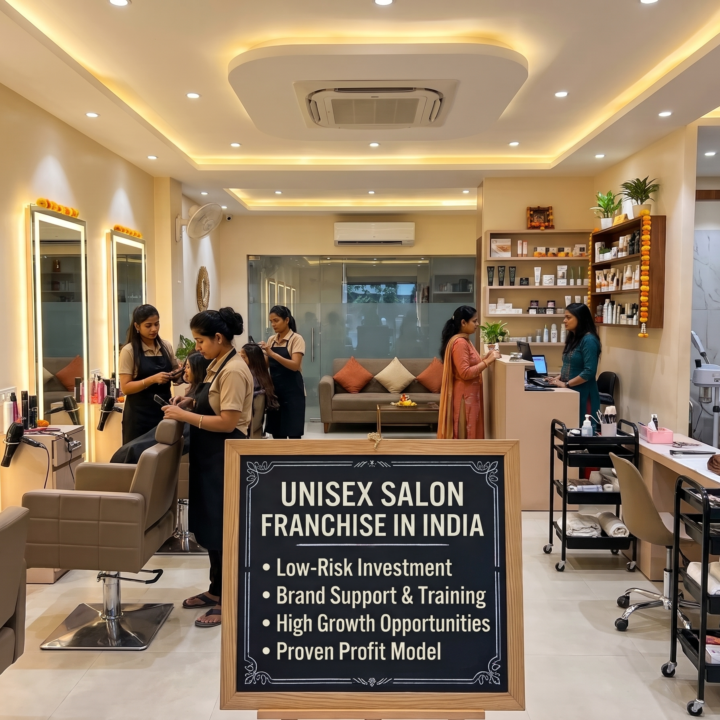
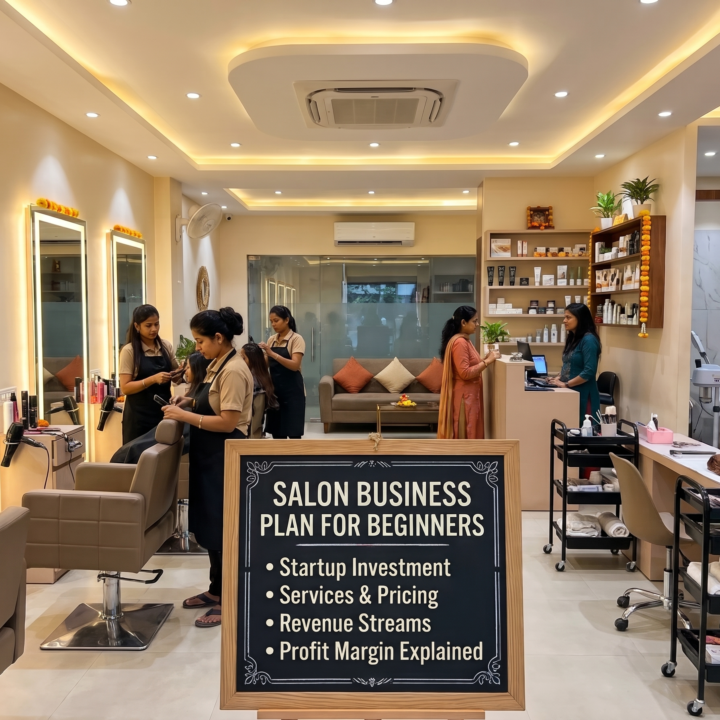
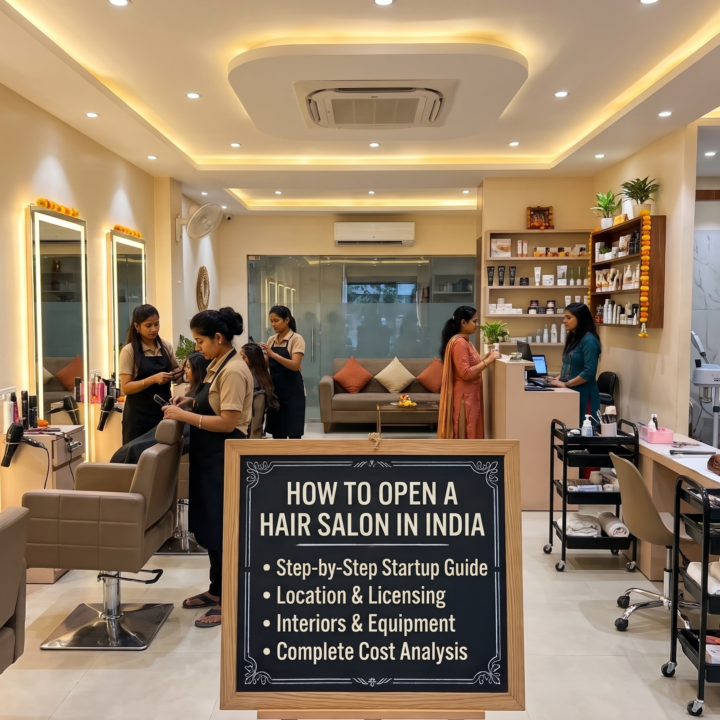
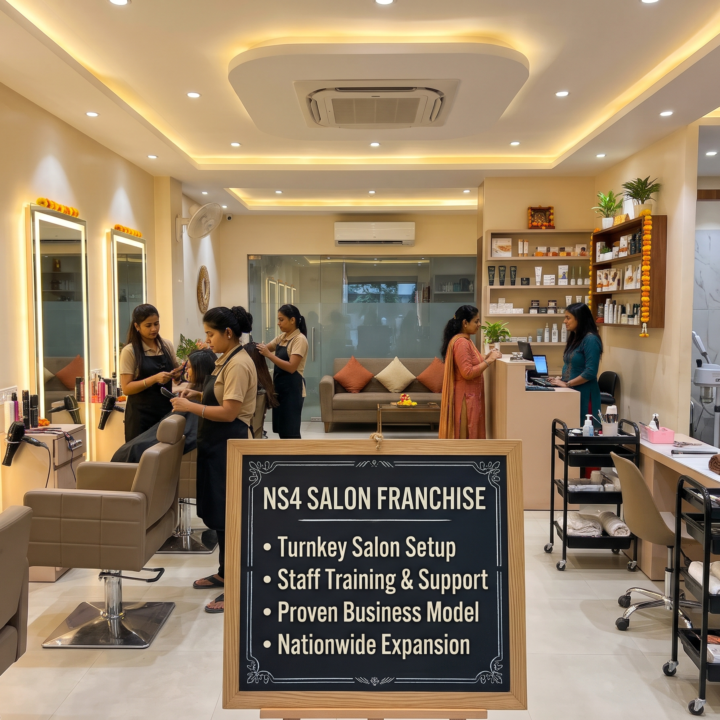
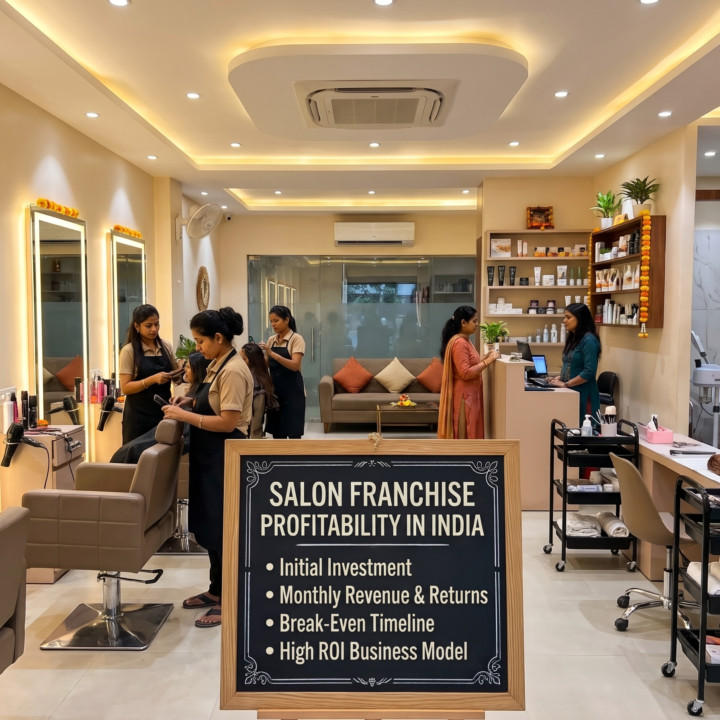
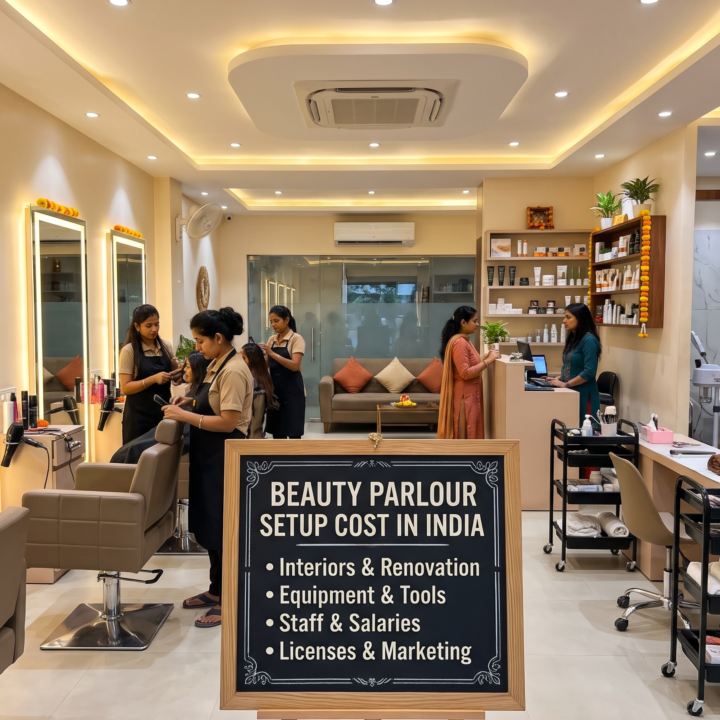
Opening a salon in India in 2026 is an exciting business opportunity for entrepreneurs who want to enter the rapidly growing beauty, grooming, and wellness industry. With increasing awareness of personal grooming, professional hair treatments, skincare, bridal makeup, and premium beauty services, the salon industry offers significant opportunities for both new business owners and experienced professionals.
However, before starting a salon, one of the most important questions is: How much does it cost to open a salon in India in 2026?
The answer depends on several factors, including salon size, location, interior design, equipment, staff requirements, service offerings, and business model. A small neighbourhood salon may require an investment of ₹3 lakh to ₹6 lakh, whereas a professionally designed unisex salon may require ₹10 lakh to ₹20 lakh. A premium luxury salon or established salon franchise may require ₹25 lakh to ₹50 lakh or more.
In this detailed guide, we will explain the salon opening cost in India in 2026, including setup expenses, interior costs, salon equipment, staff salaries, licenses, monthly operating expenses, expected revenue, and business planning.
Whether we are planning to open a small beauty parlour, a ladies’ salon, a men’s salon, a unisex salon, or a premium salon franchise, understanding the complete investment will help us make better business decisions.
1. Total Salon Opening Cost in India in 2026
The total investment required to open a salon depends primarily on its size, location, target customers, and service categories.
Here is an estimated investment breakdown for different salon business models.
| Salon Type | Estimated Investment |
|---|---|
| Small Home-Based Salon | ₹1–3 Lakhs |
| Small Beauty Parlour | ₹3–6 Lakhs |
| Men’s Salon | ₹4–8 Lakhs |
| Ladies’ Salon | ₹5–10 Lakhs |
| Standard Unisex Salon | ₹10–20 Lakhs |
| Premium Unisex Salon | ₹20–35 Lakhs |
| Luxury Salon | ₹35–50 Lakhs+ |
| Salon Franchise | ₹20–50 Lakhs+ |
These are indicative estimates for 2026. Actual costs may vary depending on the city, commercial rent, property condition, interior specifications, and equipment quality.
For entrepreneurs entering the beauty industry for the first time, starting with a small or standard salon can be a practical option. Those targeting premium customers may consider investing in a professionally designed unisex salon with advanced hair, skin, and beauty services.
2. Salon Space Requirements and Rental Costs
The first major expense when opening a salon is selecting the right commercial location.
A salon should ideally be situated in a residential market, shopping complex, commercial street, or an area with good visibility and customer movement.
The required space depends on the services we plan to offer.
| Salon Category | Recommended Area |
|---|---|
| Small Salon | 200–400 Sq. Ft. |
| Standard Salon | 400–700 Sq. Ft. |
| Unisex Salon | 700–1,000 Sq. Ft. |
| Premium Unisex Salon | 1,000–1,400 Sq. Ft. |
| Luxury Salon | 1,500–2,500 Sq. Ft. |
Estimated Commercial Rent in India
Commercial rental prices differ significantly between metropolitan cities, tier-2 cities, and smaller towns.
| Location Type | Estimated Monthly Rent |
|---|---|
| Small Town | ₹10,000–₹25,000 |
| Tier-2 City | ₹20,000–₹50,000 |
| Prime Commercial Market | ₹40,000–₹1,00,000 |
| Metropolitan City | ₹60,000–₹2,00,000+ |
Apart from monthly rent, we should also consider the security deposit, advance rent, electricity connection, water supply, and property maintenance.
Our recommendation: Choose a location with strong residential catchment and customer accessibility rather than selecting an expensive property simply because it is situated on a main road.
3. Salon Interior Designing and Setup Cost
Interior design plays an important role in creating the customer experience. A well-designed salon builds trust, improves customer comfort, and creates a professional brand image.
The interior should be designed according to the salon’s positioning and target audience.
Estimated Salon Interior Costs
| Interior Category | Estimated Cost |
|---|---|
| Basic Interior | ₹1–2 Lakhs |
| Standard Interior | ₹2–4 Lakhs |
| Premium Interior | ₹4–8 Lakhs |
| Luxury Interior | ₹8–15 Lakhs+ |
The interior budget generally includes:
-
Reception counter and waiting area.
-
Hair styling stations and mirrors.
-
False ceiling and lighting.
-
Flooring and wall finishing.
-
Electrical fittings and plumbing.
-
Shampoo and hair wash area.
-
Facial and treatment rooms.
-
Manicure and pedicure section.
-
Storage cabinets and product displays.
-
Air conditioning and ventilation.
For a professional unisex salon, we should focus on functionality, hygiene, lighting, customer privacy, and comfortable service areas.
4. Salon Equipment and Furniture Cost
Professional salon equipment is another major investment. The quality of equipment directly affects service delivery, staff productivity, and customer satisfaction.
Essential Salon Equipment and Their Prices
| Equipment | Estimated Cost |
|---|---|
| Styling Chairs (4–6) | ₹40,000–₹90,000 |
| Salon Mirrors and Stations | ₹30,000–₹70,000 |
| Hair Wash Units (2) | ₹30,000–₹60,000 |
| Hair Dryers | ₹8,000–₹20,000 |
| Professional Hair Straighteners | ₹5,000–₹15,000 |
| Hair Curling Machines | ₹4,000–₹12,000 |
| Facial Beds | ₹15,000–₹35,000 |
| Manicure and Pedicure Equipment | ₹15,000–₹35,000 |
| Waxing Equipment | ₹5,000–₹12,000 |
| Sterilizers and Hygiene Equipment | ₹5,000–₹15,000 |
| Reception Furniture | ₹15,000–₹30,000 |
Estimated total equipment investment: ₹1.5 lakh to ₹4 lakh for a standard salon, depending on the number of workstations and service categories.
We should always purchase professional-grade equipment that can handle regular commercial use.
5. Salon Product and Inventory Investment
Salon products are essential for providing professional services. These include shampoos, conditioners, hair masks, hair colours, skincare products, facial kits, waxing products, manicure products, and styling products.
A new salon should maintain sufficient inventory without investing too much money in products that may remain unused.
Estimated Initial Product Investment
| Product Category | Estimated Investment |
|---|---|
| Hair Care Products | ₹20,000–₹40,000 |
| Hair Colour Products | ₹15,000–₹30,000 |
| Hair Treatment Products | ₹15,000–₹30,000 |
| Facial and Skincare Products | ₹20,000–₹40,000 |
| Waxing Products | ₹5,000–₹10,000 |
| Manicure and Pedicure Products | ₹10,000–₹20,000 |
| Disposable Items and Hygiene Supplies | ₹5,000–₹10,000 |
Estimated initial inventory: ₹90,000–₹1.80 lakh.
We should select reliable professional product brands and maintain proper stock records to control product consumption.
6. Salon Staff Hiring and Salary Expenses
A salon’s success depends heavily on the quality of its professionals. Skilled hairstylists, beauticians, makeup artists, and reception staff help deliver consistent services and build customer loyalty.
Recommended Staff for a Standard Unisex Salon
| Staff Position | Monthly Salary |
|---|---|
| Senior Hair Stylist | ₹20,000–₹30,000 |
| Junior Hair Stylist | ₹12,000–₹18,000 |
| Beautician | ₹12,000–₹20,000 |
| Makeup Artist | ₹15,000–₹25,000 |
| Receptionist | ₹10,000–₹15,000 |
| Helper | ₹8,000–₹12,000 |
A standard salon may require approximately 4–6 employees, while a premium salon may require 8–12 professionals depending on its operating hours and service capacity.
Estimated monthly staff expense: ₹60,000–₹1.50 lakh.
We should also consider incentives, performance-based commissions, staff training, uniforms, and employee retention.
7. Salon Licenses and Registrations in India
Before opening a salon, we should complete the necessary registrations and comply with applicable local regulations.
Depending on the location and business structure, the following may be required:
-
Business Registration: Proprietorship, partnership, LLP, or private limited company registration, as applicable.
-
Shop and Establishment Registration: As required under the relevant state law.
-
GST Registration: Depending on applicable GST registration requirements and turnover.
-
Trade License: If required by the local municipal authority.
-
Fire Safety Compliance: Depending on premises, building requirements, and applicable regulations.
-
Professional Tax Registration: Where applicable.
-
Employee Compliance: Applicable labour registrations and statutory requirements.
-
Music License: Where copyrighted commercial music is played publicly and licensing is required.
Estimated Registration and Compliance Costs
We should keep approximately ₹10,000–₹40,000 aside for basic registration, documentation, and professional assistance. Actual costs depend on the state, business structure, and approvals required.
8. Salon Marketing and Branding Investment
Opening a salon is only the first step. Attracting customers and building a recognizable brand are equally important.
A new salon needs a professional identity and a marketing strategy that communicates its services, pricing, expertise, and offers.
Initial Salon Marketing Budget
| Marketing Activity | Estimated Cost |
|---|---|
| Logo and Brand Identity | ₹3,000–₹10,000 |
| Outdoor Signage | ₹10,000–₹30,000 |
| Social Media Creatives | ₹3,000–₹8,000 |
| Professional Photoshoot | ₹5,000–₹15,000 |
| Google Business Profile Setup | Basic setup can be free |
| Instagram and Facebook Ads | ₹5,000–₹15,000 |
| Opening Offers and Promotions | ₹5,000–₹10,000 |
Suggested initial marketing budget: ₹30,000–₹80,000.
We should focus on Instagram marketing, Google Business Profile optimization, local SEO, WhatsApp marketing, customer reviews, referral offers, and grand opening campaigns.
A strong digital presence helps customers discover the salon when they search for services such as haircuts, hair spa, keratin treatment, bridal makeup, and beauty parlours near them.
9. Complete Salon Opening Budget: Small to Premium Salon
Let’s understand the approximate investment required for different salon formats.
| Expense Category | Small Salon | Standard Unisex | Premium Unisex |
|---|---|---|---|
| Security Deposit and Advance | ₹30,000 | ₹75,000 | ₹1,50,000 |
| Interior and Renovation | ₹1,00,000 | ₹3,00,000 | ₹6,00,000 |
| Equipment and Furniture | ₹75,000 | ₹2,00,000 | ₹3,50,000 |
| Initial Products | ₹30,000 | ₹1,00,000 | ₹1,50,000 |
| Licenses and Registration | ₹10,000 | ₹20,000 | ₹30,000 |
| Branding and Marketing | ₹20,000 | ₹40,000 | ₹70,000 |
| Working Capital | ₹1,00,000 | ₹2,00,000 | ₹3,50,000 |
| Total | ₹3.65 Lakhs | ₹9.35 Lakhs | ₹17 Lakhs |
These figures are illustrative planning budgets, not fixed market quotations. They exclude certain possible expenses such as major structural work, franchise fees, GST on purchases, and specialised equipment.
10. Monthly Expenses of Running a Salon
After opening the salon, we must manage recurring expenses carefully.
Monthly operating expenses determine how much revenue we need to generate to maintain profitability.
Example Monthly Expense Structure for a Standard Unisex Salon
| Expense | Monthly Cost |
|---|---|
| Rent | ₹40,000 |
| Staff Salaries | ₹1,00,000 |
| Electricity | ₹15,000 |
| Product Consumption | ₹25,000 |
| Marketing | ₹10,000 |
| Miscellaneous Expenses | ₹10,000 |
| Maintenance | ₹5,000 |
| Total | ₹2,05,000 |
This example excludes financing costs, taxes, depreciation, owner compensation, and other location-specific expenses.
We should maintain sufficient working capital to manage at least three months of operating expenses, especially during the initial business development period.
11. How Much Revenue Can a Salon Generate in India?
Salon revenue depends on customer footfall, average billing value, service mix, staff capacity, and repeat visits.
Let’s consider an example of a standard unisex salon.
Monthly Revenue Calculation
Assume:
-
Average customers per day: 20
-
Average customer billing: ₹500
-
Working days: 26
Monthly revenue:
20 × ₹500 × 26 = ₹2,60,000
Now consider a salon with higher customer footfall and premium services.
| Business Metric | Standard Salon | Premium Salon |
|---|---|---|
| Customers Per Day | 20 | 30 |
| Average Billing | ₹500 | ₹800 |
| Working Days | 26 | 26 |
| Monthly Revenue | ₹2.60 Lakh | ₹6.24 Lakh |
These figures are illustrative revenue scenarios, not guaranteed earnings. Actual performance will depend on local demand, customer retention, service capacity, and operating efficiency.
How Can We Increase Salon Revenue?
We can improve salon revenue through:
-
Hair spa and hair treatment packages.
-
Keratin and smoothening services.
-
Bridal and party makeup.
-
Facial and skin treatment packages.
-
Membership and loyalty programmes.
-
Hair and skincare product sales.
-
Monthly grooming packages.
-
Customer referral programmes.
-
Seasonal promotional campaigns.
A salon should focus not only on acquiring new customers but also on increasing repeat visits and average customer spending.
12. Is Opening a Salon Franchise Better Than Starting Independently?
One important decision is whether to start an independent salon or invest in an established salon franchise.
Both business models have advantages and limitations.
Independent Salon Business
An independent salon allows us to build our own brand and manage the business according to our preferences.
Advantages:
-
Complete control over business operations.
-
Freedom to select products and services.
-
No mandatory brand royalty in many independent models.
-
Flexibility in pricing and marketing.
-
Opportunity to develop our own identity.
Challenges:
-
Building brand recognition from scratch.
-
Developing operating systems.
-
Recruiting and training professionals.
-
Creating marketing strategies.
-
Establishing customer trust.
-
Managing business operations independently.
Salon Franchise Business
A salon franchise allows entrepreneurs to operate under an established brand with a defined business model.
Advantages:
-
Established brand identity.
-
Professional salon setup guidance.
-
Standard operating procedures.
-
Staff training and operational support.
-
Marketing and promotional assistance.
-
Product and service guidance.
-
Faster brand positioning in the local market.
Challenges:
-
Initial franchise or brand fee.
-
Possible royalty payments.
-
Compliance with brand standards.
-
Less flexibility in certain business decisions.
-
Dependence on franchisor support.
Estimated Salon Franchise Investment in 2026
| Investment Component | Estimated Cost |
|---|---|
| Brand Fee | ₹3–7 Lakhs |
| Interior and Setup | ₹5–10 Lakhs |
| Equipment and Furniture | ₹3–5 Lakhs |
| Initial Products | ₹1–2 Lakhs |
| Marketing and Launch | ₹50,000–₹1 Lakh |
| Working Capital | ₹3–5 Lakhs |
| Total | ₹15.5–30 Lakhs |
Actual franchise investment depends on the brand, location, salon size, inclusions, and agreement terms.
13. Why Choose NS4 Salon for Your Salon Franchise Business?
For entrepreneurs looking to enter the professional salon industry, choosing the right brand and business support system can make an important difference.
NS4 Salon is a salon brand established in 2008, offering opportunities for entrepreneurs interested in the hair and beauty industry.
With experience in salon operations, professional beauty services, customer management, and franchise development, NS4 Salon aims to help aspiring salon owners establish and operate their businesses with a structured approach.
NS4 Salon Franchise Highlights
-
Established salon brand with industry experience since 2008.
-
Experience across multiple cities.
-
Professional salon setup guidance.
-
Assistance with interior planning and salon layout.
-
Staff training and operational guidance.
-
Hair, skin, and beauty service portfolio.
-
Marketing and brand promotion support.
-
Guidance on salon management and customer experience.
NS4 Salon Franchise Investment
The proposed investment structure for an NS4 Salon franchise can include:
| Particulars | Investment |
|---|---|
| Estimated Setup Investment | ₹20 Lakhs |
| Brand Fee | ₹5,00,000 + GST |
| Cooling Period | 180 Days |
| Setup Timeline | 60–75 Days |
The ₹20 lakh setup investment and brand fee should be treated as separate components unless the final franchise proposal specifies otherwise. Product and equipment costs are not included in the stated setup investment.
Royalty, commercial terms, deliverables, and other financial obligations should be confirmed in the final franchise agreement.
Who Can Apply for an NS4 Salon Franchise?
The franchise opportunity may be suitable for:
-
First-time business entrepreneurs.
-
Existing salon owners looking to expand.
-
Investors interested in the beauty industry.
-
Business owners exploring multiple outlets.
-
Professionals interested in building a salon business.
With a structured business model and professional guidance, entrepreneurs can work towards establishing a salon with a consistent brand identity and customer experience.
14. Important Tips Before Opening a Salon in India
Before investing money, we should evaluate the business opportunity carefully.
1. Research the Local Market
Study nearby salons, their pricing, services, customer reviews, and business positioning.
2. Select the Right Location
Choose an area with good visibility, residential population, accessibility, and potential customers.
3. Prepare a Detailed Business Plan
Calculate the setup cost, operating expenses, expected sales, break-even point, and working capital requirements.
4. Hire Skilled Professionals
Experienced staff can improve customer satisfaction and increase the salon’s service revenue.
5. Invest in Quality Equipment
Choose durable and professional equipment that supports consistent service delivery.
6. Maintain Hygiene Standards
Clean tools, sanitised workstations, fresh towels, and proper product handling are essential for customer trust.
7. Focus on Digital Marketing
Use Instagram, Facebook, Google Business Profile, and WhatsApp to promote your salon locally.
8. Build Customer Loyalty
Membership programmes, referral benefits, repeat-visit offers, and personalised recommendations can encourage long-term relationships.
9. Maintain Financial Records
Track daily sales, staff costs, product consumption, rent, marketing expenses, and profitability.
10. Keep Working Capital Ready
Avoid spending the entire investment on interiors and equipment. Keep enough funds available to manage the first few months of operations.
15. How Long Does It Take to Open a Salon in India?
The salon opening timeline depends on the property condition, interior work, equipment availability, recruitment, and licensing requirements.
A typical independent salon setup may take approximately 45–90 days.
| Activity | Estimated Timeline |
|---|---|
| Location Selection | 5–10 Days |
| Agreement and Documentation | 5–10 Days |
| Interior Designing | 7–15 Days |
| Civil and Interior Work | 20–35 Days |
| Equipment Installation | 3–7 Days |
| Staff Recruitment and Training | 7–15 Days |
| Marketing and Pre-Launch | 5–10 Days |
Some activities can be completed simultaneously, reducing the overall opening timeline.
For franchise projects, the timeline will depend on the brand’s setup process and the readiness of the selected property.
16. Is a Salon Business Profitable in India in 2026?
A salon can become a profitable business when it has a strong customer base, appropriate pricing, skilled employees, effective marketing, and controlled operating expenses.
However, profitability is not automatic.
Consider a salon generating ₹5 lakh in monthly revenue with the following illustrative expenses:
| Particulars | Amount |
|---|---|
| Monthly Revenue | ₹5,00,000 |
| Rent | ₹50,000 |
| Staff Salaries | ₹1,20,000 |
| Product Consumption | ₹50,000 |
| Electricity | ₹20,000 |
| Marketing | ₹15,000 |
| Miscellaneous | ₹15,000 |
| Total Operating Expenses | ₹2,70,000 |
| Operating Surplus | ₹2,30,000 |
This is a simplified illustration before taxes, depreciation, finance costs, royalty where applicable, and other omitted expenses. Actual profit margins can differ significantly.
The key is to build a salon business where service quality, staff productivity, customer retention, and expense management work together.
17. Final Conclusion: How Much Investment Do We Need to Open a Salon in 2026?
Opening a salon in India in 2026 requires proper planning, market research, financial preparation, and a clear business strategy.
A small salon can be started with approximately ₹3–6 lakh, while a standard unisex salon may require ₹10–20 lakh. Entrepreneurs planning a premium salon should consider an investment of ₹20–35 lakh or more.
The right investment depends on the target customers, business location, salon size, service categories, and brand positioning.
Before starting, we should prepare a detailed budget covering property rent, interiors, furniture, equipment, products, staff salaries, marketing, registrations, and working capital.
For entrepreneurs who want to establish a salon under an existing brand, exploring a professional salon franchise can be another option.
If we are planning to enter the beauty and salon industry, 2026 can be an opportunity to build a professional business with the right investment, business model, and long-term vision.
Start Your Salon Business with NS4 Salon
Looking to open your own salon but unsure where to start?
Explore the NS4 Salon Franchise Opportunity and understand the investment, setup requirements, training, and business support available.
Build your salon business with a brand that has been part of the beauty industry since 2008.
Contact NS4 Salon today to discuss your salon franchise opportunity and take the first step towards building your own salon business.
Frequently Asked Questions (FAQs)
1. How much does it cost to open a salon in India in 2026?
Opening a salon in India can cost approximately ₹3 lakh to ₹50 lakh or more. A small salon may require ₹3–6 lakh, a standard unisex salon ₹10–20 lakh, and a premium salon ₹20–35 lakh or more.
2. Can I open a salon with ₹5 lakh?
Yes. We can start a small salon with approximately ₹5 lakh by choosing a compact commercial space, basic interiors, essential equipment, and a limited service menu.
3. How much space is required to open a unisex salon?
A standard unisex salon generally requires 700–1,000 square feet. A premium salon may require 1,000–1,400 square feet or more.
4. Is a salon business profitable in India?
Yes, a salon can be profitable when managed properly. Revenue depends on customer footfall, average billing, service quality, staff productivity, and operating expenses.
5. What licenses are required to open a salon in India?
Depending on the location and business structure, salon owners may need Shop and Establishment registration, GST registration where applicable, local trade permissions, fire safety compliance, and other relevant registrations.
6. How many employees are required to run a salon?
A small salon may operate with 2–3 employees, while a standard unisex salon may require 4–6 employees. Premium salons may require 8–12 professionals.
7. What is the minimum investment for a salon franchise?
Salon franchise investment varies by brand and business model. A small franchise may require ₹10–15 lakh, while established professional salon formats may require ₹20–35 lakh or more.
8. How much time does it take to open a salon?
A typical salon can take approximately 45–90 days to become operational, depending on the property, interior work, equipment installation, and staff recruitment.
9. Is a salon franchise better than an independent salon?
A franchise may offer brand recognition, operational guidance, training, and marketing support. An independent salon provides more flexibility and control. The right choice depends on the entrepreneur’s experience, investment, and business objectives.
10. How can I start an NS4 Salon franchise?
Interested entrepreneurs can contact NS4 Salon to discuss franchise investment, location requirements, setup planning, brand fees, operational support, and the franchise agreement.