Starting a salon business can be an exciting and profitable opportunity for entrepreneurs who want to enter the beauty, haircare, skincare, and wellness industry. With increasing awareness of personal grooming, professional beauty treatments, and self-care, the demand for quality salon services continues to create opportunities for new business owners.
However, opening a successful salon requires more than finding a location and hiring beauticians. We need a well-structured salon business plan that covers investment, infrastructure, services, staff requirements, marketing, monthly expenses, revenue projections, and profitability.
Whether we are planning to open a small beauty parlour, a premium unisex salon, or a full-service hair and beauty salon, understanding the business model is essential before making an investment.
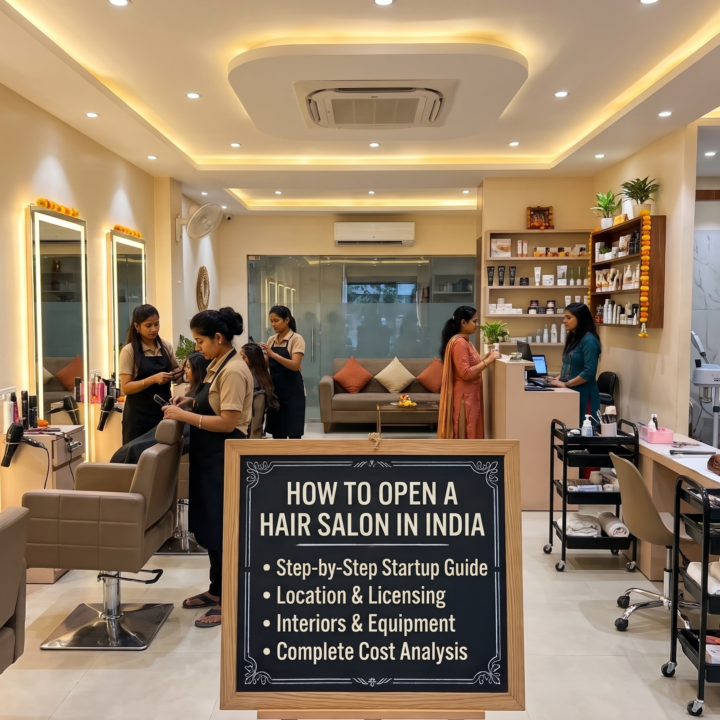
In this comprehensive guide, we will explain how to start a salon business, how much investment is required, which services generate revenue, how to manage operating expenses, and how to build a profitable salon business.
1. Understanding the Salon Business Model
Before investing in a salon, we must understand how the business generates revenue and what customers expect from professional beauty establishments.
A salon business operates by providing paid personal grooming and beauty services. Customers visit the salon for regular maintenance, special occasions, professional treatments, and personal care.
The main salon business models include:
Unisex Salon: Provides haircuts, hair colouring, styling, grooming, skincare, and beauty services for men and women.
Beauty Parlour: Primarily focuses on women’s beauty services, including facials, waxing, threading, makeup, and hair treatments.
Premium Salon: Offers luxury experiences, advanced hair treatments, premium skincare services, and personalised consultations.
Hair Studio: Specialises in haircuts, hair colouring, hair smoothening, keratin treatments, hair spa, and styling.
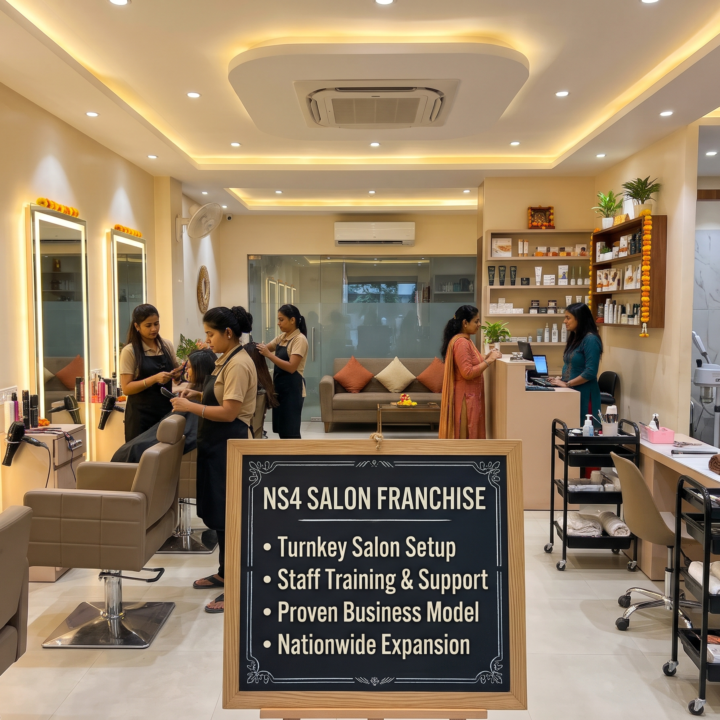
Salon Franchise: Allows entrepreneurs to operate under an established salon brand with access to branding, training, operational support, and business systems.
Choosing the right business model helps us determine the investment, target audience, required space, staffing structure, and expected revenue.
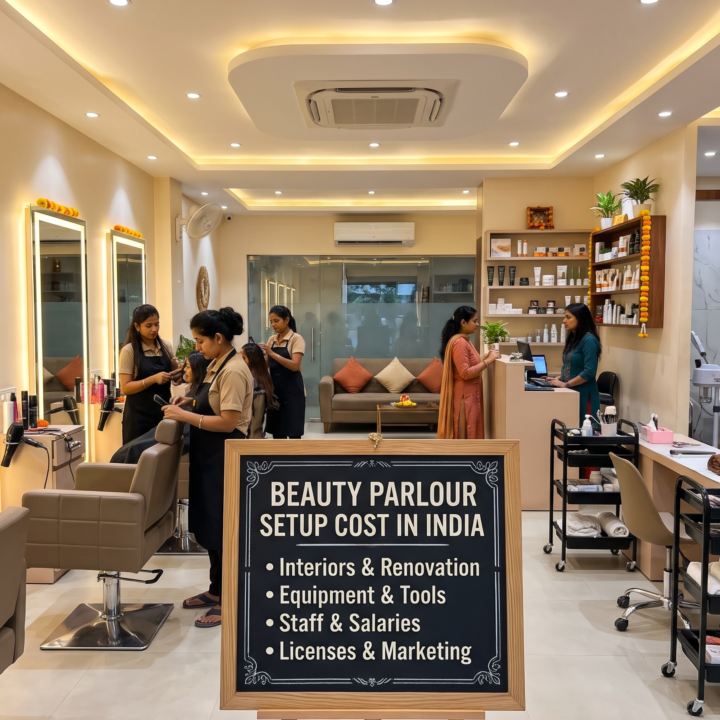
2. How Much Investment Is Required to Start a Salon Business?
One of the first questions every beginner asks is: How much money do we need to open a salon?
The investment depends on the salon’s size, location, interiors, equipment, brand positioning, and range of services.
For an Indian salon business, an approximate investment breakdown is:
| Salon Type | Estimated Investment |
|---|---|
| Small Beauty Parlour | ₹3–6 Lakhs |
| Basic Unisex Salon | ₹8–15 Lakhs |
| Professional Unisex Salon | ₹15–25 Lakhs |
| Premium Salon | ₹25–40 Lakhs |
| Luxury Salon | ₹40–75 Lakhs+ |
These are indicative planning estimates. Actual costs vary by city, property condition, equipment quality, and business requirements.
Major Investment Components
1. Shop Rent and Security Deposit
Location plays an important role in salon profitability. We should choose an area with good visibility, residential population, commercial activity, and convenient accessibility.
The initial property investment may include:
- Security deposit.
- Advance rent.
- Brokerage, if applicable.
- Electricity connection.
- Basic property modifications.
2. Salon Interior and Furniture
The salon environment directly influences customer experience and brand perception.
Essential interior requirements include:
- Reception and waiting area.
- Hair cutting stations.
- Styling mirrors.
- Salon chairs.
- Shampoo stations.
- Facial and beauty treatment beds.
- Manicure and pedicure stations.
- Storage cabinets.
- Lighting and ventilation.
- Air conditioning.
For a professional salon, interior design should balance appearance, functionality, hygiene, and customer comfort.
3. Salon Equipment and Tools
Professional equipment is necessary to maintain service quality and operational efficiency.
Some essential equipment includes:
- Hair dryers.
- Hair straighteners.
- Curling machines.
- Hair clippers and trimmers.
- Hair steamers.
- Facial steamers.
- Wax heaters.
- Manicure and pedicure equipment.
- Sterilisation equipment.
- Professional beauty tools.
We should prioritise reliable equipment that can withstand regular commercial use.
4. Professional Products and Inventory
A salon requires professional products for daily services.
These may include shampoos, conditioners, hair masks, hair colours, developers, skincare products, facial kits, waxing products, nail products, and disposable hygiene supplies.
We should maintain inventory according to service demand instead of purchasing excessive stock during the initial setup.
3. Choosing the Right Location for a Salon Business
A salon’s location can significantly influence its customer acquisition and revenue potential.
We should evaluate the following factors before finalising a commercial property:
Target Customer Population: Choose locations with sufficient residential or working populations that match the salon’s service category.
Visibility: Shops facing main roads, markets, or busy commercial areas can benefit from better brand exposure.
Accessibility: Customers should be able to reach the salon conveniently.
Parking: Parking availability can improve customer convenience, particularly for premium salons.
Competition: Study nearby salons, their pricing, services, customer reviews, and promotional strategies.
Rental Cost: The monthly rent should remain manageable in relation to expected revenue.
A good location is not necessarily the most expensive commercial property. We should focus on the relationship between customer demand, visibility, rental cost, and revenue potential.
4. Essential Services to Include in a Salon Business
Services are the primary source of salon revenue. A well-planned service menu should include regular grooming services, high-value treatments, and specialised beauty services.
Hair Services
Hair services generate recurring revenue because customers regularly require maintenance and professional care.
Popular services include:
- Haircuts and hair styling.
- Hair wash and blow-dry.
- Hair colouring and highlights.
- Global hair colour.
- Hair spa.
- Keratin treatment.
- Hair smoothening.
- Hair straightening.
- Hair repair treatments.
- Scalp treatments.
Skin and Facial Services
Skincare services help increase average customer spending and encourage repeat visits.
Popular services include:
- Basic cleanup.
- Fruit facial.
- Gold facial.
- Hydrating facial.
- Hydra facial.
- D-Tan treatment.
- Skin polishing.
- Advanced facial treatments.
- Bridal skincare packages.
Grooming Services
Regular grooming services help salons attract repeat customers.
These include:
- Men’s haircuts.
- Beard trimming.
- Shaving.
- Head massage.
- Hair wash.
- Basic grooming packages.
Nail Services
Nail services provide an additional revenue opportunity, particularly in salons targeting customers interested in premium beauty services.
These include:
- Manicure.
- Pedicure.
- Nail extensions.
- Nail art.
- Gel polish.
- Nail maintenance.
Makeup and Bridal Services
Special occasion services can generate higher-value bookings.
Our salon can offer:
- Party makeup.
- Engagement makeup.
- Bridal makeup.
- Reception makeup.
- Hairstyling.
- Pre-bridal packages.
- Complete bridal packages.
Offering multiple service categories allows us to serve different customer requirements and create several revenue streams.
5. Staff Requirements for Starting a Salon
Professional staff are one of the most important investments in a salon business.
The number of employees depends on the salon’s size, working hours, service menu, and expected customer volume.
A professional salon may require:
| Position | Main Responsibility |
|---|---|
| Salon Manager | Overall operations and staff management |
| Hair Stylist | Haircuts, colouring and treatments |
| Senior Hair Expert | Advanced hair services |
| Beautician | Facials, waxing and skincare |
| Makeup Artist | Bridal and party makeup |
| Nail Technician | Manicure, pedicure and nail extensions |
| Receptionist | Customer handling and appointments |
| Housekeeping Staff | Cleanliness and hygiene |
For a small salon, we can begin with a compact team and gradually increase staff according to customer demand.
We should also invest in regular staff training, service quality, customer communication, product knowledge, and professional behaviour.
6. Salon Business Registration and Legal Requirements in India
Before opening a salon, we should complete the necessary registrations and legal formalities applicable to the business location.
Common requirements may include:
- Business registration or constitution documentation.
- Shops and Establishments registration, as applicable under state rules.
- GST registration, where applicable.
- PAN and business bank account.
- Municipal trade licence, where applicable.
- Fire safety compliance, where required.
- Employee-related registrations and compliance, where applicable.
- Professional tax compliance, where applicable.
We should also maintain proper invoices, accounting records, salary records, supplier bills, and business expenses.
The exact requirements depend on the state, municipal authority, business structure, and applicable regulations.
7. How to Set Salon Service Prices
Pricing is an important part of salon business planning.
If prices are too low, the salon may struggle to cover expenses. If prices are too high without sufficient brand value or service quality, customers may choose competitors.
We should calculate pricing based on:
- Product consumption.
- Staff time and expertise.
- Rent and operating expenses.
- Equipment and maintenance costs.
- Local competition.
- Target customer purchasing capacity.
- Desired profit margin.
For example, an indicative salon price list could look like this:
| Service | Indicative Price |
|---|---|
| Basic Haircut | ₹200–400 |
| Hair Wash | ₹150–300 |
| Hair Spa | ₹800–2,500 |
| Global Hair Colour | ₹2,000–5,000 |
| Keratin Treatment | ₹3,000–7,000 |
| Basic Facial | ₹700–1,500 |
| Advanced Facial | ₹2,000–5,000 |
| Manicure | ₹400–800 |
| Pedicure | ₹500–1,000 |
| Party Makeup | ₹2,000–5,000 |
These are illustrative prices, not fixed market rates. Actual pricing should reflect the salon’s positioning, product brands, staff expertise, and local market.
8. Monthly Operating Expenses of a Salon
Opening a salon requires initial capital, but managing monthly expenses is equally important.
Common operating expenses include:
- Monthly rent.
- Employee salaries.
- Electricity and water bills.
- Professional product consumption.
- Marketing and advertising.
- Housekeeping supplies.
- Software and appointment management.
- Equipment maintenance.
- Internet and telephone.
- Miscellaneous expenses.
Example of Monthly Salon Expenses
Consider a professional salon with an estimated monthly revenue of ₹7,00,000.
| Expense | Monthly Amount |
|---|---|
| Shop Rent | ₹60,000 |
| Staff Salaries | ₹2,00,000 |
| Electricity | ₹25,000 |
| Product Consumption | ₹55,000 |
| Marketing | ₹20,000 |
| Miscellaneous | ₹15,000 |
| Other Operating Expenses | ₹15,000 |
| Total Expenses | ₹3,90,000 |
These figures are illustrative. Actual expenses depend on the business model, location, staffing, and service mix.
We should monitor expenses every month to identify unnecessary costs and maintain healthy operating margins.
9. How to Calculate Salon Revenue
Revenue depends on the number of customers, average customer spending, service mix, and repeat visits.
A simple formula is:
Monthly Revenue = Average Customers Per Day × Average Customer Bill × Working Days
For example:
- Average customers per day: 25.
- Average customer bill: ₹900.
- Working days: 26.
Monthly revenue:
25 × ₹900 × 26 = ₹5,85,000.
This calculation provides a basic revenue estimate.
However, actual revenue can increase through premium services, memberships, packages, bridal bookings, retail product sales, and customer retention programmes.
Revenue From Different Services
A salon should not depend on one service category.
We can generate revenue from:
- Haircuts and grooming.
- Hair colouring and treatments.
- Skin and facial services.
- Makeup and bridal bookings.
- Nail services.
- Beauty packages.
- Membership cards.
- Professional haircare and skincare products.
A diversified service menu helps reduce dependency on seasonal demand.
10. Salon Profit Calculation: How Much Can We Earn?
Revenue and profit are not the same. A salon may generate substantial sales but still have low profitability if operating expenses are not controlled.
Let’s consider an illustrative financial model.
Monthly Revenue: ₹7,00,000
Monthly Operating Expenses: ₹3,90,000
Estimated operating surplus:
₹7,00,000 − ₹3,90,000 = ₹3,10,000.
This is an operating surplus before applicable taxes, depreciation, financing costs, and any additional expenses not included in the example.
Understanding Salon Profit Margins
Salon profitability depends on:
- Service pricing.
- Product consumption.
- Employee productivity.
- Rental expenses.
- Customer retention.
- Average bill value.
- Capacity utilisation.
- Marketing efficiency.
Instead of focusing only on increasing sales, we should work on improving the profitability of every service.
For example, tracking product consumption for hair treatments and colour services can help identify services where material costs are unnecessarily high.
11. Salon Marketing Strategy to Attract More Customers
A newly opened salon needs a consistent marketing strategy to build local awareness and generate appointments.
Google Business Profile
We should create and optimise a Google Business Profile with:
- Correct salon address.
- Contact number.
- Business hours.
- Service categories.
- Professional photographs.
- Service descriptions.
- Customer reviews.
- Appointment information.
Encouraging genuine customer reviews helps build trust and improves our local online presence.
Instagram and Facebook Marketing
Social media is an important promotional channel for salons.
We can publish:
- Before-and-after transformations.
- Haircut and hair colour videos.
- Hair treatment demonstrations.
- Skincare tips.
- Customer testimonials.
- Bridal makeup transformations.
- Festival offers.
- Professional staff introductions.
- Salon interior videos.
Consistent, high-quality content helps customers understand our service standards before visiting.
Local Paid Advertising
Facebook and Instagram advertisements can help attract customers within the salon’s service area.
We can create campaigns for:
- New salon openings.
- Hair treatment offers.
- Facial packages.
- Bridal services.
- Membership programmes.
- Seasonal promotions.
Advertisements should include clear offers, professional creatives, location details, and an easy appointment-booking option.
Referral and Membership Programmes
Customer referrals and membership programmes can encourage repeat visits.
We can introduce:
- Loyalty points.
- Membership cards.
- Referral discounts.
- Birthday offers.
- Service bundles.
- Regular customer benefits.
The objective should be to build long-term customer relationships rather than depending entirely on discounts.
12. Importance of Customer Retention in Salon Business
Attracting new customers is important, but retaining existing customers is equally valuable.
Customers who trust our salon are more likely to return for haircuts, hair colouring, skincare, grooming, and maintenance treatments.
We can improve customer retention through:
Personalised Consultation: Understand customer requirements before recommending services.
Service Quality: Maintain consistent professional standards.
Appointment Reminders: Send reminders through WhatsApp or other communication channels.
Customer Records: Maintain service history, preferences, and relevant treatment details with appropriate consent.
Feedback Management: Ask customers about their experience and address genuine complaints promptly.
Loyalty Benefits: Reward repeat customers through structured membership programmes.
A salon with a strong repeat-customer base can develop more predictable monthly revenue.
13. Common Mistakes to Avoid When Starting a Salon
Many new salon businesses struggle because of poor planning and operational mistakes.
We should avoid the following:
1. Investing Too Much in Interiors
Expensive interiors do not automatically guarantee profitability. We should balance design investment with working capital.
2. Choosing the Wrong Location
A beautiful salon in a location with insufficient customer demand may struggle to achieve its sales targets.
3. Hiring Without Proper Planning
Employee salaries are recurring expenses. We should recruit according to expected customer volume and service requirements.
4. Offering Unprofitable Services
Every service should have a clear pricing structure and cost calculation.
5. Ignoring Marketing
Even a professionally designed salon needs continuous local promotion and brand visibility.
6. Poor Financial Management
We should maintain daily sales reports, expense records, inventory reports, and monthly profit-and-loss statements.
7. Depending Only on Discounts
Excessive discounting can reduce profitability and create customers who visit only when offers are available.
14. Is a Salon Franchise Better Than Starting an Independent Salon?
Entrepreneurs generally have two options: establish an independent salon or invest in an established salon franchise.
Both approaches have advantages and limitations.
| Factor | Independent Salon | Salon Franchise |
|---|---|---|
| Brand Identity | Created independently | Established brand identity |
| Investment | Depends on individual setup | Depends on franchise model |
| Training | Arranged independently | May be provided by franchisor |
| Marketing | Managed independently | May receive brand support |
| Operations | Developed by owner | May receive operating systems |
| Royalty | Usually not applicable | May be applicable |
| Business Control | Greater flexibility | Subject to franchise terms |
Advantages of an Independent Salon
- Complete control over business decisions.
- Freedom to create service packages.
- Flexibility in pricing.
- Independent branding.
- No franchise royalty in a typical independent model.
Advantages of a Salon Franchise
- Established brand recognition.
- Structured business model.
- Professional training support.
- Standardised service processes.
- Marketing guidance.
- Assistance with salon setup, depending on the agreement.
For beginners without extensive salon management experience, a well-supported franchise can provide a structured starting point.
However, before investing, we should carefully evaluate the franchise agreement, total investment, royalty structure, support commitments, brand reputation, and financial projections.
15. How to Create a Successful Salon Business Plan
A professional salon business plan should cover the following essential sections:
- Business Overview: Salon name, business model, location, and objectives.
- Market Research: Customer demand, competitors, and target audience.
- Investment Plan: Property, interiors, equipment, inventory, and working capital.
- Service Menu: Hair, skin, grooming, nail, and makeup services.
- Staffing Plan: Employee requirements, responsibilities, and salaries.
- Marketing Strategy: Digital marketing, local promotions, and customer retention.
- Financial Plan: Monthly sales targets, operating expenses, cash flow, and profitability.
- Growth Strategy: Additional services, memberships, retail products, and future expansion.
We should also prepare conservative, realistic, and optimistic financial scenarios to understand how the salon may perform under different business conditions.
16. Salon Business Growth Strategies for Long-Term Success
Once the salon becomes operational, the next objective should be sustainable growth.
We can increase revenue and improve profitability through the following strategies:
Introduce Premium Hair Treatments: Services such as keratin, smoothening, hair repair, and advanced hair spa treatments can increase average customer spending.
Develop Bridal Packages: Wedding-related services can generate higher-value bookings during the wedding season.
Sell Professional Beauty Products: Retail sales of shampoos, conditioners, serums, masks, and skincare products can create an additional revenue stream.
Introduce Salon Memberships: Membership programmes can encourage customers to return regularly.
Improve Staff Productivity: Training and performance monitoring can improve service quality and revenue per employee.
Expand Through Multiple Outlets: Once the first outlet demonstrates a stable business model, we can explore expansion into additional locations.
Build a Recognisable Brand: Consistent branding, customer experience, service quality, and marketing help create long-term business value.
17. Final Thoughts: Is Starting a Salon Business Profitable?
Starting a salon business can be a rewarding entrepreneurial opportunity when we approach it with proper planning, financial discipline, and a customer-focused mindset.
The key to building a profitable salon is not simply investing in attractive interiors or offering a large number of services. We need to understand our target market, control operating expenses, hire trained professionals, maintain service quality, and build a consistent customer base.
A successful salon business is developed through a combination of smart investment, professional services, effective marketing, customer retention, and strong financial management.
For beginners, starting with a clear business plan and realistic financial targets can reduce unnecessary risks and create a stronger foundation for future growth.
Whether we choose an independent salon or an established franchise, our long-term objective should remain the same: build a trusted beauty brand that customers want to visit again and again.
Plan Smart. Invest Wisely. Deliver Excellence. Build a Profitable Salon Business.