NS4 Salon Franchise Requirements: Space, Investment and Eligibility Guide – 15 Powerful Facts
Starting a salon business can be an exciting opportunity, especially when you enter the market with an established business system. However, before taking the next step, it is important to understand the NS4 Salon Franchise Requirements clearly.
A franchise isn’t simply about opening a salon with a brand name above the door. It requires suitable space, planned investment, the right location, basic business eligibility, trained professionals, proper infrastructure, and a willingness to follow operational standards. When these factors work together, they can create a stronger foundation for long-term business growth.
This detailed guide explains the major NS4 Salon Franchise Requirements, including franchise space options, estimated investment structures, eligibility expectations, location selection, staffing, documents, and the application process.
Whether you are a first-time entrepreneur, an existing salon owner, or an investor looking for opportunities in the beauty and wellness industry, this guide can help you understand what it takes to begin.
Understanding the NS4 Salon Franchise Opportunity
The beauty and personal care industry continues to offer opportunities because customers regularly require services such as haircuts, hair colour, hair treatments, skincare, makeup, grooming, nail services, and bridal beauty.
However, running an independent salon can be challenging. An entrepreneur may need to build the brand, develop service standards, recruit staff, train professionals, create marketing systems, and earn customer trust from scratch.
A franchise model can make this journey more structured.
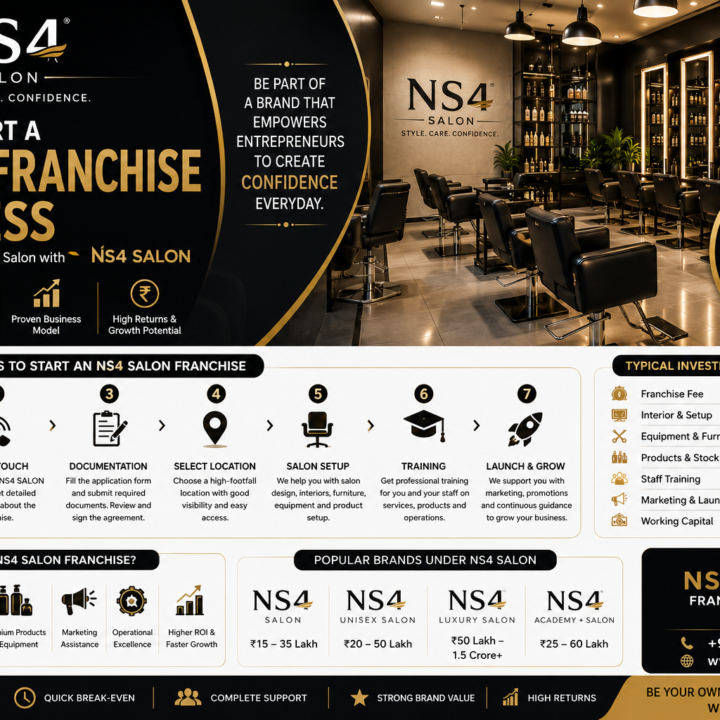
NS4 Salon offers different salon formats designed to suit different space and investment capacities. The broad franchise structure includes Luxury, Premium, and Studio formats.
The three formats allow potential franchise partners to consider a model based on their local market, available commercial property, and financial capacity.
Understanding the NS4 Salon Franchise Requirements before investing is essential because the right format can affect operational efficiency, customer experience, and future growth.
A successful franchise partner should focus on more than the initial franchise fee. They should also consider the overall setup, interiors, equipment, staffing, working capital, local demand, and day-to-day business management.
In simple terms, the goal is to choose a business model that fits both the location and the entrepreneur.
Why Franchise Requirements Matter
Franchise requirements help maintain consistency across locations. Customers generally expect a recognizable standard when they visit a branded salon.
For this reason, factors such as salon size, layout, interiors, service stations, staff training, hygiene, technology, and customer service can play an important role.
Meeting the NS4 Salon Franchise Requirements can help a new outlet begin with a clearer roadmap.
Here are some key reasons why these requirements matter:
- They help determine the correct franchise model.
- They support better space planning.
- They help estimate the required capital.
- They improve location selection.
- They support consistent customer experiences.
- They make staff and infrastructure planning easier.
- They reduce the chances of making costly decisions too early.
Simply put, good preparation can save both time and money. As the saying goes, “measure twice, cut once.” That approach is especially useful when planning a salon franchise.
1. Space Requirements for an NS4 Salon Franchise
One of the first NS4 Salon Franchise Requirements is identifying the right commercial space.
The amount of space needed depends on the franchise format. A larger format can accommodate more service areas, while a smaller studio model may focus on efficient use of available space.
Luxury Salon Space Model
The Luxury model generally requires approximately 2,000 to 3,000 square feet of space.
This format is suitable for entrepreneurs who want to create a larger salon experience with the capacity for multiple service categories.
A larger location may allow space for:
- Multiple hair styling stations
- Shampoo and hair wash areas
- Hair treatment sections
- Skin and facial rooms
- Makeup areas
- Nail service sections
- Pedicure and manicure facilities
- Reception and waiting areas
- Staff and storage spaces
- Premium customer experience zones
The biggest advantage of a larger space is flexibility. Different services can be organized into dedicated areas, which can improve the customer journey and help the team work more efficiently.
However, entrepreneurs should remember that bigger isn’t always better. The location must also have sufficient local demand to support the larger format.
Premium Salon Space Model
The Premium model generally requires approximately 1,000 to 1,500 square feet.
This can be a suitable option for busy urban markets and commercial areas where a full-service salon is needed but a very large property isn’t practical.
A Premium salon can be designed to provide a broad range of beauty and grooming services while maintaining efficient use of space.
The layout should be carefully planned so that customers and staff can move comfortably between service areas.
Important considerations include:
- Front-facing visibility
- Easy customer access
- Adequate lighting
- Water and drainage facilities
- Electrical capacity
- Comfortable service spacing
- Storage areas
- Clean reception and waiting space
Studio Salon Space Model
The Studio model generally requires approximately 600 to 800 square feet.
This format may suit entrepreneurs who want to enter the salon industry with a comparatively smaller commercial space.
Although the space is smaller, professional planning is still important. Every square foot should be used efficiently.
A Studio salon may focus on core high-demand services such as:
- Haircuts
- Hair styling
- Hair colour
- Hair treatments
- Basic skin services
- Makeup
- Grooming services
The Studio format can be particularly useful where commercial space is limited or where the entrepreneur wants a more compact business model.
Among all NS4 Salon Franchise Requirements, choosing the correct space category is one of the most important decisions because changing the format after major construction can be expensive.
2. NS4 Salon Franchise Investment Requirements
Investment planning is another major part of the NS4 Salon Franchise Requirements.
The franchise format should match the entrepreneur’s available budget and business goals.
The overall business investment may include franchise fees, applicable taxes, interiors, equipment, furniture, technology, initial inventory, staffing, licenses, deposits, marketing, and working capital.
The franchise fee structure associated with the three models includes the following.
Luxury Model Investment
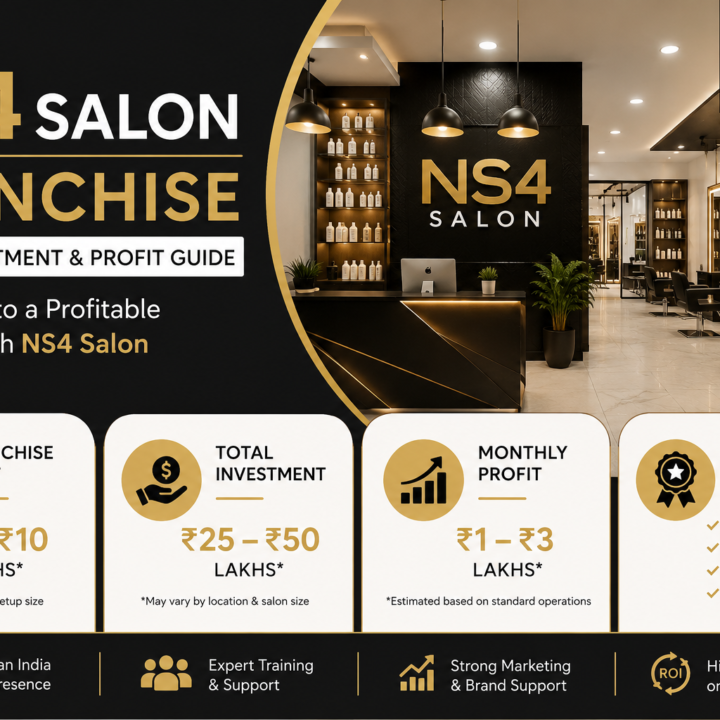
The Luxury model has a franchise fee of approximately ₹7 lakh plus applicable GST.
This model is designed around a larger space of approximately 2,000 to 3,000 square feet.
Because the outlet is larger, the complete business setup may require additional investment beyond the franchise fee. Entrepreneurs should plan for interiors, salon equipment, furniture, staffing, technology, local operating costs, and working capital.
Premium Model Investment
The Premium model has a franchise fee of approximately ₹5 lakh plus 18% GST.
It is designed for approximately 1,000 to 1,500 square feet of commercial space.
This format may offer a balance between service capacity and setup size. However, a detailed financial plan is still necessary before signing a franchise agreement.
Studio Model Investment
The Studio model has a franchise fee of approximately ₹3 lakh plus applicable GST.
It generally requires approximately 600 to 800 square feet of space.
This can be a practical entry format for entrepreneurs with suitable smaller commercial properties and a focused business plan.
The key point is simple: franchise fee and total business investment aren’t always the same thing.
Before investing, applicants should understand the complete expected financial requirement.
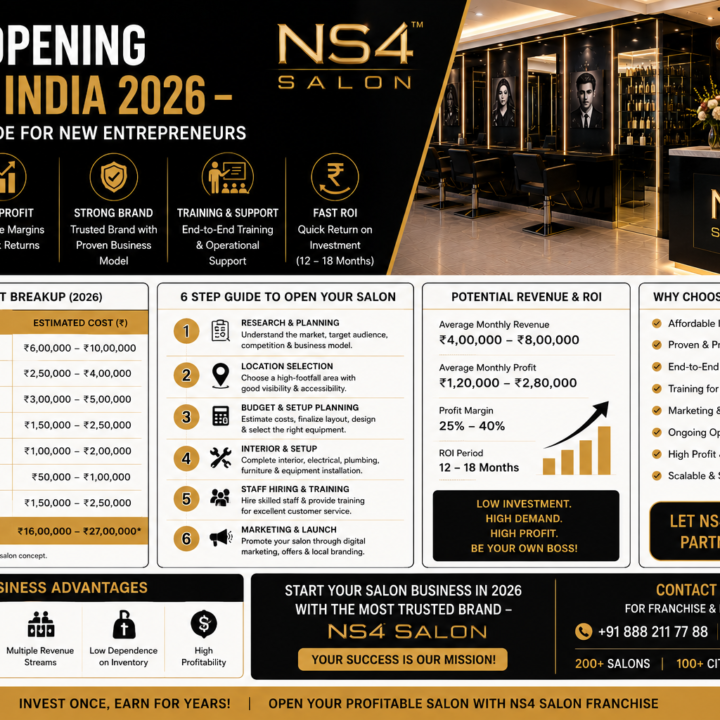
A practical budget may include the following categories:
| Investment Area | Purpose |
|---|---|
| Franchise Fee | Brand and franchise entry |
| GST | Applicable taxes |
| Commercial Deposit | Property-related security deposit |
| Interior Setup | Salon design and finishing |
| Furniture | Chairs, reception, waiting and storage |
| Equipment | Professional salon tools and machines |
| Products | Initial professional and retail stock |
| Staff Costs | Recruitment and initial salaries |
| Technology | Billing and operational systems |
| Marketing | Local launch and promotion |
| Working Capital | Day-to-day business expenses |
Good financial planning is crucial. Don’t put every rupee into interiors and then struggle to manage the first few months of operations.
3. Location Eligibility and Selection
A good location can support customer visibility and business accessibility.
For an NS4 Salon franchise, the property should ideally be evaluated based on the surrounding market.
Potential factors include:
- Residential population nearby
- Commercial activity
- Visibility from the road
- Parking availability
- Accessibility
- Competition in the area
- Customer spending potential
- Nearby markets and landmarks
- Local demand for beauty services
A property with excellent interiors but poor accessibility may face challenges. Similarly, a highly visible property with rent that is too high may place unnecessary pressure on the business.
Therefore, location selection should involve both opportunity and affordability.
Before finalizing a property, applicants should consider whether the space can support the required layout and operational needs.
For additional franchise information, prospective partners can visit the official NS4 Salon franchise platform: franchise.ns4salon.com.
4. Who Can Apply for an NS4 Salon Franchise?
Many people assume they need years of salon experience before entering the industry. In reality, practical business ability, commitment, financial readiness, and willingness to learn can be equally important.
Experience Requirements
Previous salon experience can be helpful, but business success also depends on management, customer service, team leadership, and following operational systems.
Potential franchise applicants may include:
- Entrepreneurs
- Existing salon owners
- Business investors
- Professionals seeking a new business opportunity
- Individuals with suitable commercial property
- Families planning a managed business venture
The most important factor is commitment to operating the business professionally.
Financial Eligibility
An applicant should have the financial ability to support the chosen franchise model.
This means considering:
- Initial franchise costs
- Setup costs
- Commercial rent or property expenses
- Staff salaries
- Monthly operating expenses
- Marketing requirements
- Emergency reserves
- Working capital
Borrowed capital may also require careful planning because loan repayments can affect monthly cash flow.
Management Ability
A salon requires regular attention. Staff schedules, customer satisfaction, inventory, hygiene, service quality, billing, and marketing all need monitoring.
Therefore, one of the practical NS4 Salon Franchise Requirements is the ability to manage or appoint someone capable of managing daily operations responsibly.
5. Infrastructure and Interior Requirements
Salon infrastructure affects both service quality and customer perception.
A professional salon should have a functional and attractive environment. However, design should never sacrifice practicality.
Important infrastructure areas may include:
- Reception
- Waiting area
- Styling stations
- Mirrors and professional lighting
- Shampoo stations
- Service rooms
- Storage
- Staff area
- Product display
- Electrical fittings
- Plumbing
- Water supply
- Drainage
- Ventilation
- Air conditioning where required
The layout should allow staff to perform services comfortably and safely.
For example, wet areas need appropriate plumbing, while hair colour and treatment areas require suitable storage and work surfaces.
Interior execution should follow approved business and brand standards where applicable. This helps create a more consistent identity across franchise locations.
6. Team and Staffing Requirements
People are at the heart of the salon business.
Even the best location and interiors won’t create customer loyalty if the service experience is poor.
A franchise outlet may require professionals based on its size and service menu, such as:
- Hair stylists
- Senior stylists
- Beauticians
- Makeup artists
- Nail technicians
- Therapists
- Reception staff
- Salon managers
- Housekeeping staff
Staffing needs will naturally differ between Studio, Premium, and Luxury formats.
Recruitment should focus on both technical skills and customer behavior.
Training is equally important because salon customers often judge the complete experience, not just the final hairstyle or facial.
A friendly greeting, proper consultation, hygiene, punctuality, service knowledge, and professional communication can make a big difference.
7. Technology and Operational Requirements
Modern salon businesses benefit from organized technology.
Depending on the operating system, technology may support:
- Appointment scheduling
- Customer records
- Billing
- Service history
- Inventory monitoring
- Sales reports
- Staff performance tracking
- Customer communication
A franchise owner should understand basic business reports and numbers.
For example, monthly revenue alone doesn’t show whether a salon is profitable.
The owner should monitor expenses, staff costs, product usage, rent, promotions, repeat customers, and service performance.
In other words, what gets measured can be managed.
8. Training Requirements for Franchise Owners
Training can help franchise owners understand how the business model works.
A strong franchise system should help partners become familiar with key operational areas, such as:
- Service standards
- Customer handling
- Team management
- Hygiene practices
- Sales techniques
- Product knowledge
- Daily operations
- Brand presentation
- Marketing support
- Reporting procedures
Owners don’t necessarily need to perform every salon service themselves. However, they should understand the standards expected from the team.
Training can also help reduce the learning curve for new business owners.
9. Understanding the Investment Breakdown
Before proceeding, applicants should prepare a realistic business budget.
Here’s a simple planning approach.
Step 1: Calculate the Franchise Cost
Identify the applicable franchise fee and taxes for the selected model.
Step 2: Estimate Property Expenses
Consider rent, security deposits, brokerage, renovation, and other property-related costs.
Step 3: Estimate Setup Costs
Calculate the likely cost of interiors, furniture, professional equipment, and technology.
Step 4: Plan Staffing Costs
Estimate recruitment, salaries, uniforms, and training-related expenses.
Step 5: Keep Working Capital
Set aside funds for the initial operating period.
This step is often overlooked. A salon may need time to build regular customer traffic, so working capital planning can provide valuable stability.
10. Documents Required for Franchise Application
The exact document list may depend on the application process and applicable legal requirements.
Common business documents may include:
- Identity proof
- Address proof
- PAN details
- Business information
- Property ownership or rental documents
- Commercial property details
- Financial information where required
- GST details, if applicable
- Company or partnership documents, where applicable
Applicants should provide accurate information and complete documentation.
If a commercial property has already been shortlisted, basic property photographs, location details, and floor area information may also help during evaluation.
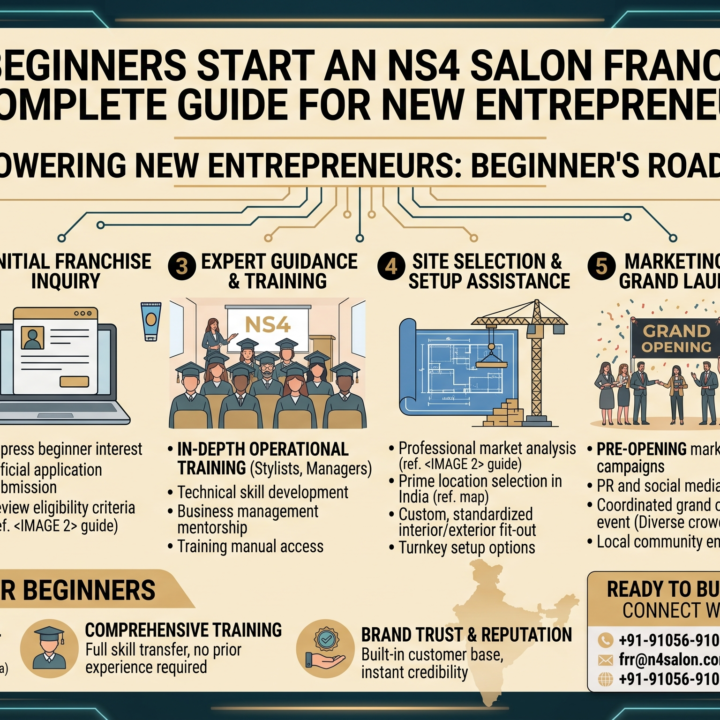
11. Steps to Apply for an NS4 Salon Franchise
The franchise process can generally be approached step by step.
Step 1: Understand the Business Model
Review the available formats and identify the model that fits your budget and space.
Step 2: Check Your Location
Evaluate whether you have an existing property or need to find one.
Step 3: Discuss Eligibility
Share relevant information about your proposed city, property, investment capacity, and business goals.
Step 4: Select the Suitable Model
Choose between the Luxury, Premium, or Studio format based on approved requirements and business planning.
Step 5: Complete Documentation
Submit the required documents and business details.
Step 6: Plan the Setup
After moving forward, plan the property, layout, interiors, equipment, and staffing.
Step 7: Prepare the Team
Recruit suitable professionals and complete required training.
Step 8: Launch and Operate
Begin operations with a strong focus on customer experience, service quality, local marketing, and regular business monitoring.
This structured process can make the NS4 Salon Franchise Requirements easier to understand and implement.
12. Franchise Support Available to Partners
Franchise support can help entrepreneurs operate with more structure.
Depending on the franchise agreement and selected business model, support may involve areas such as:
- Brand guidance
- Setup planning
- Interior direction
- Operational guidance
- Training
- Service standards
- Marketing guidance
- Launch support
- Business development assistance
Before making a decision, every applicant should ask clear questions about the exact support available.
It is always better to understand responsibilities on both sides before signing any agreement.
13. Common Mistakes to Avoid Before Investing
Avoiding common mistakes can protect your investment.
Choosing a Property Too Quickly
Don’t finalize a property only because the rent looks attractive. Evaluate visibility, accessibility, local demand, and layout suitability.
Underestimating Total Investment
Remember to calculate more than the franchise fee.
Ignoring Working Capital
Opening day isn’t the finish line. The business needs financial support during its early operations.
Hiring Without Training
Technical ability matters, but customer service and standardization matter too.
Spending Too Much on Non-Essential Items
Focus first on operational essentials and customer experience.
Expecting Instant Success
A new salon usually needs consistent service, marketing, customer retention, and strong management to build momentum.
There is no magic wand. Sustainable business growth takes planning and regular effort.
14. How to Check if You Are Eligible
You can perform a simple self-assessment before applying.
Ask yourself:
- Do I have access to suitable commercial space?
- Can I arrange the required investment?
- Have I planned setup costs beyond the franchise fee?
- Do I understand the local market?
- Can I manage the business personally or appoint a capable manager?
- Am I prepared to recruit and manage a professional team?
- Can I maintain working capital?
- Am I willing to follow operational and brand standards?
- Have I reviewed the legal and commercial terms carefully?
- Do I have a long-term approach to business growth?
If most answers are yes, you may be in a stronger position to explore the opportunity.
The next step is to discuss your proposed location and investment plan directly with the franchise team.
Frequently Asked Questions
1. What are the main NS4 Salon Franchise Requirements?
The main requirements generally include suitable commercial space, sufficient investment capacity, an appropriate location, required documentation, infrastructure readiness, staffing plans, and the ability to follow operational standards.
2. How much space is required for an NS4 Salon franchise?
The Luxury model generally requires around 2,000 to 3,000 square feet, the Premium model around 1,000 to 1,500 square feet, and the Studio model around 600 to 800 square feet.
3. What is the NS4 Salon franchise fee?
The franchise fee structure includes approximately ₹7 lakh plus applicable GST for the Luxury model, ₹5 lakh plus 18% GST for the Premium model, and ₹3 lakh plus applicable GST for the Studio model. Applicants should also plan separately for other business setup and operating costs.
4. Do I need previous salon experience to apply?
Previous salon experience can be useful, but applicants may also come from entrepreneurship, investment, management, or other business backgrounds. A willingness to learn and manage the business professionally is important.
5. Is the franchise fee the total investment required?
No. The franchise fee is only one part of the financial requirement. Other costs may include property deposits, interiors, furniture, equipment, products, staffing, technology, marketing, licenses, and working capital.
6. Can I open an NS4 Salon franchise in a smaller space?
The Studio model is designed for approximately 600 to 800 square feet, subject to suitability and the applicable franchise evaluation.
7. What type of location is best for a salon franchise?
A good location should ideally offer customer accessibility, visibility, suitable surrounding demand, and a commercially practical property. Residential and commercial market potential should both be evaluated.
8. What documents may be required for a franchise application?
Common documents may include identity proof, address proof, PAN information, business details, and commercial property documents. The final requirements may vary depending on the application and business structure.
9. Does NS4 Salon provide franchise support?
Franchise support may include guidance in areas such as brand standards, setup, operations, training, and marketing. Applicants should confirm the exact scope of support during the franchise discussion and agreement process.
10. How can I determine which NS4 Salon franchise model is right for me?
Compare your available commercial space, total investment capacity, target market, management ability, and long-term business goals. A detailed discussion with the franchise team can help identify the most suitable model.
Conclusion: Is an NS4 Salon Franchise Right for You?
Understanding the NS4 Salon Franchise Requirements is the first step toward making a more informed business decision.
The opportunity isn’t only about arranging a franchise fee. A successful salon setup requires the right combination of space, investment, location, infrastructure, staff, training, technology, and business commitment.
The three available formats—Luxury, Premium, and Studio—provide different options for different business capacities. A larger investment may support a wider service experience, while a compact model can offer a focused route into the beauty and wellness industry.
Before moving forward, evaluate your total budget carefully. Check your commercial property, study your local market, calculate setup and operating costs, and maintain adequate working capital.
Most importantly, approach the decision with a long-term mindset.
A salon franchise can offer a structured path into the beauty business, but lasting results depend on strong execution. Good customer service, trained staff, smart management, local marketing, and consistent quality can all play an important role in business growth.
If you meet the essential NS4 Salon Franchise Requirements and are ready to build a professionally managed beauty business, exploring the appropriate NS4 Salon franchise model could be a valuable next step.
Ready to explore your salon franchise opportunity? Evaluate your space, prepare your investment plan, and take the first step toward building a professional beauty business with NS4 Salon.