Introduction: Is a Salon Business Profitable in India?
The beauty and wellness industry in India is growing rapidly, creating exciting opportunities for entrepreneurs who want to establish a profitable business. With increasing awareness of personal grooming, professional haircare, skincare, bridal makeup, and beauty treatments, salons have become an important part of everyday life.
One of the most common questions among aspiring entrepreneurs is: How much can a salon owner earn monthly in India?
The answer depends on several factors, including salon location, investment, services offered, customer footfall, staff management, pricing strategy, and operating expenses. A small neighbourhood salon may generate a few thousand rupees in daily sales, while a well-established premium unisex salon can generate several lakhs in monthly revenue.
A properly managed salon business can potentially achieve a net profit margin of approximately 15%–30%, depending on its business model and operating efficiency. However, these figures are indicative rather than guaranteed industry averages.
In this comprehensive guide, we will explore salon business profit margins in India, monthly income possibilities, operating expenses, revenue calculations, and practical strategies to increase profitability.
1. How Much Does a Salon Owner Earn Monthly in India?
A salon owner’s monthly income depends primarily on the salon’s revenue and total operating expenses.
For example, a salon generating ₹5 lakh in monthly revenue does not necessarily mean its owner earns ₹5 lakh. The business must first pay salaries, rent, electricity bills, product costs, marketing expenses, maintenance charges, and other operational costs.
Here is an illustrative earning comparison:
| Salon Type | Monthly Revenue | Estimated Net Profit |
|---|---|---|
| Small Beauty Parlour | ₹1–2 Lakh | ₹15,000–₹40,000 |
| Budget Unisex Salon | ₹2–4 Lakh | ₹30,000–₹80,000 |
| Mid-Range Unisex Salon | ₹4–7 Lakh | ₹60,000–₹1.40 Lakh |
| Premium Salon | ₹8–15 Lakh | ₹1.20–₹3 Lakh |
| Luxury Salon | ₹15–25 Lakh | ₹2.25–₹5 Lakh |
These are hypothetical examples based on different revenue and profit assumptions. Actual earnings vary according to location, business size, customer demand, and management.
The important point is that salon profitability depends on how efficiently the business converts customer bookings into revenue while controlling expenses.
2. Understanding Salon Business Profit Margin in India
Before starting a salon, entrepreneurs should understand three important financial terms.
Gross Profit Margin: This is the amount remaining after deducting direct service-related expenses, such as beauty products and service commissions, from revenue.
Operating Profit: This is the amount remaining after deducting regular operating expenses, including rent, salaries, electricity, marketing, and administration.
Net Profit Margin: This represents the actual profit remaining after accounting for business expenses and other applicable costs.
For example, if a salon generates ₹5,00,000 in monthly revenue and its total expenses are ₹4,00,000, the remaining profit is ₹1,00,000.
Net Profit Margin = (Net Profit ÷ Total Revenue) × 100
Net Profit Margin = (₹1,00,000 ÷ ₹5,00,000) × 100
Net Profit Margin = 20%
This means the salon generates ₹20 in net profit for every ₹100 of revenue.
3. Monthly Expenses of Running a Salon in India
Understanding monthly expenses is essential for calculating the actual profitability of a salon business.
Even a salon with excellent customer footfall can struggle financially if its expenses are not managed properly.
The major operating expenses include:
A. Shop Rent
Location plays an important role in determining salon expenses.
A salon located in a premium commercial market may have significantly higher rental expenses than one operating in a residential neighbourhood.
Approximate monthly rental assumptions:
- Small-town salon: ₹10,000–₹25,000
- Tier-2 city salon: ₹20,000–₹50,000
- Metro city salon: ₹40,000–₹1,00,000+
- Premium commercial location: ₹1,00,000 or more
These figures are illustrative and depend on the property’s size, location, and commercial demand.
B. Staff Salaries
Professional staff are among the most important assets of a salon.
A typical salon may require:
- Senior hairstylist
- Junior hairstylist
- Beautician
- Makeup artist
- Receptionist
- Assistant staff
- Salon manager
Monthly salary expenses depend on employee experience, service quality, and the size of the salon.
Business owners should also consider performance incentives and commissions when calculating staff costs.
C. Beauty Products and Consumables
Salons regularly purchase professional products for different services.
These include:
- Hair colour and developer
- Keratin and hair spa products
- Haircare shampoos and conditioners
- Facial kits
- Waxing products
- Skin treatment products
- Manicure and pedicure products
- Professional styling products
Proper inventory management helps reduce unnecessary product consumption and wastage.
D. Electricity and Maintenance
Air conditioning, hair dryers, straighteners, steamers, washing machines, lighting, and professional salon equipment contribute to electricity expenses.
Regular maintenance is also necessary to maintain equipment performance and customer satisfaction.
E. Marketing and Advertising
A salon must continuously attract new customers while maintaining relationships with existing clients.
Marketing expenses may include:
- Instagram and Facebook promotions
- Google Business Profile management
- Local advertising
- Influencer collaborations
- Festival offers
- Promotional banners
- Customer referral programmes
Marketing should be treated as a business investment rather than an unnecessary expense.
4. Realistic Monthly Profit Calculation for a Mid-Size Salon
Let us understand the earning potential through an illustrative financial example.
Suppose an entrepreneur operates a mid-size unisex salon in a developing commercial location.
Estimated Monthly Revenue: ₹6,00,000
| Particulars | Monthly Amount |
|---|---|
| Hair Services | ₹2,00,000 |
| Skin and Facial Services | ₹1,20,000 |
| Hair Treatments | ₹1,00,000 |
| Grooming Services | ₹70,000 |
| Bridal and Makeup Services | ₹60,000 |
| Product Sales | ₹50,000 |
| Total Revenue | ₹6,00,000 |
Now calculate the monthly expenses.
| Expenses | Monthly Amount |
|---|---|
| Staff Salaries and Incentives | ₹1,50,000 |
| Shop Rent | ₹45,000 |
| Beauty Products | ₹65,000 |
| Electricity and Water | ₹20,000 |
| Marketing | ₹15,000 |
| Maintenance | ₹10,000 |
| Other Expenses | ₹15,000 |
| Total Expenses | ₹3,20,000 |
Estimated Monthly Operating Surplus: ₹2,80,000
This figure is before accounting for any additional costs not included in the example, such as owner compensation, depreciation, finance costs, applicable taxes, and other business liabilities.
Therefore, the actual take-home profit may be lower.
This calculation demonstrates why business owners should maintain proper financial records instead of estimating earnings only from daily collections.
5. Which Salon Services Generate the Highest Revenue?
A successful salon should offer a combination of regular grooming services and higher-value professional treatments.
Different services attract different customer segments and contribute differently to monthly revenue.
Haircut and Hairstyling
Haircuts and hairstyling generate regular customer visits.
Customers frequently return for trimming, styling, blow-drying, and other hair services.
These services help establish long-term customer relationships.
Hair Colouring and Highlights
Hair colouring, global colour, highlights, balayage, and other transformation services can generate higher-value bookings.
Professional consultation and product selection are important for maintaining customer satisfaction.
Keratin and Hair Smoothening
Hair treatments such as keratin, botox, and smoothening attract customers looking for specialised haircare solutions.
These services can increase the average customer bill and create opportunities for repeat appointments.
Facial and Skin Treatments
Facials, clean-ups, detanning, and specialised skincare services help salons attract customers interested in regular beauty maintenance.
Bridal Makeup and Party Makeup
Bridal makeup can generate significant revenue through individual bookings and complete bridal packages.
Wedding seasons, festivals, and special occasions can create additional business opportunities.
Manicure and Pedicure
Nail care, manicure, pedicure, and foot treatments provide additional revenue opportunities while improving the overall service experience.
6. How to Increase Salon Business Profit Margin
Generating more revenue is important, but increasing profitability requires better business management.
Here are practical strategies that salon owners can implement.
A. Increase Repeat Customers
Repeat customers provide a more stable source of revenue.
A salon should maintain customer records, service histories, preferences, and appointment schedules.
WhatsApp reminders, birthday offers, membership benefits, and personalised recommendations can encourage repeat visits.
B. Introduce Attractive Service Packages
Service packages can increase the average customer bill.
For example:
- Haircut + Hair Spa Package
- Facial + Detan Package
- Hair Colour + Hair Treatment Package
- Bridal Makeup Package
- Grooming and Skin Care Package
Packages should be designed carefully so that discounts do not reduce profitability unnecessarily.
C. Improve Staff Productivity
Every stylist and beautician should have clear performance targets.
Business owners can monitor:
- Daily customer appointments
- Revenue per employee
- Service completion time
- Customer feedback
- Repeat booking percentage
- Product consumption
Improving employee productivity can increase revenue without requiring a major expansion.
D. Control Product Wastage
Professional salon products can represent a considerable operating expense.
Maintain stock registers, monitor product usage, and train staff to use the correct quantities.
This helps prevent unnecessary purchases and improves financial performance.
E. Build a Strong Online Presence
Customers frequently search online before selecting a salon.
A professional digital presence helps businesses attract local customers.
Focus on:
- Google Business Profile optimisation
- Local SEO
- Customer reviews
- Instagram Reels
- Before-and-after transformations
- Professional service photographs
- Location-based keywords
Consistent online activity can improve brand awareness and local customer discovery.
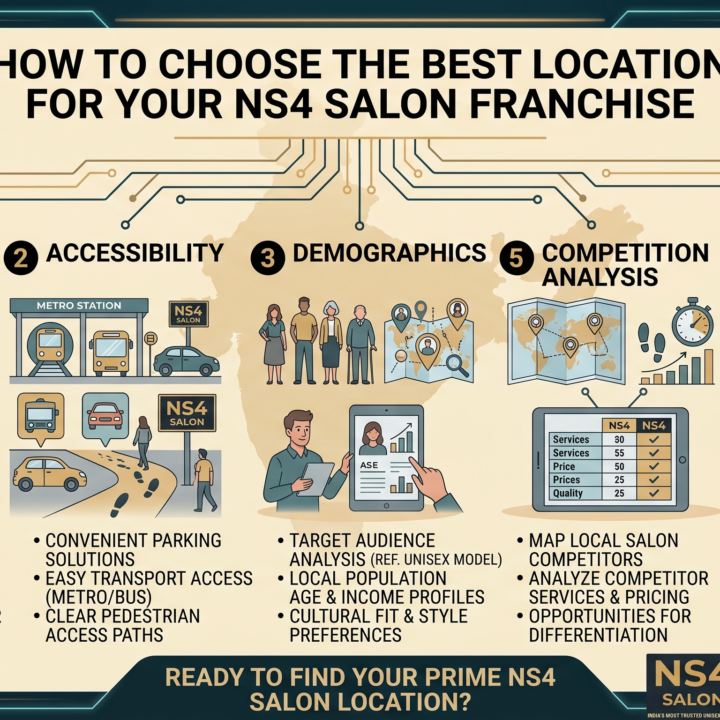
7. Does Salon Location Affect Monthly Profit?
Yes. Location is one of the most important factors affecting salon revenue.
A salon in a busy commercial market may attract more walk-in customers, while a residential location may benefit from regular customers living nearby.
Before finalising a location, evaluate:
- Local population and customer demographics.
- Nearby residential societies.
- Commercial market activity.
- Competitor salons.
- Parking availability.
- Visibility from the main road.
- Rental costs.
- Purchasing power of potential customers.
Entrepreneurs should not select a location only because it has high footfall.
The location must also support the salon’s pricing strategy and customer segment.
8. How Much Investment Is Required to Start a Salon Business in India?
The initial investment depends on the salon format, location, interior design, equipment, and professional requirements.
Here is an illustrative investment comparison:
| Salon Format | Estimated Investment |
|---|---|
| Small Beauty Parlour | ₹3–7 Lakh |
| Compact Unisex Salon | ₹8–15 Lakh |
| Mid-Size Unisex Salon | ₹15–30 Lakh |
| Premium Salon | ₹30–50 Lakh |
| Luxury Salon | ₹50 Lakh–₹1 Crore+ |
These are broad planning estimates, not fixed market prices or franchise quotations.
The investment generally covers:
- Interior designing and renovation
- Salon furniture
- Styling stations
- Professional equipment
- Washing stations
- Reception area
- Initial product inventory
- Staff recruitment and training
- Branding and marketing
- Security deposit
- Working capital
Entrepreneurs should maintain sufficient working capital because a newly opened salon may take time to build a stable customer base.
9. Is a Salon Franchise More Profitable Than an Independent Salon?
Entrepreneurs planning to enter the beauty industry often compare two business models: starting an independent salon or investing in a salon franchise.
Both models offer opportunities, but their operational requirements are different.
Independent Salon Business
An independent salon allows the owner to control branding, pricing, service selection, recruitment, and marketing.
However, the owner must independently develop the business model, establish brand recognition, create operational procedures, and attract customers.
Salon Franchise Business
A salon franchise provides access to an established brand identity and a structured business model.
Depending on the franchise agreement, the support may include:
- Salon setup guidance
- Interior and branding assistance
- Staff training
- Service protocols
- Marketing support
- Business development guidance
- Operational systems
- Professional product recommendations
A franchise does not guarantee profitability. The actual results depend on location, investment, customer demand, operational execution, and the terms of the agreement.
Why Entrepreneurs Consider NS4 Salon
NS4 Salon offers an opportunity for entrepreneurs interested in entering the professional salon industry through a structured salon business model.
For individuals who want to establish a salon but lack experience in salon operations, professional guidance and training can be valuable.
Before selecting any franchise, entrepreneurs should carefully evaluate the brand’s business model, investment requirements, franchise fees, ongoing charges, training support, marketing assistance, and existing outlet performance.
Choosing the right franchise partner can help entrepreneurs approach salon ownership with better preparation and a clearer operational strategy.
10. How Long Does It Take for a Salon to Become Profitable?
A new salon does not usually achieve its full revenue potential immediately after opening.
The business must develop customer awareness, build trust, establish service quality, and generate repeat bookings.
An illustrative development timeline may look like this:
First 3 Months: Focus on brand awareness, introductory promotions, customer acquisition, and service quality.
3–6 Months: Develop repeat customers, improve staff productivity, and establish regular appointment bookings.
6–12 Months: Strengthen customer retention, improve monthly revenue, and optimise operational expenses.
After 12 Months: Evaluate profitability, customer loyalty, service performance, and opportunities for business expansion.
These are planning stages, not guaranteed profitability milestones. Some businesses may achieve break-even earlier, while others may require additional time.
11. Common Mistakes That Reduce Salon Profitability
Even a salon with good revenue can experience financial difficulties because of poor management.
Avoid these common mistakes:
1. Choosing an Expensive Location: High rent can significantly reduce monthly profits.
2. Hiring Without Proper Planning: Excessive staffing increases fixed expenses.
3. Offering Unnecessary Discounts: Heavy discounts can attract customers but reduce contribution margins.
4. Ignoring Customer Retention: Constantly acquiring new customers can be more expensive than maintaining existing relationships.
5. Poor Inventory Management: Uncontrolled product consumption increases operating costs.
6. Lack of Financial Tracking: Without monthly profit-and-loss statements, owners may not identify financial problems early.
7. Inconsistent Service Quality: Customers expect professional results and consistent service standards.
Avoiding these mistakes can help salon owners build a more financially stable business.
12. Future of the Salon Business in India
The Indian beauty and wellness industry offers opportunities across multiple customer segments.
Consumers are increasingly interested in professional haircare, skincare, grooming, bridal services, and specialised beauty treatments.
Several developments are creating opportunities for salon entrepreneurs:
- Increasing demand for professional grooming.
- Growing interest in premium hair treatments.
- Expansion of organised salon chains.
- Greater awareness of professional beauty products.
- Increasing use of online appointment platforms.
- Growth of beauty education and professional training.
- Demand for personalised customer experiences.
For entrepreneurs, this creates opportunities to establish businesses that combine professional services, quality management, and strong customer relationships.
13. Frequently Asked Questions About Salon Business Profit Margin in India
Q1. How much does a small salon owner earn monthly in India?
A small salon owner may generate monthly revenue of approximately ₹1–2 lakh. Depending on operating expenses and customer demand, the business may generate an illustrative net profit of ₹15,000–₹40,000.
Q2. Is a salon business profitable in India?
Yes, a salon business can be profitable when it has a suitable location, competitive pricing, trained staff, consistent service quality, and effective expense management.
Q3. What is the average salon business profit margin in India?
There is no single verified profit-margin figure applicable to every Indian salon. A well-managed salon may target a net profit margin of approximately 15%–30%, depending on its format and operating costs.
Q4. How much investment is required to open a unisex salon?
A compact unisex salon may require approximately ₹8–15 lakh, while a mid-size or premium salon may require ₹15–50 lakh or more.
Q5. Which salon services are most profitable?
Hair colouring, highlights, keratin treatments, smoothening, bridal makeup, specialised facials, and other premium services can generate higher-value bookings. Their profitability depends on product consumption, staff costs, pricing, and demand.
Q6. Can a salon generate ₹1 lakh profit per month?
Yes. A salon generating sufficient monthly revenue while maintaining controlled operating expenses can potentially achieve ₹1 lakh in monthly net profit.
Q7. Is a salon franchise a good investment?
A salon franchise may be suitable for entrepreneurs who prefer an established brand identity and structured operational support. However, investment decisions should be based on financial projections, franchise terms, and realistic local market demand.
Q8. How can I increase my salon’s monthly revenue?
Focus on customer retention, premium services, service packages, online marketing, staff productivity, professional training, and customer referrals.
Conclusion: Build a Profitable Salon Business in India
The salon industry offers promising opportunities for entrepreneurs who understand the importance of professional services, customer satisfaction, financial planning, and business management.
However, salon business profitability is not determined by revenue alone. Successful salon owners focus on increasing repeat bookings, controlling operating expenses, improving staff productivity, and building a trusted brand.
Whether you are planning to open a small beauty parlour, a mid-size unisex salon, or a premium salon franchise, having a clear business strategy is essential.
With the right location, professional team, attractive service portfolio, and consistent customer experience, a salon can develop into a sustainable and scalable business.
If you are planning to enter the salon industry, explore NS4 Salon franchise opportunities and take the next step towards building your own professional salon business.