The beauty and grooming industry in India continues to create exciting opportunities for entrepreneurs, investors and professionals who want to build a profitable business. With increasing awareness of personal grooming, premium haircare, skincare, beauty treatments and professional salon services, the salon franchise business in India has become an attractive investment option in 2026.
Starting a salon independently requires significant effort in building a brand, developing service standards, hiring professionals, creating marketing strategies and attracting customers. A salon franchise offers a structured business model, established brand identity, professional training, operational guidance and marketing support that can help entrepreneurs enter the beauty industry with greater confidence.
However, before investing, it is essential to understand the salon franchise cost in India, the total investment required, monthly expenses, revenue potential, profit margins, return on investment and the factors that determine long-term success.
In this comprehensive guide, we explore everything investors need to know about starting a salon franchise business in India in 2026.
How Much Does a Salon Franchise Cost in India in 2026?
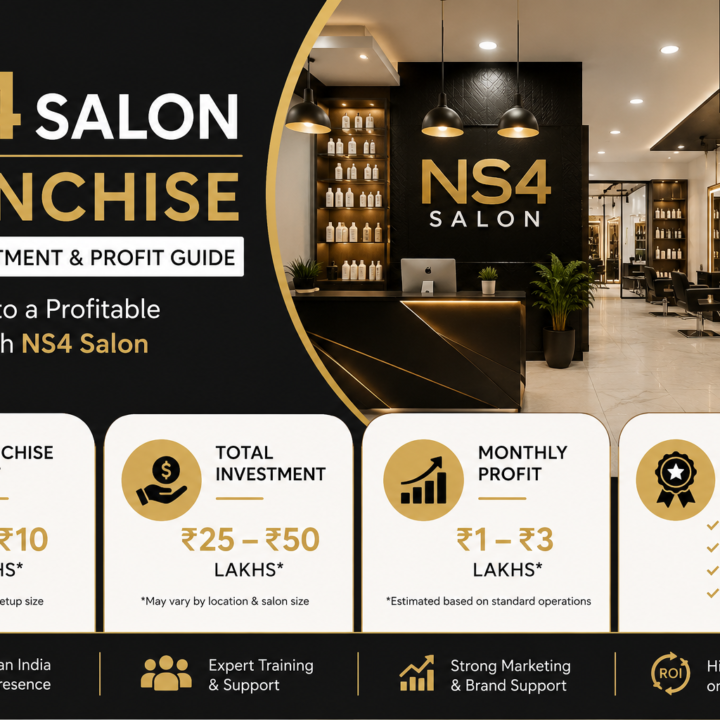
The cost of opening a salon franchise in India generally ranges from ₹15 lakh to ₹50 lakh or more, depending on the franchise brand, salon size, city, location, interior design, equipment requirements and business model.
A compact salon in a smaller city may require a lower investment, whereas a premium salon in a metropolitan city may demand a substantially larger budget.
Indicative estimates for planning purposes. Actual franchise costs depend on brand-specific agreements and location.
| Salon Business Model | Estimated Investment |
|---|---|
| Small salon franchise | ₹15–20 lakh |
| Standard salon franchise | ₹20–30 lakh |
| Premium salon franchise | ₹30–50 lakh |
| Luxury salon franchise | ₹50 lakh+ |
These ranges are indicative and may exclude GST, working capital, franchise fees, equipment or other costs depending on the franchise agreement.
For most investors planning a professionally designed salon in a Tier-2 or Tier-3 Indian city, an investment budget of ₹20 lakh to ₹30 lakh may provide a starting point for evaluating suitable franchise opportunities.
The final budget should always be based on a detailed financial assessment of the specific brand and location.
Salon Franchise Investment Breakdown in India
Understanding the individual expenses involved in opening a salon franchise helps investors prepare a realistic financial plan. The total investment is not limited to the franchise fee. It includes the physical setup, equipment, staffing, marketing and sufficient working capital to manage the business during its initial months.
1. Franchise Fee or Brand Fee
The franchise fee is the amount paid to the franchisor for the right to operate under its brand name and access its business system. Depending on the brand’s positioning, support structure and agreement, franchise fees may range from ₹2 lakh to ₹15 lakh or more.
The franchise fee may cover:
-
Brand licensing and usage rights
-
Initial business training
-
Salon operational guidelines
-
Service menu and pricing guidance
-
Brand standards and design guidelines
-
Launch assistance
-
Marketing templates and promotional support
Investors should carefully review what is included in the franchise fee before signing an agreement. A lower franchise fee does not necessarily mean a lower total investment or a better business opportunity.
2. Salon Interior Design and Fit-Out
Salon interiors are among the largest components of the initial investment. The salon must create an attractive, functional and comfortable environment that supports professional services and customer experience.
Interior expenses may include:
-
Flooring and wall finishing
-
Lighting and electrical installations
-
Plumbing and water systems
-
Reception and waiting area
-
Hair styling stations
-
Mirrors and workstations
-
Shampoo and wash stations
-
Treatment rooms
-
Nail stations
-
Storage and staff areas
-
Branding, signage and decorative elements
The interior cost depends on the salon’s size, design complexity, construction quality and city.
A salon with 800–1,200 square feet of space may require a substantial fit-out budget, particularly when the brand mandates specific layouts, furniture, equipment and design standards.
3. Salon Equipment and Furniture
Professional salon equipment is essential for delivering consistent services and maintaining operational efficiency.
Typical equipment includes:
| Equipment | Purpose |
|---|---|
| Styling chairs | Haircuts and styling |
| Shampoo stations | Hair washing and treatments |
| Hair dryers | Hair drying and styling |
| Hair straighteners | Smoothening and styling |
| Curling tools | Hair styling |
| Facial beds | Skin treatments |
| Manicure tables | Nail services |
| Pedicure chairs | Foot care |
| Reception furniture | Customer reception |
| Mirrors and workstations | Professional styling |
| Sterilisation equipment | Hygiene and sanitation |
The equipment budget depends on the number of service stations, quality of equipment and range of services offered.
4. Initial Product Inventory
A salon requires a professional inventory of haircare, skincare, nailcare, colour products and treatment materials.
Initial inventory may include:
-
Hair colour and developer
-
Shampoos and conditioners
-
Hair masks and treatments
-
Keratin and smoothening products
-
Hair styling products
-
Facial cleansers and skincare products
-
Waxing supplies
-
Nail products
-
Manicure and pedicure products
-
Disposable towels and hygiene supplies
Product consumption should be monitored carefully. Inventory planning helps avoid unnecessary stock accumulation, product expiry and excessive working capital requirements.
5. Rent, Security Deposit and Location Costs
The salon location directly influences the investment and future profitability.
A salon situated in a high-footfall commercial area may attract more walk-in customers, but it may also have higher rental expenses. A residential catchment with strong purchasing power, accessible parking and limited direct competition can sometimes provide better operating economics.
Location-related expenses may include:
-
Security deposit
-
Advance rent
-
Brokerage
-
Lease documentation
-
Property maintenance charges
-
Signage permissions
-
Renovation expenses
Before finalising a location, investors should evaluate nearby residential communities, commercial activity, accessibility, parking, competitor salons and the target customer’s spending behaviour.
6. Staff Recruitment and Training
A salon business depends heavily on the quality of its professionals and customer service team.
A standard salon may require:
-
Salon manager
-
Senior hairstylists
-
Hair technicians
-
Skin therapists
-
Makeup artists, where applicable
-
Nail technicians
-
Receptionists
-
Assistants and housekeeping staff
Staff salaries are recurring expenses and should be included in the monthly operating budget. Recruitment, training, employee retention and performance incentives are equally important.
The ability to retain skilled professionals can significantly influence repeat customer visits, service quality and revenue stability.
7. Marketing and Launch Expenses
Marketing is essential for building awareness and generating the salon’s initial customer base.
The initial marketing budget may include:
-
Social media campaigns
-
Local influencer collaborations
-
Opening offers
-
Promotional videos
-
Google Business Profile optimisation
-
Local advertising
-
Customer referral programmes
-
WhatsApp marketing
-
Printed promotional materials
-
Launch events
A well-planned launch campaign can help establish visibility within the salon’s catchment area and encourage the first wave of customer visits.
8. Working Capital
Working capital is one of the most important expenses investors often underestimate.
A salon may take several months to establish consistent customer traffic, repeat visits and predictable revenue. Therefore, investors should reserve sufficient funds to cover operating expenses during the early stages.
Working capital may cover:
-
Salaries
-
Rent
-
Electricity
-
Product consumption
-
Marketing
-
Internet and software
-
Maintenance
-
Administrative expenses
Maintaining a reserve equivalent to approximately 3–6 months of essential operating expenses can help a new outlet manage early-stage financial pressure.
Estimated Salon Franchise Investment Table for 2026
The following is an illustrative investment structure for a standard salon franchise. Actual expenses will vary depending on the brand, city, location, area and contractual requirements.
| Investment Component | Estimated Budget |
|---|---|
| Franchise fee | ₹3–6 lakh |
| Interior and fit-out | ₹8–15 lakh |
| Equipment and furniture | ₹3–5 lakh |
| Initial inventory | ₹1–2 lakh |
| Security deposit and advance rent | ₹2–5 lakh |
| Marketing and launch | ₹50,000–₹1.5 lakh |
| Working capital | ₹3–6 lakh |
| Indicative Total | ₹20.5–40.5 lakh |
This is an illustrative planning table, not a quotation. Certain components may be bundled within a franchise package, while GST, additional equipment, contingencies or other costs may increase the total.
How Much Space Is Required for a Salon Franchise?
The space requirement depends on the salon’s format, service range, target customer segment and operational design.
| Salon Format | Approximate Space |
|---|---|
| Compact salon | 400–600 sq. ft. |
| Standard unisex salon | 600–1,000 sq. ft. |
| Premium salon | 1,000–1,500 sq. ft. |
| Luxury salon | 1,500–3,000+ sq. ft. |
A standard unisex salon can often accommodate hair styling stations, shampoo stations, a reception area, waiting space, skin treatment facilities and storage within a well-planned layout.
The objective is not simply to maximise floor space. It is to create an efficient layout that allows professionals to serve customers comfortably, minimise unnecessary movement and maintain a premium customer experience.
How Does a Salon Franchise Business Make Money?
A salon franchise generates revenue through multiple services and complementary products. A diversified service menu allows the salon to serve customers with different requirements and spending levels.
1. Hair Services
Hair services typically form a major part of salon revenue.
Popular services include:
-
Haircuts
-
Hair colouring
-
Highlights
-
Balayage
-
Hair spa
-
Hair treatments
-
Keratin
-
Smoothening
-
Hair straightening
-
Hair styling
Regular haircut appointments, colouring services and hair treatments can create repeat customer relationships.
2. Skin and Facial Services
Skin services can increase the salon’s average bill value and help diversify revenue.
These services may include:
-
Clean-ups
-
Facials
-
Hydra facials
-
Skin polishing
-
Detan treatments
-
Professional skin treatments
The service menu should be developed according to staff expertise, customer demand and the salon’s positioning.
3. Nail Services
Nail services offer opportunities to generate additional revenue through specialised treatments.
Popular nail services include:
-
Nail extensions
-
Nail art
-
Gel polish
-
Manicure
-
Pedicure
-
Nail maintenance
Nail services can attract customers looking for specialised beauty experiences and recurring maintenance appointments.
4. Makeup and Occasion Services
Makeup services can generate higher-value bookings during wedding seasons, festivals and special occasions.
A salon may offer:
-
Party makeup
-
Bridal makeup
-
Engagement makeup
-
Reception makeup
-
Hair styling
-
Pre-bridal packages
Bridal and occasion services can contribute significantly to seasonal revenue when supported by effective marketing and professional execution.
5. Beauty Product Retail
Retail sales can complement service revenue.
Salons may sell:
-
Shampoos
-
Conditioners
-
Hair masks
-
Hair serums
-
Skincare products
-
Sunscreens
-
Hair styling products
-
Professional treatment products
Retail recommendations should be based on the customer’s service requirements and professional consultation.
Salon Franchise Profit in India: How Much Can You Earn?
The profitability of a salon franchise depends on customer footfall, average bill value, service mix, employee productivity, rent, marketing, royalty and repeat visits.
A salon can generate substantial revenue, but revenue alone does not determine profitability. The investor must evaluate the actual monthly operating expenses.
Illustrative Monthly Salon Revenue Model
Consider a standard salon operating in a Tier-2 Indian city.
| Business Metric | Illustrative Value |
|---|---|
| Average customers per day | 30 |
| Average customer bill | ₹1,000 |
| Operating days per month | 30 |
| Monthly service revenue | ₹9,00,000 |
This model assumes 30 customers per day and an average bill of ₹1,000. Actual customer volume and ticket size will vary depending on the salon’s location, services, pricing and customer base.
Illustrative Monthly Expense Structure
| Expense | Monthly Estimate |
|---|---|
| Rent | ₹70,000 |
| Salaries | ₹2,00,000 |
| Product consumption | ₹90,000 |
| Royalty | ₹72,000 |
| Electricity and utilities | ₹25,000 |
| Marketing | ₹25,000 |
| Miscellaneous expenses | ₹20,000 |
| Software, maintenance and administration | ₹15,000 |
| Total Expenses | ₹5,17,000 |
Illustrative assumptions only. Royalty is calculated at 8% of ₹9 lakh revenue. Actual salary, product, royalty and other expenses will vary.
Illustrative Monthly Profit
| Particulars | Amount |
|---|---|
| Monthly Revenue | ₹9,00,000 |
| Monthly Expenses | ₹5,17,000 |
| Illustrative Operating Surplus | ₹3,83,000 |
This is an illustrative operating surplus before any excluded costs such as financing, depreciation, taxes, owner compensation or other expenses not included in the table. It should not be treated as a guaranteed salon profit.
The example demonstrates why salon investors should develop their own outlet-specific financial model instead of relying solely on franchise marketing claims.
Salon Franchise ROI and Break-Even Period
Return on investment is one of the most important factors when evaluating a salon franchise opportunity.
ROI depends on the total capital invested and the actual profit generated after the business becomes operational.
How to Calculate Salon Franchise ROI
The basic annual ROI formula is:
For example, suppose an investor spends ₹30 lakh on a salon franchise and the business generates ₹6 lakh in annual profit.
This example is purely illustrative. Actual ROI will depend on the outlet’s performance and the definition of profit used in the calculation.
How Long Does It Take to Recover Salon Franchise Investment?
The investment recovery period is commonly referred to as the payback period.
For example:
| Investment | Annual Cash Profit | Illustrative Payback |
|---|---|---|
| ₹20 lakh | ₹5 lakh | 4 years |
| ₹25 lakh | ₹7.5 lakh | 3.33 years |
| ₹30 lakh | ₹10 lakh | 3 years |
| ₹35 lakh | ₹12 lakh | 2.92 years |
These figures are mathematical illustrations rather than projected or guaranteed franchise returns.
Industry articles and franchise operators report different payback periods depending on salon format, location and business performance. Some planning benchmarks suggest approximately 14–24 months for selected outlets, while broader franchise estimates can extend to 24–36 months or longer. Investors should verify actual results from existing franchisees rather than treating advertised payback periods as guarantees.
The TrimHub Salons+2
Factors That Determine Salon Franchise Profitability
1. Location and Catchment Area
The salon’s location can influence customer acquisition, pricing, visibility and repeat visits.
A strong location should ideally have:
-
Residential communities nearby
-
Good accessibility
-
Suitable parking
-
High visibility
-
Commercial activity
-
Target customers with spending capacity
-
Limited direct competition or a differentiated market position
A salon should not select a location based solely on the number of people passing by. The quality of the target customer base is equally important.
2. Rent-to-Revenue Ratio
Rent is one of the largest fixed expenses in salon operations.
A salon with high rent must generate sufficient revenue to maintain profitability. Before signing a lease, investors should calculate the expected revenue required to cover rent, salaries, product consumption, royalty and other operating expenses.
The financial model should include a conservative revenue scenario rather than only optimistic projections.
3. Professional Staff and Retention
Salon professionals influence service quality, customer satisfaction, referrals and repeat visits.
A business that invests in employee training, incentives, career development and professional working conditions can improve employee retention.
Staff retention is particularly important because customers often develop relationships with individual hairstylists, beauty therapists and nail professionals.
4. Repeat Customers
Repeat customers can provide a more predictable revenue base than relying entirely on new customer acquisition.
Salons can encourage repeat visits through:
-
Membership programmes
-
Appointment reminders
-
Customer loyalty programmes
-
Personalised consultations
-
Service follow-ups
-
Referral programmes
-
Seasonal offers
-
Birthday promotions
Customer retention strategies should focus on service quality rather than excessive discounts.
5. Average Bill Value
Increasing average bill value can improve salon revenue without requiring an equivalent increase in customer volume.
For example, a customer visiting for a haircut may also purchase a hair spa, scalp treatment or professional haircare product when the recommendation genuinely matches their needs.
Professional consultation and ethical upselling can improve customer satisfaction and revenue simultaneously.
6. Royalty and Franchise Fees
Franchise royalty structures differ from one brand to another.
Some franchisors charge:
-
Percentage-based royalty
-
Fixed monthly royalty
-
Marketing contribution
-
Technology fees
-
Training fees
-
Renewal fees
-
Product-related charges
The investor should calculate the complete financial impact of every recurring franchise charge.
A royalty of 8% on ₹10 lakh revenue represents ₹80,000 per month. This expense must be included in the outlet’s profit calculation.
7. Local Marketing and Customer Acquisition
Local marketing helps the salon build awareness and establish a customer base.
Effective channels include:
-
Google Business Profile
-
Instagram
-
Facebook
-
WhatsApp
-
Local influencers
-
Residential society promotions
-
Customer referrals
-
Local events
-
Paid advertising
A consistent marketing strategy should focus on attracting the right customers, building trust and encouraging repeat visits.
Why Choose a Salon Franchise Instead of Starting Independently?
Opening an independent salon gives entrepreneurs complete control over branding, pricing, services and operations. However, it also requires building the business infrastructure from scratch.
A franchise can provide access to an established operating framework.
| Independent Salon | Salon Franchise |
|---|---|
| Build brand identity independently | Access to established brand identity |
| Develop SOPs from scratch | Existing operational guidelines |
| Independently plan training | Franchise training support, subject to agreement |
| Develop marketing independently | Brand and marketing support, subject to agreement |
| Source products independently | May provide approved sourcing systems |
| Develop service menus | Existing service menu guidance |
| Independently build customer trust | Potential advantage from brand recognition |
| Complete operational responsibility | Structured operating system with franchise obligations |
A franchise is not automatically more profitable than an independent salon. The value of a franchise depends on the quality of the brand, support system, commercial terms, reputation, operating discipline and the franchisee’s execution.
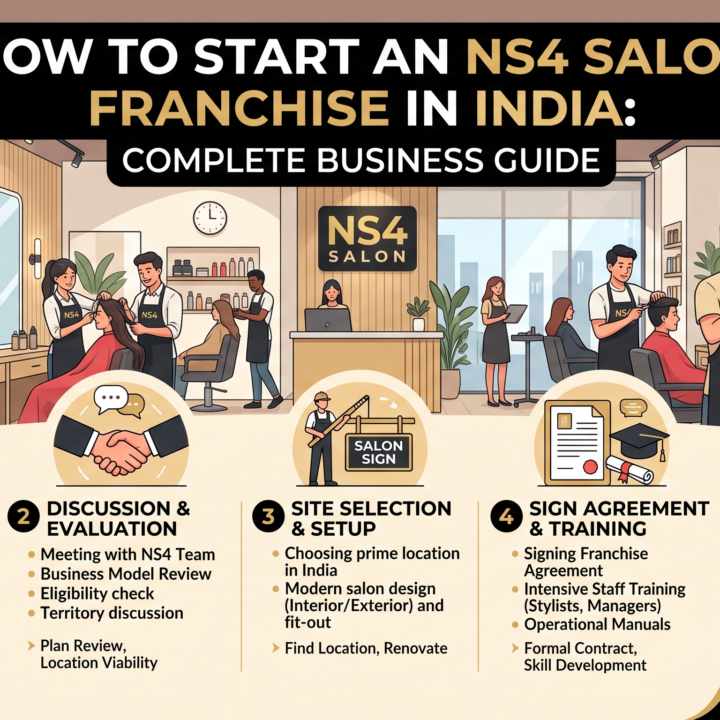
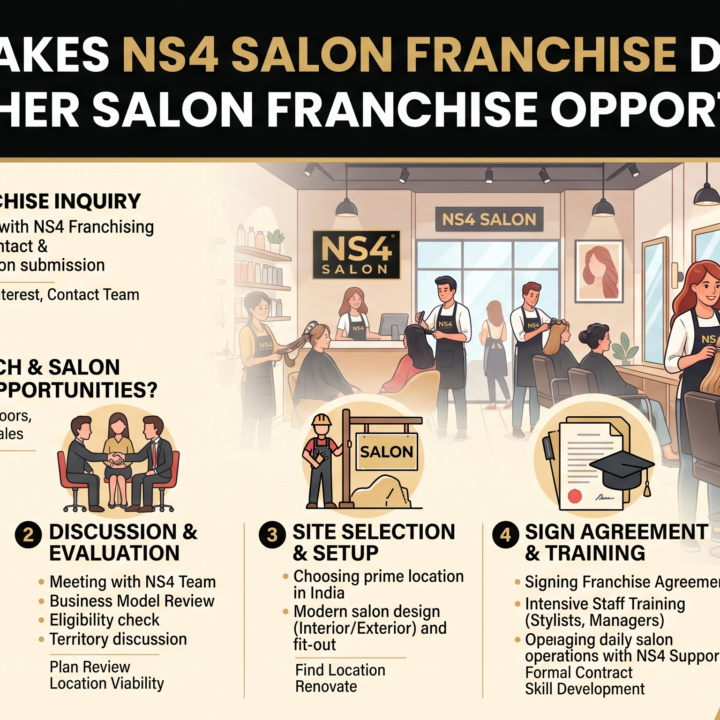
How to Start a Salon Franchise Business in India in 2026
Starting a salon franchise requires careful planning, financial preparation and operational execution.
Step 1: Research Salon Franchise Brands
Compare multiple salon franchise brands based on:
-
Brand reputation
-
Existing outlets
-
Franchise investment
-
Royalty structure
-
Training support
-
Marketing support
-
Operational systems
-
Product sourcing
-
Franchise agreement
-
Territory protection
Do not select a brand only because of its advertising or franchise brochure.
Step 2: Prepare Your Investment Budget
Create a complete financial plan covering franchise fee, interiors, equipment, inventory, rent deposit, salaries, launch marketing and working capital.
Ensure that your investment plan includes contingency funds for unexpected expenses.
Step 3: Choose the Right Location
Conduct a location survey before signing the lease.
Evaluate residential density, local purchasing power, competition, accessibility, parking, visibility and commercial activity.
Step 4: Finalise the Franchise Agreement
Carefully review the agreement with a qualified legal professional.
Pay particular attention to:
-
Franchise duration
-
Royalty
-
Marketing fees
-
Renewal conditions
-
Termination clauses
-
Territory protection
-
Mandatory product purchasing
-
Training obligations
-
Brand standards
-
Exit provisions
Step 5: Design and Set Up the Salon
Complete the interior design, equipment installation, branding, signage, electrical work, plumbing and other infrastructure requirements.
The salon should be designed to support efficient operations and a premium customer experience.
Step 6: Recruit and Train Staff
Hire qualified professionals and provide appropriate training before opening.
Establish clear responsibilities for service delivery, customer consultation, hygiene, billing, inventory and customer follow-up.
Step 7: Launch Your Marketing Campaign
Begin marketing before the salon opens.
Use social media, local advertising, Google Business Profile, influencer collaborations, opening offers and customer referral programmes to create awareness.
Step 8: Monitor Business Performance
Track key performance indicators from the first day.
| KPI | What It Measures |
|---|---|
| Daily sales | Daily revenue performance |
| Customer footfall | Number of customers served |
| Average bill value | Revenue per customer |
| Repeat customer rate | Customer retention |
| Staff productivity | Revenue generated per professional |
| Product consumption | Cost efficiency |
| Customer reviews | Customer satisfaction |
| Monthly expenses | Cost management |
| Net operating profit | Financial performance |
A salon business becomes easier to manage when owners make decisions using consistent financial and operational data.
Best Cities to Start a Salon Franchise in India
Salon franchise opportunities exist across metropolitan cities, Tier-2 cities and emerging urban markets.
Metro Cities
Cities such as Delhi, Mumbai, Bengaluru, Hyderabad, Chennai and Pune offer large customer markets and strong demand for premium grooming services.
However, higher rental costs, competition and employee expenses can increase the investment required.
Tier-2 Cities
Cities such as Lucknow, Jaipur, Indore, Chandigarh, Meerut, Aligarh, Agra, Dehradun and other growing urban centres may offer attractive opportunities depending on the local market.
Tier-2 cities can offer a balance between customer demand, rental expenses and business expansion opportunities, but market suitability must be evaluated at the neighbourhood level.
Emerging Urban Markets
Smaller cities and developing commercial areas can also support salon franchises when the brand, service offering and investment are aligned with local purchasing power.
The best city is not necessarily the largest city. The best location is one where the salon can attract its target customers, maintain operational efficiency and generate sustainable revenue.
Frequently Asked Questions About Salon Franchise Cost in India
1. How much does a salon franchise cost in India in 2026?
A salon franchise in India may require an investment of approximately ₹15 lakh to ₹50 lakh or more, depending on the brand, location, salon size, interior design, equipment, franchise fee and working capital requirements.
2. Can we start a salon franchise with ₹20 lakh?
Yes, some salon franchise models and compact formats may be evaluated within a ₹20 lakh budget. However, investors must confirm whether the amount includes the franchise fee, GST, interiors, equipment, inventory, rent deposit, marketing and working capital.
The total project cost should be calculated before making any financial commitment.
3. Is a salon franchise profitable in India?
A salon franchise can be profitable when it has a suitable location, trained professionals, strong customer retention, efficient operations, effective marketing and disciplined expense management.
Profitability depends on actual outlet performance and is not guaranteed by the franchise brand.
4. How much profit can a salon franchise make per month?
Monthly profit varies significantly depending on customer volume, average bill value, services, rent, salaries, royalty, product consumption and marketing expenses.
A salon generating ₹5 lakh in monthly revenue may have a very different profit structure from one generating ₹10 lakh or ₹15 lakh.
Investors should create a realistic monthly profit-and-loss projection before opening.
5. How long does it take to recover a salon franchise investment?
The payback period varies by outlet and investment level. Some outlets may recover their investment within approximately 18–24 months under favourable operating conditions, while others may take 3 years or longer.
Investors should verify actual financial performance from existing franchisees and calculate payback using conservative assumptions.
6. Do we need experience in the beauty industry to open a salon franchise?
Not necessarily. Many franchise models are designed for investors who may not have professional salon experience.
However, the investor must be willing to manage the business, recruit qualified staff, follow operational systems and understand financial performance.
7. What is the minimum space required for a salon franchise?
A compact salon may operate within approximately 400–600 square feet, while a standard unisex salon may require 600–1,000 square feet or more.
The actual requirement depends on the brand’s layout, service menu and operating model.
8. What expenses are included in a salon franchise investment?
The investment may include:
-
Franchise fee
-
Interior design and fit-out
-
Salon equipment
-
Furniture
-
Initial inventory
-
Rent deposit
-
Signage
-
Launch marketing
-
Staff training
-
Working capital
Always confirm the inclusions and exclusions in writing.
9. What is the royalty charged by salon franchises?
Royalty structures vary across brands. Some charge a percentage of revenue, while others may use fixed fees or additional marketing contributions.
The franchise agreement should clearly explain how royalty is calculated, when it is payable and whether additional charges apply.
10. Is a salon franchise better than an independent salon?
A salon franchise may provide brand recognition, operating systems, training, marketing assistance and business guidance. An independent salon offers greater flexibility and control.
The better option depends on the investor’s experience, budget, business goals, brand quality and the commercial terms.
Conclusion: Is a Salon Franchise a Good Investment in India in 2026?
The salon and beauty industry presents an opportunity for entrepreneurs who want to build a business around professional grooming, personal care and recurring customer demand.
A salon franchise in India can offer an organised business structure, professional service systems, brand support and a framework for managing operations. However, success requires more than investing in a recognised brand.
The most important factors are the right location, realistic investment planning, skilled employees, customer experience, marketing, repeat visits and cost control.
Before investing, evaluate the total salon franchise cost, understand the royalty structure, review the franchise agreement, visit existing outlets and speak directly with franchise owners.
A well-planned salon franchise is built on strong customer relationships, disciplined financial management, professional service delivery and a sustainable business model.
Entrepreneurs who approach the opportunity with realistic expectations, proper research and a long-term business mindset can build a salon business with the potential to grow into multiple outlets and a stronger regional presence.