Introduction
Starting a salon business can be an exciting opportunity, but launching an independent salon from scratch isn’t always easy. Entrepreneurs have to build a brand, create operating systems, hire professionals, market the business, manage suppliers, and attract customers—all at the same time.
That’s one reason a NS4 Salon Franchise can be an attractive option for new entrepreneurs.
A franchise gives beginners the opportunity to operate under an established salon brand while following a structured business model. Instead of figuring out every part of the business alone, a franchise owner can receive support related to salon setup, branding, training, operations, and marketing.
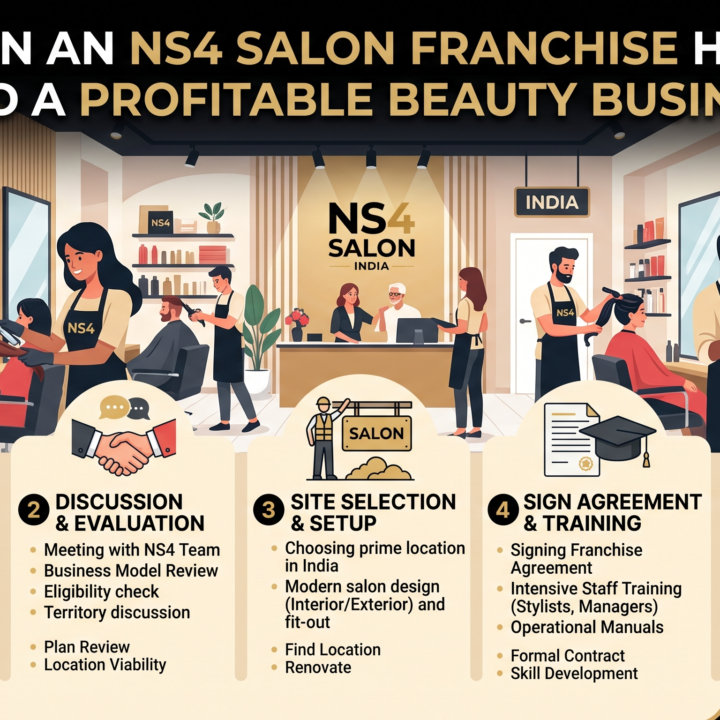
However, franchising isn’t a shortcut to success. You still need capital, commitment, customer-service skills, and the ability to manage a team. The good news is that you don’t necessarily need years of salon-industry experience to become a salon franchise owner.
With the right preparation, even a beginner can enter the beauty and wellness industry with a more organized approach.
This guide explains how beginners can start an NS4 Salon Franchise, what they should consider before investing, the different franchise formats, and seven powerful steps that can help build a sustainable salon business.
Understanding an NS4 Salon Franchise
An NS4 Salon Franchise is based on the franchise model, where an entrepreneur operates a salon using the established NS4 brand and business framework.
Rather than creating everything independently, the franchisee follows a defined system. This can make the initial business journey easier to organize, particularly for someone entering the salon industry for the first time.
A typical franchise operation can involve several important areas:
- Salon branding and identity
- Interior and store setup
- Service standards
- Staff training
- Business processes
- Marketing support
- Customer experience
- Product and service planning
- Operational guidance
The franchisee, however, remains responsible for the day-to-day performance of the outlet.
That means you should think of franchising as structured entrepreneurship, not passive investment.
A beginner can own the business, but success depends on how well they manage people, expenses, customers, quality, and local marketing.
What Makes Salon Franchising Attractive?
The beauty industry depends heavily on trust and customer experience. People don’t simply buy a haircut or facial—they’re also buying convenience, hygiene, expertise, consistency, and confidence.
An established salon brand can help reduce some of the challenges associated with building credibility from zero.
For a new entrepreneur, this can be particularly valuable.
Can Beginners Start an NS4 Salon Franchise?
Yes, beginners can potentially start an NS4 Salon Franchise, provided they meet the investment, location, operational, and franchise requirements.
You don’t necessarily have to be an experienced hairstylist, makeup artist, or beautician.
In fact, many successful business owners work primarily as managers and entrepreneurs rather than performing salon services themselves.
However, beginners should develop an understanding of:
- Basic business management
- Customer service
- Staff management
- Financial planning
- Local marketing
- Inventory control
- Salon operations
- Sales and customer retention
You can learn many of these skills through training and hands-on experience.
The key is to avoid thinking, “I’ll open the salon and customers will automatically come.”
They won’t.
A successful salon requires consistent marketing, excellent service, professional employees, cleanliness, customer relationships, and financial discipline.
Do You Need Salon Experience?
Not necessarily.
A beginner can focus on business management while trained professionals handle technical services such as haircuts, hair colouring, chemical treatments, makeup, facials, manicures, and other salon services.
Still, learning the basics of the industry is highly recommended.
The more you understand your customers and services, the better decisions you’ll make as an owner.
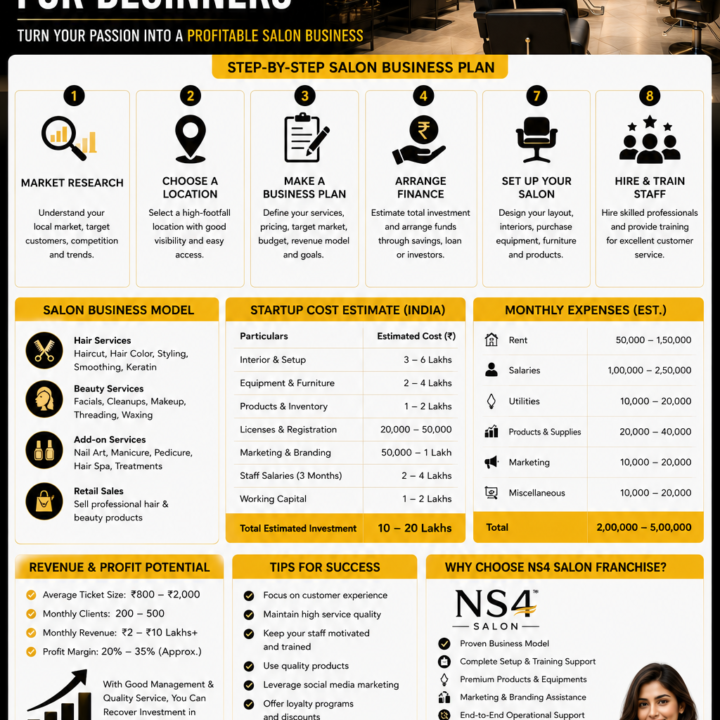
7 Powerful Steps to Start an NS4 Salon Franchise
Starting a salon franchise becomes much easier when the process is broken into practical steps.
1. Understand the Investment Before Starting
Your first step shouldn’t be choosing paint colours or salon furniture.
It should be understanding the total investment.
The franchise investment can include:
- Franchise fee
- Interior and civil work
- Furniture
- Salon equipment
- Electrical work
- Signage
- Air conditioning
- Product inventory
- Staff salaries
- Marketing
- Licences and registrations
- Rent deposit
- Working capital
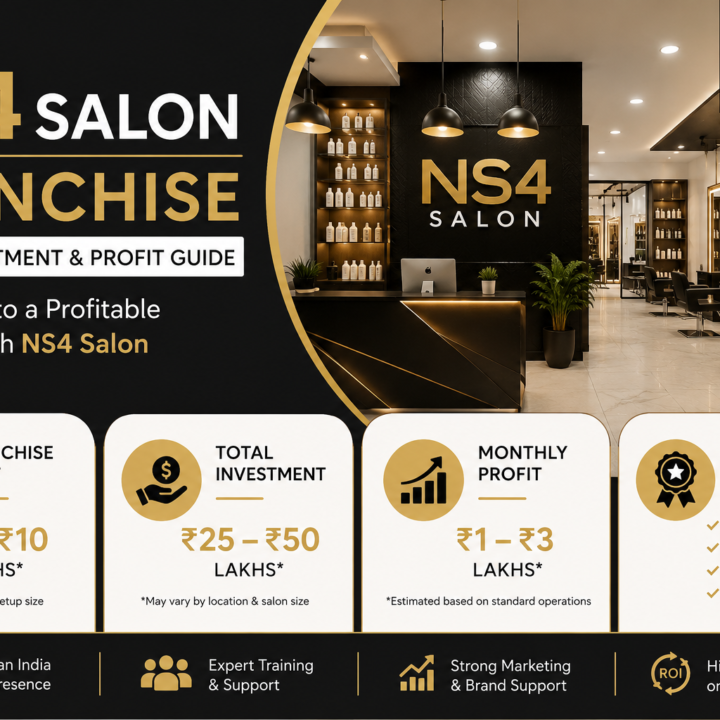
NS4 Salon franchise formats have been discussed in different investment ranges, including Studio, Premium, and Luxury models, with overall business investment potentially varying according to location, size, interiors, equipment, and other requirements.
Before investing, prepare a realistic financial plan.
Why Working Capital Matters
One common beginner mistake is spending almost the entire budget on the salon setup.
That’s risky.
A new salon needs money after opening too.
You may have rent, salaries, electricity, products, advertising, maintenance, and other expenses before the outlet reaches its desired customer volume.
Therefore, keep a working-capital reserve.
2. Choose the Right NS4 Franchise Model
Different locations require different salon formats.
A large premium market may support a larger salon, while a smaller market could be better suited to a compact studio.
Common NS4 franchise formats include:
| Model | Approx. Size | Suitable For |
|---|---|---|
| Studio | 600–800 sq. ft. | Compact markets and smaller investments |
| Premium | 1,000–1,500 sq. ft. | Growing markets and established neighbourhoods |
| Luxury | 2,000–3,000 sq. ft. | High-footfall or premium markets |
The exact investment should always be confirmed directly with NS4 before making a business decision because costs can change according to location and setup requirements.
How Should a Beginner Choose?
Don’t automatically choose the biggest model.
Instead, consider:
- Local demand
- Available capital
- Rent
- Competition
- Customer spending power
- Property size
- Expected footfall
- Long-term business goals
A smaller, well-managed salon can be better than a large salon with high fixed expenses.
3. Select the Right Location
Location can make or break a salon business.
You don’t necessarily need the most expensive commercial street. What you need is a location that matches your target customers.
Before finalising a property, study:
- Population density
- Nearby residential areas
- Offices and commercial spaces
- Colleges and educational institutions
- Parking availability
- Road visibility
- Public transportation
- Nearby competitors
- Existing beauty and salon demand
- Average customer spending
Think Like Your Customer
Ask yourself:
Would my target customer find this salon convenient?
If customers struggle to park, can’t easily find the salon, or have to travel too far, convenience becomes a problem.
A visible location with easy access can support customer acquisition and repeat visits.
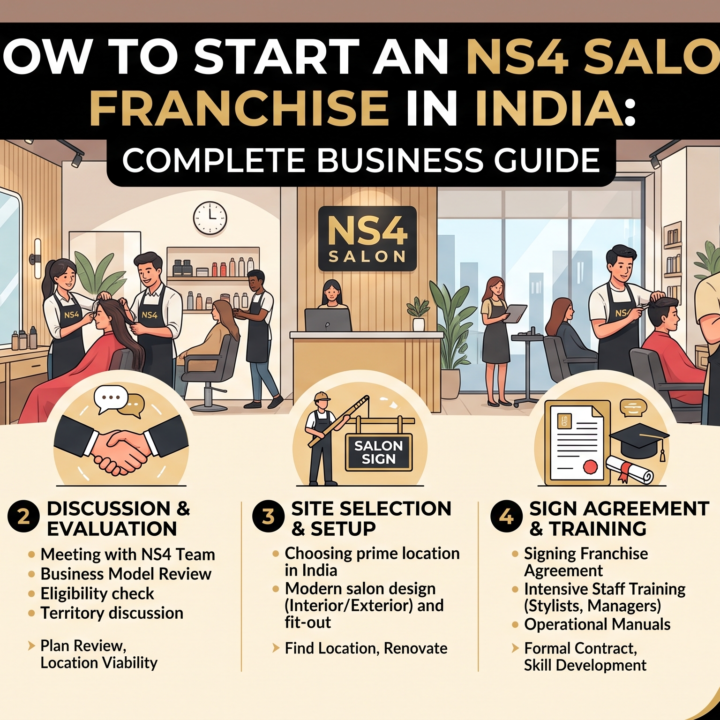
4. Complete Training and Salon Setup
A beginner doesn’t need to know everything on day one.
That’s where structured training and operational guidance can be valuable.
Before opening, make sure you understand:
- Customer reception procedures
- Appointment management
- Service consultation
- Hygiene standards
- Product usage
- Billing
- Inventory management
- Complaint handling
- Staff scheduling
- Daily opening and closing procedures
The salon should also have consistent service standards.
For example, a customer visiting for hair colouring should receive a professional consultation before the service begins. The team should understand the customer’s expectations, hair condition, desired result, and suitable treatment.
Consistency builds trust.
5. Build a Strong Professional Team
Your salon’s reputation won’t come from the logo alone.
It will come from your people.
Hairdressers, makeup artists, beauticians, nail technicians, reception staff, and managers all influence the customer experience.
Hiring Tips for Beginners
Look for people who demonstrate:
- Technical ability
- Good communication
- Professional behaviour
- Hygiene awareness
- Willingness to learn
- Customer-friendly attitude
- Reliability
Don’t hire purely based on years of experience.
A technically skilled employee who treats customers poorly can damage the business.
Likewise, someone with good communication and a willingness to learn can become a valuable long-term team member.
Train Your Team Continuously
Training shouldn’t stop after opening day.
Beauty trends change quickly.
Customers increasingly ask about services such as:
- Global hair colour
- Keratin
- Nanoplastia
- Hair Botox
- Hair spa
- Bridal makeup
- Party makeup
- Facial treatments
- Nail extensions
- Nail art
Keeping your team updated can help your salon stay competitive.
6. Use Smart Marketing to Attract Customers
Opening a beautiful salon isn’t enough.
People need to know that you’re there.
A beginner franchise owner should create a marketing plan before opening.
Digital Marketing
Your strategy can include:
- Google Business Profile
- Local SEO
- WhatsApp marketing
- Short-form videos
- Customer reviews
- Before-and-after content
- Festival offers
- Referral campaigns
Google Business Profile is particularly important for local salons because customers frequently search for services such as “best salon near me,” “hair salon near me,” “bridal makeup near me,” and similar terms.
For general guidance on Google Business Profile, visit Google Business Profile.
Local Marketing Still Works
Don’t ignore offline marketing.
You can use:
- Opening events
- Local partnerships
- Apartment-community promotions
- Corporate tie-ups
- College promotions
- Referral cards
- Flyers
- Local influencers
- Festival campaigns
The strongest strategy often combines digital and local marketing.
7. Monitor Performance and Grow Strategically
Once your salon is operational, your job changes from opening the business to improving the business.
Track important numbers regularly.
| KPI | Why It Matters |
|---|---|
| Daily customers | Measures footfall |
| Average bill value | Shows customer spending |
| Repeat customers | Measures loyalty |
| New customer sources | Shows marketing performance |
| Service-wise sales | Identifies popular services |
| Product sales | Adds revenue opportunities |
| Staff productivity | Measures team performance |
| Monthly expenses | Controls profitability |
Don’t rely only on how busy the salon looks.
A salon can be busy and still make poor profits if expenses are too high.
Focus on Repeat Customers
Repeat customers are extremely valuable.
Instead of constantly chasing new customers, create reasons for existing customers to return.
For example:
- Membership plans
- Birthday offers
- Loyalty rewards
- Service packages
- Referral benefits
- Seasonal promotions
- Follow-up messages
Customer retention can become one of the strongest foundations of a salon business.
Common Mistakes Beginners Should Avoid
Starting a franchise can reduce some challenges, but it doesn’t eliminate business risks.
Mistake 1: Underestimating Working Capital
Don’t spend the entire budget before opening.
Mistake 2: Choosing a Location Based Only on Cheap Rent
Low rent isn’t always a good deal if the location has poor visibility or limited demand.
Mistake 3: Ignoring Staff Management
Your employees directly influence customer satisfaction.
Mistake 4: Depending Only on Discounts
Discounts can attract customers, but excessive discounting can hurt profitability and brand positioning.
Mistake 5: Neglecting Online Reviews
Customers often check reviews before visiting a salon.
Encourage satisfied customers to leave genuine feedback.
Mistake 6: Poor Inventory Control
Overstocking products can block cash flow, while understocking can disrupt services.
Mistake 7: Expecting Immediate Profit
A new business needs time to establish a customer base.
Set realistic targets instead of expecting overnight success.
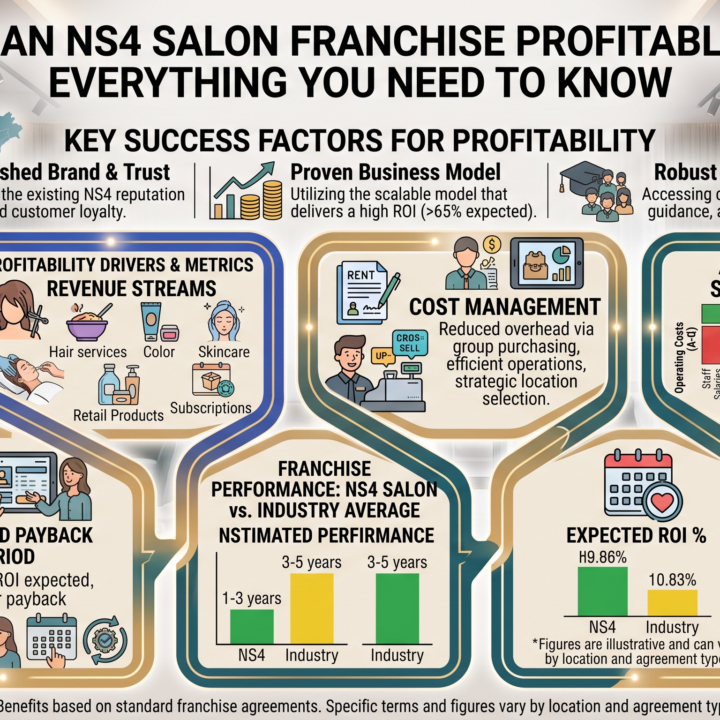
What Determines NS4 Salon Franchise Profitability?
There isn’t one guaranteed profit figure for every franchise.
Profitability depends on several factors.
Major Factors Include
Location: A strong market can produce greater customer demand.
Rent: Excessive fixed costs can reduce margins.
Average bill value: Higher-value services can increase revenue.
Customer retention: Returning customers can create more predictable sales.
Staff productivity: Efficient teams can improve revenue per employee.
Marketing: Consistent lead generation helps maintain customer flow.
Cost control: Managing salaries, inventory, utilities, and other expenses is essential.
A Simple Business Formula
You can think about salon profitability as:
Revenue − Operating Expenses = Operating Profit
Revenue can come from:
- Hair services
- Skin services
- Makeup
- Nail services
- Treatments
- Packages
- Retail products
The goal isn’t simply to maximise customer count.
The goal is to build a healthy combination of customer volume, average spending, repeat visits, and controlled expenses.
Skills Beginners Need to Become Successful Franchise Owners
You don’t need to be an expert beautician.
But you do need business skills.
1. Leadership
Your team needs direction and motivation.
2. Communication
You should be able to communicate clearly with customers, staff, suppliers, and the franchise team.
3. Financial Discipline
Know where every major expense is going.
4. Customer Focus
Listen to customer feedback and respond professionally.
5. Marketing Awareness
Understand how local customers discover and choose salons.
6. Problem Solving
Unexpected issues will happen. Good owners solve them quickly rather than ignoring them.
7. Consistency
A salon needs consistent service quality every day—not just during the grand opening.
Is an NS4 Salon Franchise Suitable for First-Time Entrepreneurs?
For someone who wants to enter the salon industry but doesn’t want to build a brand and operating system entirely from scratch, franchising can be worth considering.
An NS4 Salon Franchise may be particularly suitable for beginners who:
- Have sufficient investment capacity
- Are willing to follow established systems
- Want structured business support
- Enjoy working with people
- Are prepared to manage a team
- Understand the importance of marketing
- Are willing to learn the beauty industry
However, it may not be ideal for someone looking for completely passive income.
A salon is a people-driven business.
The owner or manager needs to stay involved.
How to Prepare Before Contacting NS4
Before discussing a franchise opportunity, prepare a basic business plan.
Write down:
- Your approximate investment budget
- Preferred city
- Preferred neighbourhood
- Available property size
- Target customers
- Expected monthly expenses
- Your management plan
- Marketing budget
- Working-capital reserve
- Long-term business goal
You should also ask the franchisor detailed questions about the current franchise fee, setup requirements, training, support, branding, operational standards, renewal terms, and other commercial conditions.
Don’t make a financial commitment until you’ve reviewed the current franchise agreement and all applicable costs.
Why an Established Brand Can Help Beginners
Building a new salon brand takes time.
You need to establish:
- Brand identity
- Customer trust
- Visual standards
- Marketing materials
- Service processes
- Reputation
- Training systems
A franchise model can provide a framework around these areas.
That doesn’t guarantee success, but it can give a beginner a clearer starting point.
Think of it this way:
Independent salon: You build the road yourself.
Franchise: A road map and established system are already available, but you still have to drive the business successfully.
Frequently Asked Questions
1. Can a beginner start an NS4 Salon Franchise?
Yes. A beginner can consider an NS4 Salon Franchise without being a professional hairstylist or beautician. However, they should have adequate investment, management ability, and willingness to learn salon operations.
2. Do I need previous salon experience?
Previous salon experience isn’t necessarily required. Business management, customer service, team management, and financial planning skills are highly important for a franchise owner.
3. How much investment is required for an NS4 Salon Franchise?
The investment depends on the selected franchise format, property, location, interiors, equipment, working capital, and other business requirements. NS4 has different formats, so prospective franchisees should confirm the latest commercial terms directly before investing.
4. What franchise models are available?
NS4 franchise formats discussed include Studio, Premium, and Luxury models. Studio formats are generally smaller, while Premium and Luxury models require larger spaces and potentially greater investment.
5. Can I run the salon without personally providing salon services?
Yes. A franchise owner can focus on business management while trained professionals handle salon services. However, the owner should remain involved in team management, customer experience, finances, and business development.
6. Is a salon franchise profitable?
A salon franchise can be profitable, but profitability isn’t guaranteed. Results depend on location, rent, customer demand, pricing, service quality, staff productivity, marketing, customer retention, and expense management.
7. How can I attract customers to a new salon?
Use a combination of Google Business Profile, social media, local SEO, opening promotions, referrals, local partnerships, customer reviews, WhatsApp marketing, and targeted promotional campaigns.
8. What should beginners do before investing?
Research the market, understand the total investment, evaluate the location, calculate working capital, review the franchise agreement, understand ongoing costs, and discuss all support and operational terms with the franchisor.
9. Can I choose a smaller franchise model as a beginner?
A smaller format can be worth considering when the available capital, property size, and local market support a compact salon. The right model should be selected based on business economics rather than size alone.
10. Is salon franchising better than starting an independent salon?
Neither model is automatically better. An independent salon offers greater freedom, while a franchise can provide an established brand and structured systems. Beginners should compare investment, support, control, and business goals before deciding.
Conclusion
So, can beginners start an NS4 Salon Franchise?
Absolutely, provided they’re prepared to approach it as a serious business venture.
You don’t need to be a master hairstylist or experienced beautician to become a salon entrepreneur. What you do need is the right investment, a suitable location, a capable team, customer-focused service, effective marketing, and strong financial management.
The seven powerful steps are simple to remember:
- Understand your investment
- Choose the right franchise model
- Select a suitable location
- Complete training and setup
- Build a professional team
- Market your salon consistently
- Track performance and improve
Most importantly, don’t rush the decision.
Research the opportunity, understand the commercial terms, study your local market, and prepare a realistic financial plan. With proper preparation and disciplined management, a franchise can give a first-time entrepreneur a structured way to enter India’s growing beauty and salon industry.
The opportunity is promising—but your execution will ultimately determine your results.
Ready to explore an NS4 Salon Franchise? Research the latest franchise models, investment requirements, location criteria, and support available before taking the next step.