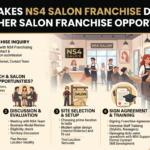
Why the Right Franchise Foundation Matters
A salon business can look exciting from the outside. Customers see stylish interiors, skilled professionals, attractive hair colours, bridal makeup, facials, nail services, and premium products. Behind the scenes, though, a successful salon requires systems.
A strong franchise foundation can help entrepreneurs understand how different parts of the business work together. This may include salon setup planning, service processes, team training, marketing direction, customer experience standards, and business operations.
For a new entrepreneur, this structure can be valuable. Starting independently often means making every decision alone. What services should be offered? How should prices be structured? How should staff be recruited? Which marketing channels should receive attention? How can customer complaints be handled professionally?
With the NS4 Salon Franchise, partners can work toward building their business around an organized brand and operational approach. This can make the journey more focused and reduce unnecessary trial and error.
Building on an Established Business System
A salon should not depend only on one talented stylist or makeup artist. A strong business needs repeatable systems.
For example, a system may define:
- How customers are welcomed
- How appointments are managed
- How consultations are conducted
- How services are recommended
- How hygiene and cleanliness are maintained
- How customer feedback is collected
- How follow-up communication is handled
- How staff performance is reviewed
When these processes are clear, daily operations can become easier to manage.
Consistency is particularly important in the beauty industry. A customer who enjoys a great experience once should have a good chance of receiving a similar experience during the next visit. This is how confidence develops.
Reducing Common Startup Challenges
Every business has risks, and no franchise can guarantee automatic success. Still, an organized franchise model can help partners avoid some common beginner mistakes.
These mistakes may include spending too much on unnecessary items, offering too many services without proper demand, ignoring local marketing, failing to train staff, or not monitoring expenses.
The goal is not simply to open the salon. The real goal is to build a salon that can attract customers, retain them, and operate efficiently for years.
Strategy 1: Choosing the Right Location
One of the first major decisions for a salon entrepreneur is location. Even a beautiful salon with skilled professionals can struggle if it opens in an area that doesn’t match its target market.
A successful location should be evaluated carefully.
Understanding Local Customer Demand
Before opening, franchise partners should study the local market. Important questions include:
- Who lives or works nearby?
- What age groups are common in the area?
- What beauty and grooming services are in demand?
- Are customers looking for affordable, premium, or luxury services?
- Is there demand for bridal makeup?
- Are hair treatments popular?
- Is there growing interest in nail services?
- How much are nearby customers willing to spend?
The answers can help a salon create the right service mix.
For example, one location may have strong demand for premium hair colour and advanced treatments. Another may generate more business from family grooming, facials, bridal services, and regular beauty packages.
Evaluating Competition and Accessibility
Competition isn’t always a bad sign. In fact, several salons in one commercial area may indicate strong customer demand. The important question is whether a new salon can offer a clear reason for customers to choose it.
Partners should consider visibility, parking, accessibility, surrounding businesses, residential areas, footfall, and local competition.
A salon located near shopping areas, residential communities, offices, or educational hubs may have different customer opportunities. The business plan should match the location rather than taking a one-size-fits-all approach.
Strategy 2: Delivering Consistent Service Quality
A beautiful logo can attract attention, and a great advertisement can bring customers through the door. However, service quality determines whether they return.
This is one of the most important growth factors for every NS4 Salon Franchise partner.
Standardizing the Customer Experience
The customer experience starts before the actual service.
It begins when someone sees the salon online, calls for information, sends a message, or walks through the entrance. Every interaction matters.
A strong service journey may include:
- A warm and professional greeting
- Understanding the customer’s needs
- Providing a proper consultation
- Clearly explaining suitable services
- Maintaining hygiene and comfort
- Delivering the service professionally
- Asking for feedback
- Suggesting appropriate aftercare
- Inviting the customer to return
Small details can make a big difference.
For example, customers appreciate punctuality, clean workstations, polite communication, transparent pricing, and professionals who listen carefully. These things may sound simple, but they create trust.
Creating Trust Through Consistency
Trust is built when customers know what to expect.
If a salon provides excellent service one month and poor service the next month, customers may not return. Consistency requires training, supervision, service standards, and communication.
The best approach is to avoid relying on luck. Partners should create repeatable processes that help every team member understand what quality means.
Quality Should Be Measured, Not Assumed
Managers should regularly review customer feedback, repeat bookings, complaints, cancellations, service outcomes, and online reviews.
If a problem appears repeatedly, it should be addressed quickly.
For instance, if customers frequently mention waiting too long, appointment management may need improvement. If customers complain about unclear pricing, staff communication may require additional training.
This mindset turns feedback into business improvement.
Strategy 3: Training and Developing the Salon Team
A salon’s people are one of its greatest assets.
Even the best interiors and equipment cannot replace a skilled, motivated, and customer-focused team. That’s why continuous staff development plays a major role in long-term growth.
Building Technical Skills
Beauty trends change quickly. Customers may ask about new hair colour techniques, hair treatments, skincare services, makeup styles, nail designs, and other emerging services.
A team must continue learning.
Regular training can help professionals improve:
- Hair cutting techniques
- Hair colouring knowledge
- Hair treatment application
- Styling skills
- Bridal and party makeup
- Skin and facial services
- Nail art and extensions
- Product knowledge
- Hygiene practices
- Consultation skills
Training shouldn’t be treated as a one-time activity completed when an employee joins.
The strongest salons build a culture of learning.
Improving Customer Communication
Technical skill is essential, but communication is equally important.
A stylist may know exactly how to perform a service, yet the customer can still be unhappy if expectations weren’t discussed properly.
Team members should learn how to ask useful questions, explain realistic results, discuss maintenance, and recommend suitable services without sounding pushy.
For example, instead of simply saying, “You need this treatment,” a professional can explain why the treatment may suit the customer’s hair or skin condition and what results can reasonably be expected.
This creates confidence.
Creating a Culture of Continuous Learning
Managers can encourage growth through regular team meetings, service demonstrations, performance discussions, and knowledge sharing.
A simple culture of improvement can include:
- Weekly skill practice
- Monthly service reviews
- Customer feedback discussions
- Product knowledge sessions
- Recognition for good performance
- Clear improvement goals
When employees feel they are developing professionally, they are often more engaged with the business.
Strategy 4: Using Smart Marketing to Generate Leads
A great salon still needs customers to know it exists.
Marketing should not be treated as an occasional activity performed only when business is slow. It should be an ongoing system.
For an NS4 Salon Franchise partner, smart marketing can support local awareness, lead generation, customer retention, and brand visibility.
Local Digital Marketing
Today’s customers often search online before choosing a salon.
They may search for terms such as:
- Best salon near me
- Unisex salon in my city
- Bridal makeup artist
- Hair colour salon
- Keratin treatment
- Hair spa
- Nail extension
- Facial services
This makes local digital visibility important.
A professional online presence should provide accurate business information, service details, photographs, contact options, customer reviews, and location information.
Social Media and Visual Content
Beauty is a highly visual industry. Before-and-after transformations, bridal looks, hair styling, nail art, skincare results, and salon interiors can help potential customers understand what the salon offers.
Content should be useful, attractive, and authentic.
Good content ideas include:
- Hair transformation videos
- Bridal makeup looks
- Client testimonials
- Nail art designs
- Beauty tips
- Behind-the-scenes videos
- Festival offers
- New service announcements
- Team introductions
- Educational reels
However, simply posting random content isn’t enough. The content should reflect the salon’s target audience and local market.
Google Business Profile and Local Visibility
Local search visibility can help customers discover nearby salons.
Partners should focus on keeping business information accurate and encouraging genuine customer feedback. High-quality photos, updated hours, correct contact details, and consistent information across online platforms can strengthen trust.
For broader guidance on building business credibility and responsible advertising, entrepreneurs can also review resources from the Google Maps
The key is simple: make it easy for potential customers to find accurate information and take the next step.
Strategy 5: Building Customer Loyalty
Getting a new customer is important. Getting that customer to return is even more valuable.
A loyal customer can book regular services, recommend the salon to friends and family, leave positive reviews, and become a long-term supporter of the business.
Creating Memorable Experiences
Customers remember how a business makes them feel.
A memorable salon experience doesn’t always require expensive gifts or dramatic gestures. Often, it comes from simple things done well.
These include:
- Remembering customer preferences
- Being respectful of time
- Offering honest recommendations
- Maintaining cleanliness
- Using professional communication
- Following up after important services
- Resolving complaints fairly
A customer who feels valued is more likely to return.
Loyalty, Referrals, and Repeat Visits
Partners can create structured loyalty efforts through membership programs, referral offers, service packages, or personalized follow-ups.
For example, after a hair treatment, the salon can recommend a suitable maintenance schedule and invite the customer to book the next appointment.
The goal should not be aggressive selling. It should be helpful communication.
Happy customers can become one of the strongest marketing channels. Word-of-mouth recommendations often carry more trust than advertisements.
Strategy 6: Managing Salon Operations Efficiently
Revenue is important, but a high-revenue salon can still struggle if expenses and operations are poorly managed.
Successful growth requires operational discipline.
Appointment and Staff Management
Poor appointment management can lead to long waiting times, stressed employees, and unhappy customers.
A salon should have a clear process for:
- Booking appointments
- Confirming appointments
- Managing walk-ins
- Allocating staff
- Handling delays
- Tracking cancellations
- Recording customer preferences
Staff schedules should also match business demand. If weekends are busy, the salon should prepare accordingly. If certain hours are consistently slow, managers can explore promotions, training sessions, or operational tasks during those periods.
Inventory and Expense Control
Salon products, disposables, tools, electricity, rent, salaries, and marketing all affect profitability.
Partners should monitor:
- Product consumption
- Stock levels
- Wastage
- Expired products
- Supplier costs
- Service profitability
- Monthly fixed expenses
Without regular tracking, small leaks can become major financial problems.
Measuring Important Business Numbers
Business decisions should be supported by data whenever possible.
Useful metrics include:
| Metric | Why It Matters |
|---|---|
| Monthly Revenue | Shows overall sales performance |
| Number of Customers | Indicates customer activity |
| Repeat Customer Rate | Measures loyalty |
| Average Bill Value | Shows spending per visit |
| Staff Productivity | Helps improve scheduling |
| Service-wise Revenue | Identifies popular services |
| Product Sales | Measures retail opportunities |
| Marketing Leads | Evaluates campaign effectiveness |
Numbers tell the real story.
If customer visits are increasing but profits aren’t improving, expenses may be rising too quickly. If marketing generates many enquiries but few bookings, the follow-up process may need attention.
Strategy 7: Increasing Revenue Per Customer
Growth doesn’t always mean finding thousands of new customers.
Sometimes the smartest opportunity is to increase the value created for existing customers.
Service Packages and Upselling
Upselling should mean helping customers choose suitable additional services, not pressuring them to spend unnecessarily.
For example, a customer booking a haircut may also benefit from a hair spa or conditioning service. A bridal customer may require pre-bridal skincare, hair styling, nail services, or additional event makeup.
Packages can make the buying process easier while increasing value.
The important rule is relevance.
Recommendations should match the customer’s needs.
Retail Product Opportunities
Home-care products can support both customer results and salon revenue.
After receiving a professional hair or skin service, customers may need suitable products to maintain the result at home.
Professionals should explain:
- How to use the product
- Why it may be suitable
- How often to use it
- What realistic benefits to expect
Creating Value Instead of Simply Cutting Prices
Constant discounting can damage a salon’s long-term positioning.
Instead of always reducing prices, businesses can create value through service bundles, memberships, seasonal packages, expert consultations, or exclusive experiences.
Price matters, of course. But customers also consider quality, trust, convenience, professionalism, and results.
Strategy 8: Building a Strong Local Brand Reputation
Reputation takes time to build and only moments to damage.
Every NS4 Salon Franchise partner should understand that local reputation can become a major competitive advantage.
Reviews and Customer Feedback
Online reviews influence how potential customers view a business.
The best way to receive positive reviews is not to chase them blindly. It is to consistently deliver experiences worth discussing.
Partners can politely ask satisfied customers for honest feedback. They should also respond professionally to criticism.
A negative review should not automatically lead to an argument. First, understand the concern. If the salon made a mistake, acknowledge it and work toward a fair solution.
Professional responses show future customers that the business cares.
Community Engagement
A local salon can strengthen its presence by connecting with the surrounding community.
This may include participating in local events, supporting relevant initiatives, collaborating with complementary businesses, or running seasonal campaigns.
The goal is to become more than a place where customers occasionally receive services. A strong salon brand can become a trusted part of the local beauty and lifestyle community.
Strategy 9: Planning for Long-Term Growth
Successful business owners don’t only think about today’s bookings. They also plan for the next month, next year, and beyond.
Growth should be intentional.
Setting Monthly and Annual Goals
Partners should create measurable goals.
Examples include:
- Increase monthly customer visits
- Improve repeat booking rates
- Grow average bill value
- Add a new high-demand service
- Improve online reviews
- Train staff in advanced techniques
- Reduce unnecessary product wastage
- Increase local brand awareness
Large goals should be broken into smaller actions.
For example, “Increase revenue” is a broad goal. A better plan may be to increase repeat visits, improve service packages, train staff, strengthen follow-ups, and measure performance every month.
Expanding Services and Opportunities
Expansion should follow market demand.
Before adding a new service, partners should ask:
- Is there customer demand?
- Does the team have the required skills?
- What equipment is needed?
- What are the costs?
- Can the service be marketed effectively?
- Will the service support profitability?
This prevents businesses from adding services simply because competitors have them.
Scaling Without Losing Quality
Growth can create new challenges.
A larger team requires stronger communication. More customers require better appointment systems. More locations require stronger operational consistency.
That’s why systems become even more important during expansion.
The business should grow without losing the quality and customer experience that helped it succeed in the first place.
Common Mistakes Salon Franchise Partners Should Avoid
Even a strong franchise model requires careful execution.
Common mistakes include:
1. Ignoring Local Market Research
What works in one city or neighborhood may not work exactly the same way elsewhere.
2. Depending Only on Discounts
Discounts can bring attention, but long-term success requires service quality and customer loyalty.
3. Neglecting Staff Training
Beauty trends and customer expectations change. Training must continue.
4. Failing to Track Business Performance
Without numbers, it is difficult to understand whether the business is truly improving.
5. Ignoring Customer Complaints
Complaints can reveal operational problems that need attention.
6. Inconsistent Marketing
Marketing should continue even during busy periods.
7. Poor Follow-Up
Many potential customers need a reminder or additional information before booking.
8. Growing Too Quickly
Expansion without strong systems can create more problems than profits.
How to Measure Salon Business Growth
Growth should be measured from several angles.
A salon may appear busy, but true business growth should include improvements in revenue, profitability, customer loyalty, team performance, and reputation.
A practical monthly review can answer:
- Did revenue increase?
- Did profit improve?
- Are more customers returning?
- Which services are growing?
- Which services are underperforming?
- Did the average bill value improve?
- Are customers leaving positive feedback?
- Is staff productivity improving?
- Are marketing efforts generating quality leads?
- What should be improved next month?
The NS4 Salon Franchise approach can provide partners with a structured foundation, but regular measurement helps turn daily activity into informed business decisions.
Frequently Asked Questions
1. How can an NS4 Salon Franchise partner grow a salon business?
An NS4 Salon Franchise partner can focus on service quality, staff training, local marketing, customer retention, efficient operations, financial monitoring, and consistent brand standards. Growth usually comes from improving several areas together rather than depending on only one strategy.
2. Is salon marketing important for franchise growth?
Yes. Marketing helps potential customers discover the salon and understand its services. A good strategy can include local search visibility, social media, customer referrals, promotional campaigns, visual content, and follow-up communication.
3. How important is staff training in a salon business?
Staff training is extremely important because the customer experience depends heavily on the people delivering services. Technical skills, consultations, product knowledge, communication, and customer service should all be improved continuously.
4. How can a salon increase repeat customers?
A salon can increase repeat customers by delivering consistent quality, remembering customer preferences, recommending suitable maintenance schedules, communicating professionally, resolving issues quickly, and creating loyalty or referral opportunities.
5. Should a salon always offer discounts to attract customers?
No. Discounts can be useful for specific campaigns, but relying only on low prices may reduce profitability and weaken brand positioning. Creating value through quality, packages, memberships, expert services, and excellent customer experiences can be more sustainable.
6. What numbers should a salon owner track every month?
Important numbers include total revenue, expenses, profit, number of customers, repeat customer rate, average bill value, service-wise revenue, staff productivity, inventory usage, and marketing results.
7. Can a franchise guarantee salon business success?
No business model can guarantee success. A franchise can provide systems, guidance, branding, and support, but results also depend on the franchise partner’s location, investment, management, team, local market, customer service, and execution.
8. What is the biggest factor in long-term salon success?
There isn’t just one factor. Long-term success usually comes from combining strong service quality, customer trust, trained staff, efficient operations, smart marketing, and continuous improvement.
Conclusion: Build Growth Step by Step
Growing a salon business successfully is a journey, not a one-day achievement. The strongest businesses are built through consistent action.
For NS4 Salon Franchise partners, the opportunity is to combine franchise support with strong local execution. Choosing the right location, training the team, delivering excellent customer experiences, using smart marketing, managing operations, and tracking performance can all contribute to sustainable growth.
The biggest lesson is simple: don’t focus only on getting more customers. Focus on building a better business.
When customers receive consistent value, employees continue improving, operations are monitored carefully, and marketing stays active, a salon can build stronger foundations for the future.
Success may not happen overnight, but with the right systems, discipline, and commitment, every step forward can create momentum. In the salon industry, trust is earned one customer, one service, and one positive experience at a time.
Post-Article Message: Ready to strengthen your salon entrepreneurship journey? Focus on consistent quality, smart marketing, trained professionals, and measurable business goals to build a stronger and more successful salon business.