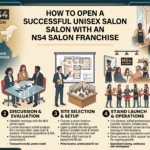
NS4 Salon Franchise Models: Which Salon Business Model Is Right for You? – 5 Powerful Options
Meta Description: NS4 Salon Franchise Models offer flexible business options for different budgets, locations, and salon goals. Explore Luxury, Premium, and Studio models and discover which salon franchise format may be right for you.
Starting a salon business can be an exciting opportunity, but choosing the right business format is just as important as choosing the right location. A large luxury salon may work beautifully in a premium market, while a compact studio can be a smarter choice for a smaller city or a high-footfall neighborhood. This is where understanding NS4 Salon Franchise Models becomes important for aspiring salon entrepreneurs.
NS4 Salon offers different franchise formats designed around different investment capacities, space requirements, customer profiles, and business goals. Instead of forcing every entrepreneur into the same setup, the model allows investors to consider a salon format that fits their market and resources.
Whether you’re an experienced salon professional, an investor looking for a beauty-business opportunity, or someone planning to enter the salon industry for the first time, understanding the differences between the models can help you make a more informed decision.
In this detailed guide, we’ll explore the available NS4 Salon franchise formats, estimated investment structure, space requirements, advantages, important considerations, and the factors you should evaluate before selecting a model.
Understanding NS4 Salon Franchise Models
An NS4 salon franchise gives an entrepreneur the opportunity to operate a salon under an established brand and business system rather than building everything from scratch.
For a new business owner, this can make the journey more structured. Branding, salon positioning, service presentation, training, operational systems, and marketing can all play an important role in building customer confidence.
The key advantage of having multiple NS4 Salon Franchise Models is flexibility.
Different entrepreneurs have different requirements. For example:
- One investor may have a larger budget and want a premium salon experience.
- Another may want a professionally designed salon in a medium-sized commercial space.
- A first-time entrepreneur may prefer a smaller studio with a lower initial investment.
- An existing salon owner may be interested in converting or expanding through a recognized franchise brand.
Therefore, the “best” model isn’t necessarily the biggest model. It’s the one that matches your location, finances, customer demand, and long-term plans.
Why Choose a Salon Franchise?
Launching an independent salon requires you to develop your brand identity, pricing strategy, customer experience, marketing approach, operating procedures, and reputation from the ground up.
A franchise can provide a more organized starting point.
Some potential advantages include:
- Established brand positioning
- Standardized salon concepts
- Professional service presentation
- Business and operational guidance
- Marketing support
- Training and skill development
- A structured customer experience
- Potentially faster brand recognition
However, a franchise isn’t a magic wand. Location, management, staff quality, customer service, pricing, marketing, and financial discipline still matter enormously.
That’s why entrepreneurs should study the business model carefully before investing.
What Makes NS4 Different?
NS4 Salon has positioned itself around professional beauty and hair services, offering customers a broad range of salon solutions.
Depending on the location and salon format, services can include haircuts, hair coloring, hair treatments, smoothening, keratin, nanoplastia, hair spa, facial services, bridal makeup, party makeup, manicure, pedicure, nail services, and other beauty treatments.
For a franchise owner, having a broad service portfolio can create multiple revenue opportunities. A customer who initially visits for a haircut may later purchase a hair spa, color service, facial, treatment, or other service.
That creates opportunities to increase repeat visits and average customer spending through responsible cross-selling and service recommendations.
5 Powerful NS4 Salon Franchise Models to Consider
The most important part of your franchise decision is selecting a format that fits your market.
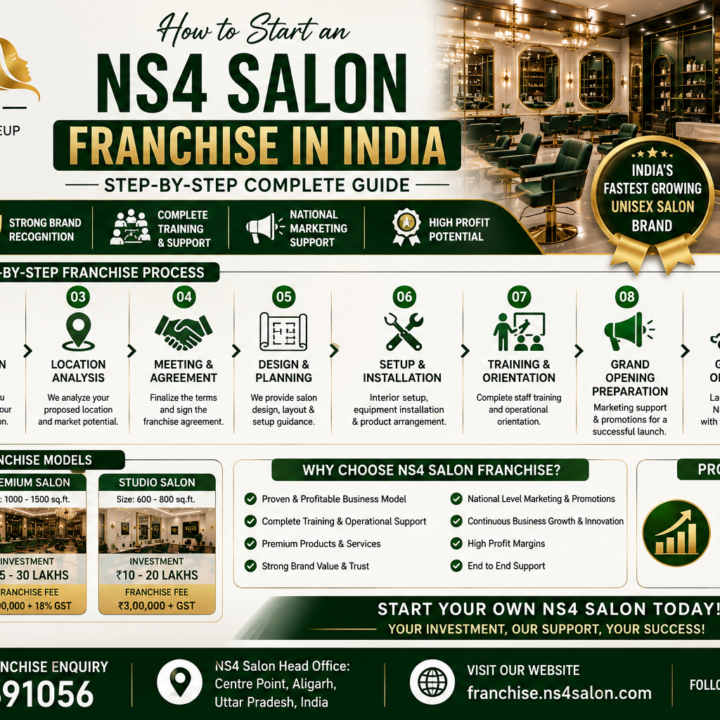
NS4 Salon’s franchise structure includes three primary salon formats: Luxury, Premium, and Studio. These formats are designed for different space and investment requirements.
Luxury Salon Model
The Luxury model is designed for entrepreneurs who want to establish a larger, high-end salon experience.
The approximate space requirement is 2,000–3,000 square feet.
The franchise fee is approximately ₹7 lakh plus applicable GST, while the overall business investment can vary depending on interiors, equipment, location, staffing, and other setup requirements.
A luxury salon can be particularly suitable for:
- High-income residential areas
- Premium commercial markets
- Busy urban locations
- Large shopping or lifestyle destinations
- Entrepreneurs targeting a premium customer segment
The larger space allows the business to create separate zones for different services. Depending on the final layout, the salon can accommodate dedicated areas for hair services, beauty treatments, makeup, nails, consultation, waiting, and other customer requirements.
The biggest advantage is the ability to create a more expansive customer experience.
However, there’s a catch: a larger salon also means higher operating expenses.
Rent, electricity, staff salaries, equipment maintenance, consumables, housekeeping, and marketing expenses can all increase as the size of the salon grows.
Therefore, the Luxury model should ideally be considered when the location has enough customer demand to support a larger operation.
Premium Salon Model
The Premium model is designed for entrepreneurs who want a professional salon experience without taking on the scale of a 2,000–3,000 sq. ft. luxury setup.
The approximate space requirement is 1,000–1,500 square feet.
The franchise fee is approximately ₹5 lakh plus applicable GST.
For many entrepreneurs, this can represent a practical middle ground.
The salon can still offer a comprehensive range of hair and beauty services while requiring less space than the Luxury model.
A Premium salon may be appropriate for:
- Established residential neighborhoods
- Commercial markets
- Growing cities
- High-footfall localities
- Entrepreneurs with a moderate investment budget
One of its biggest strengths is balance.
You’re not necessarily trying to compete purely on size. Instead, you can focus on professional service, customer experience, cleanliness, trained staff, consultation, and consistent results.
For a first-time entrepreneur with sufficient capital and a strong location, the Premium model may be worth considering because it offers a balance between salon capacity and operating scale.
Studio Salon Model
The Studio model is the compact option.
It generally requires approximately 600–800 square feet, with a franchise fee of approximately ₹3 lakh plus applicable GST.
This model can be attractive to entrepreneurs who want to enter the salon industry with a smaller footprint.
A Studio salon may be suitable for:
- Smaller commercial spaces
- Residential neighborhoods
- Developing markets
- High-density local areas
- Entrepreneurs with a comparatively smaller investment budget
The smaller footprint can also make the business easier to manage in certain locations.
However, compact doesn’t mean careless.
A smaller salon still needs excellent planning. Every square foot should be used efficiently. The layout, customer movement, storage, service stations, reception, lighting, ventilation, and hygiene should be carefully considered.
The goal is simple: make a smaller salon feel professional, comfortable, and efficient.
Comparing the Models
Here’s a simplified comparison of the three main formats:
| Model | Approx. Space | Approx. Franchise Fee | Best Suited For |
|---|---|---|---|
| Luxury | 2,000–3,000 sq. ft. | ₹7 lakh + GST | Premium/high-end markets |
| Premium | 1,000–1,500 sq. ft. | ₹5 lakh + GST | Growing and established markets |
| Studio | 600–800 sq. ft. | ₹3 lakh + GST | Compact locations and smaller markets |
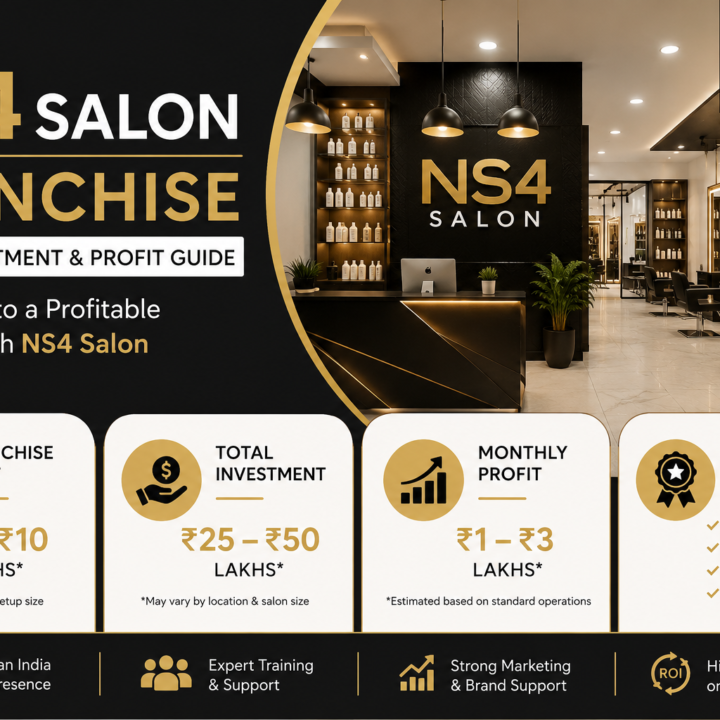
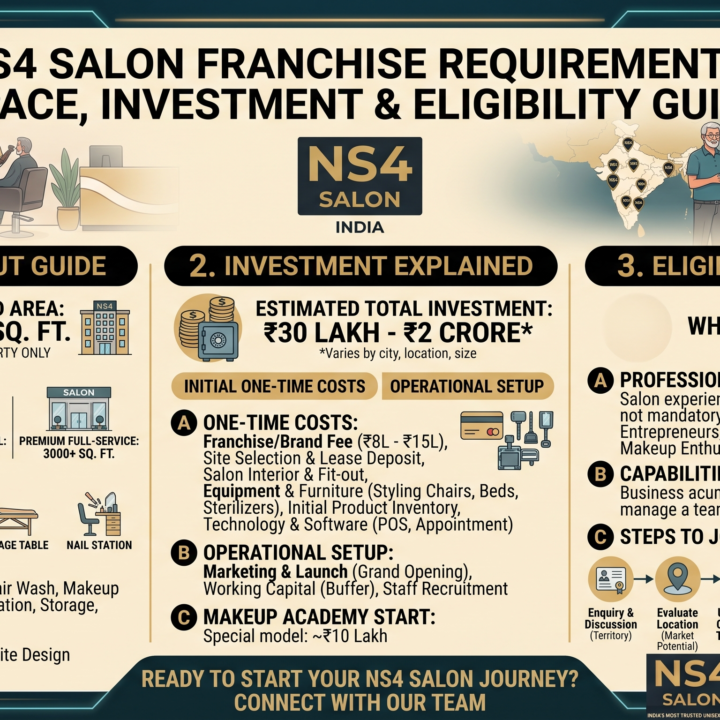
These figures should be treated as indicative franchise-format information rather than a guaranteed total project cost. The actual investment can vary significantly based on location, rent, interiors, equipment, staffing, local regulations, working capital, and other business expenses.
How Much Investment Does a Salon Franchise Require?
One common mistake new entrepreneurs make is looking only at the franchise fee.
The franchise fee is just one part of the total investment.
Before signing an agreement, create a complete financial plan that includes both startup and operating expenses.
Your total salon investment may involve:
- Franchise fee
- GST and applicable taxes
- Interior work
- Salon furniture
- Styling stations
- Shampoo stations
- Beauty equipment
- Makeup equipment
- Nail equipment
- Air conditioning
- Electrical work
- Signage
- POS or billing systems
- Security systems
- Initial inventory
- Staff recruitment
- Staff salaries
- Marketing
- Rent deposit
- Licenses and registrations
- Working capital
This is why entrepreneurs shouldn’t decide based on franchise fee alone.
Franchise Fee and GST
The franchise fee represents the cost associated with joining the franchise system, subject to the terms of the applicable franchise agreement.
For the commonly discussed NS4 formats, the approximate franchise fees are:
- Luxury: ₹7 lakh + GST
- Premium: ₹5 lakh + GST
- Studio: ₹3 lakh + GST
The exact commercial terms should always be confirmed directly with NS4 before making an investment decision.
Interior and Setup Costs
Salon interiors can become one of the largest startup expenses.
A salon isn’t simply a room with chairs and mirrors. It needs an environment that makes customers feel comfortable and confident.
The setup may include:
- Reception counter
- Waiting area
- Hair stations
- Mirrors
- Salon chairs
- Shampoo units
- Facial beds
- Manicure and pedicure areas
- Lighting
- Storage
- Staff area
- Product displays
- Branding
- Electrical and plumbing work
The cost will depend heavily on the size, design, location, materials, and final specifications.
Working Capital
Don’t forget about working capital.
Even a well-planned salon may take time to reach stable monthly profitability.
Working capital can help cover expenses such as:
- Salaries
- Rent
- Electricity
- Consumables
- Product inventory
- Advertising
- Maintenance
- Software
- Cleaning
- Miscellaneous expenses
Having sufficient financial reserves can reduce pressure during the initial months.
How to Choose the Right Salon Business Model
Choosing between Luxury, Premium, and Studio shouldn’t be based on excitement alone.
Your decision should be supported by numbers and market research.
Consider Your Budget
Start by calculating how much you can realistically invest without putting excessive pressure on your finances.
Don’t use your entire available capital for construction and interiors.
A healthier plan leaves room for working capital and unexpected expenses.
For example, if two models are affordable, don’t automatically select the larger one. Ask yourself whether the additional capacity can realistically generate additional revenue.
Consider Your Location
Location can make or break a salon.
Study:
- Population density
- Nearby residential areas
- Commercial activity
- Competitor salons
- Parking
- Visibility
- Footfall
- Accessibility
- Rent
- Local customer spending patterns
A 3,000 sq. ft. luxury salon may not be the right choice for a location where customer demand is limited.
On the other hand, a small studio may struggle if the location has a large premium customer base that expects a broader salon environment.
In other words, match the salon to the market—not the other way around.
Consider Your Target Customers
Think about who you want to serve.
Are your target customers:
- Students?
- Working professionals?
- Families?
- Brides?
- Premium customers?
- Men and women?
- Young adults?
- Local residents?
- Corporate customers?
Your customer profile should influence the salon’s size, services, pricing, staffing, and overall experience.
Consider Your Growth Plans
Your first salon doesn’t have to be your final salon.
An entrepreneur may begin with a Studio model and later open larger Premium or Luxury locations.
Alternatively, someone with significant resources may begin with a Premium or Luxury format.
Think about where you want the business to be in three to five years.
Benefits of Starting an NS4 Salon Franchise
A salon franchise can provide several advantages compared with building an entirely new independent brand.
Brand Recognition
Building a new salon brand takes time.
A franchise model can provide an established identity that may make marketing and customer acquisition more structured.
Professional Business Structure
A franchise system can give entrepreneurs a framework for operating the business.
This can be particularly helpful for first-time business owners.
Multiple Revenue Streams
A full-service salon can generate revenue from multiple categories.
For example:
Hair Services + Hair Treatments + Hair Color + Skin Services + Makeup + Nail Services + Packages = Multiple Revenue Opportunities
Customers can also return for maintenance services.
Hair color requires maintenance. Hair treatments may be repeated. Facials and grooming services can become recurring purchases. Bridal customers can also create opportunities for pre-bridal and related services.
Training and Service Standards
Salon success isn’t only about having beautiful interiors.
The actual customer experience depends on the people delivering the service.
Staff training, consultation, product knowledge, technical skills, hygiene, communication, and customer handling all matter.
Marketing Opportunities
Modern salon marketing can include:
- Google Business Profile
- WhatsApp marketing
- Local SEO
- Google Search campaigns
- Referral programs
- Festival offers
- Membership programs
- Customer loyalty programs
- Before-and-after content
Franchise owners should use digital marketing consistently rather than relying only on opening-day promotions.
Common Mistakes New Franchise Owners Should Avoid
Even a strong franchise concept can struggle if the business is poorly managed.
Here are some mistakes to avoid.
Choosing a Location Based Only on Cheap Rent
Cheap rent isn’t always a bargain.
A low-rent location with poor visibility and limited demand can cost more in lost revenue.
Overspending on Interiors
Customers want a good experience, but excessive spending on interiors can put unnecessary pressure on the business.
The objective should be professional, attractive, functional, and brand-aligned.
Hiring Without Training
A salon’s reputation is closely linked to its staff.
Don’t focus only on hiring people who can perform technical services. Look for professionals who can also communicate well and create a positive customer experience.
Ignoring Digital Marketing
Customers search online before visiting many salons.
Your Google Business Profile, reviews, photographs, website, social media presence, and local SEO should be maintained regularly.
Offering Too Many Discounts
Discounts can bring customers through the door, but excessive discounting can damage profitability and brand perception.
Instead, create strategic packages and value-based offers.
Poor Financial Tracking
Track:
- Daily sales
- Service-wise revenue
- Product sales
- Staff productivity
- Customer retention
- Average bill value
- Marketing spend
- Monthly expenses
- Profit margins
Numbers tell the real story.
Steps to Start an NS4 Salon Franchise
If you’re considering an NS4 franchise, the process should begin with research rather than immediate investment.
Step 1: Understand the Franchise Formats
Compare Luxury, Premium, and Studio models.
Step 2: Define Your Budget
Calculate your total available capital, not just the franchise fee.
Step 3: Select Your Location
Evaluate potential locations based on demand, accessibility, competition, rent, and customer profile.
Step 4: Discuss the Opportunity
Connect with the NS4 franchise team to understand current commercial terms, requirements, support, and documentation.
You can explore the franchise opportunity through the NS4 Salon Franchise website: franchise.ns4salon.com
Step 5: Prepare the Business Plan
Estimate:
- Startup cost
- Monthly expenses
- Expected customer volume
- Average ticket size
- Break-even point
- Marketing budget
- Working capital requirements
Step 6: Finalize the Salon Format
Once the location and financial plan are clear, select the model that fits the business.
Step 7: Plan the Setup
Work through design, branding, equipment, staffing, inventory, and operational requirements.
Step 8: Build a Marketing Strategy
Begin local marketing before launch and continue after opening.
A grand opening can create awareness, but long-term success comes from consistent marketing and excellent service.
Who Should Choose the Luxury Model?
The Luxury model may be suitable for entrepreneurs with a larger investment capacity and a location capable of supporting a premium salon.
It’s worth considering if:
- You have access to 2,000–3,000 sq. ft.
- Your location has strong customer potential.
- You want a larger salon experience.
- You can support higher operating expenses.
- You have a premium target audience.
- You want room for multiple service categories.
The model offers greater physical capacity, but capacity only matters when customer demand supports it.
Who Should Choose the Premium Model?
The Premium model can be an excellent middle-ground option.
It may suit entrepreneurs who want a professionally positioned salon but don’t require a 2,000–3,000 sq. ft. setup.
Consider it if:
- You have approximately 1,000–1,500 sq. ft.
- Your market has steady salon demand.
- You have a moderate-to-strong investment budget.
- You want a broad service offering.
- You want a balance between scale and operating costs.
For many markets, this balance can be attractive.
Who Should Choose the Studio Model?
The Studio model can make sense for entrepreneurs who want a smaller footprint.
Consider it if:
- Your available space is around 600–800 sq. ft.
- You want a compact business format.
- Your location has strong local demand.
- You prefer a smaller operating setup.
- You want to enter the salon business at a lower franchise-fee level.
However, remember that the lower franchise fee doesn’t mean there will be no additional setup costs.
How to Make Your Salon Franchise Successful
Selecting the correct model is only the beginning.
Long-term success requires disciplined execution.
Focus on five major areas:
1. Customer Experience
Make every visit comfortable and professional.
2. Service Quality
Consistency matters more than occasional exceptional results.
3. Staff Development
Keep your team trained in technical skills, communication, hygiene, and customer handling.
4. Local Marketing
Build strong visibility in your local market through online and offline channels.
5. Customer Retention
A returning customer is often more valuable than a one-time discount customer.
Create reasons for customers to come back through quality, service reminders, memberships, packages, and personalized recommendations.
FAQs About NS4 Salon Franchise Models
1. What are the main NS4 Salon Franchise Models?
The primary NS4 franchise formats are Luxury, Premium, and Studio. They differ mainly in salon size, franchise fee, investment level, and the type of market they are intended to serve.
2. How much is the NS4 Salon franchise fee?
The indicative franchise fees are approximately ₹7 lakh + GST for the Luxury model, ₹5 lakh + GST for the Premium model, and ₹3 lakh + GST for the Studio model. Actual commercial terms should be confirmed directly with NS4.
3. What is the space requirement for an NS4 Salon franchise?
The approximate requirements are 2,000–3,000 sq. ft. for Luxury, 1,000–1,500 sq. ft. for Premium, and 600–800 sq. ft. for Studio.
4. Which NS4 Salon model is best for a first-time investor?
There isn’t one universal answer. A first-time investor should select a model based on available capital, location, customer demand, management ability, and long-term goals. The Studio or Premium format may be more practical in certain markets, while a strong premium location may justify a Luxury model.
5. Does the franchise fee cover the entire salon investment?
No. The franchise fee is only one component of the overall investment. Entrepreneurs should also budget for interiors, equipment, rent deposits, staff, inventory, marketing, licenses, utilities, and working capital.
6. Can I start an NS4 Salon in a smaller city?
Yes, the Studio and Premium formats may provide flexibility for different market sizes. However, the suitability of a location should be assessed based on local demand, competition, spending power, accessibility, and other business factors.
7. Is a salon franchise profitable?
A salon franchise can be profitable, but profitability isn’t guaranteed. It depends on factors such as location, pricing, customer volume, staff productivity, operating costs, marketing, service quality, and management.
8. How do I select between Luxury, Premium, and Studio?
Start with three questions: How much can I invest? How much suitable space is available? And what type of customers does my location attract? Your answers can help narrow down the right format.
9. What services can an NS4 Salon offer?
Depending on the selected format and location, salon services can include haircuts, styling, hair coloring, hair treatments, hair spa, keratin, nanoplastia, smoothening, facials, makeup, bridal services, manicure, pedicure, nail services, and other beauty treatments.
10. Where can I learn more about the NS4 Salon franchise opportunity?
Prospective franchise owners can visit the official NS4 Salon franchise website to learn more and contact the franchise team: https://franchise.ns4salon.com/
Conclusion
Choosing the right salon format is one of the most important decisions an aspiring salon entrepreneur can make.
The NS4 Salon Franchise Models provide different options for entrepreneurs with different budgets, spaces, locations, and ambitions. The Luxury model is designed for larger premium setups, the Premium model provides a balanced mid-sized format, and the Studio model offers a compact entry point.
But don’t simply choose the model with the lowest franchise fee—or the biggest salon because it looks impressive.
Instead, look at the complete picture.
Evaluate your investment capacity, location, customer demand, competition, operating costs, staffing requirements, and growth strategy. A well-planned Studio salon in the right location can outperform a much larger salon in the wrong market.
Likewise, a Premium or Luxury salon can create significant opportunities when the location and customer base support its scale.
Ultimately, the strongest salon businesses combine the right format + the right location + skilled professionals + excellent customer service + consistent marketing + disciplined financial management.
If you’re seriously considering entering the salon industry, start by comparing the available NS4 Salon franchise formats and discussing your location and investment plan with the franchise team. With proper research and realistic planning, you can choose a salon business model that’s aligned with your goals and positioned for sustainable growth.