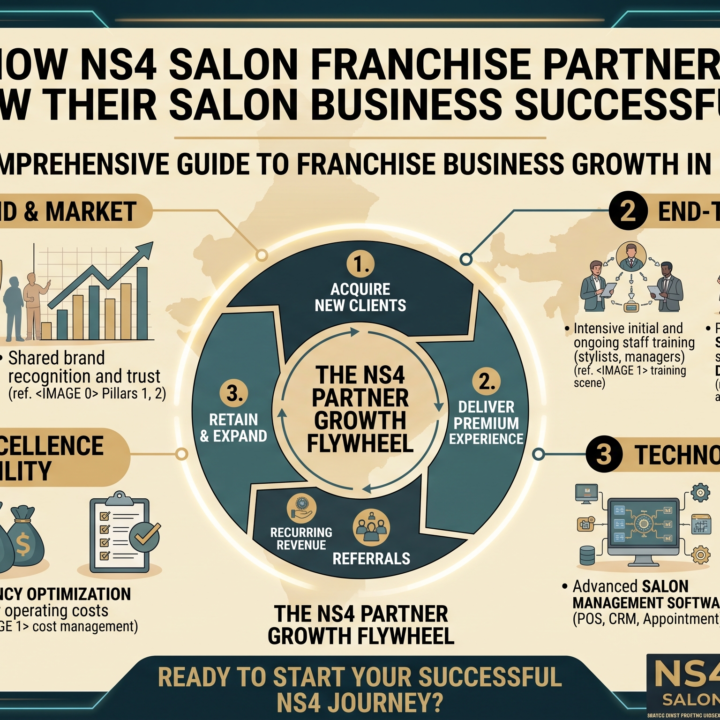
Starting a salon business in India is an exciting opportunity for aspiring entrepreneurs who want to enter the rapidly growing beauty and wellness industry. With increasing awareness of personal grooming, professional haircare, skincare, beauty treatments, and lifestyle services, the demand for quality salons continues to grow across metropolitan cities, tier-2 cities, and smaller towns.
Whether we plan to open a small beauty salon, a premium unisex salon, a ladies’ salon, a men’s grooming studio, or a luxury hair and beauty salon, the industry offers several business opportunities. However, building a successful salon requires more than investing in furniture and hiring beauticians. We need a clear business plan, the right location, trained professionals, quality products, effective marketing, and a customer-focused approach.
For beginners, understanding the complete salon setup process can make the journey easier and help avoid common business mistakes.
In this comprehensive guide, we will explore 10 essential steps to start a salon business in India, including investment, salon registration, equipment, staff recruitment, marketing, and franchise opportunities.
1. Research the Indian Salon and Beauty Industry
Before opening a salon, we should understand the local beauty and wellness market. The Indian salon industry offers opportunities in haircare, skincare, grooming, bridal makeup, spa treatments, and professional beauty services.
Customers today are increasingly interested in professional salon experiences rather than basic grooming services. Popular services include:
-
Haircuts and professional hairstyling
-
Hair colouring, global colour, and highlights
-
Keratin and hair smoothening treatments
-
Hair spa and hair repair treatments
-
Bridal and party makeup
-
Facials and advanced skincare
-
Manicure and pedicure
-
Waxing and threading
-
Men’s grooming and beard styling
-
Nail extensions and nail art
We should research which services are most popular in our target location. For example, a salon near a residential area may receive regular haircut, facial, and grooming bookings, while a salon near a wedding market may generate additional revenue through bridal makeup and hairstyling.
Market research helps us identify customer demand, understand competitors, select profitable services, and develop a suitable salon business model.
2. Choose the Right Salon Business Model
Selecting the right business model is one of the most important decisions when starting a salon business in India.
We can choose from several salon business formats depending on our investment capacity, business goals, and target customers.
Independent Salon Business
An independent salon allows us to build our own brand, choose our services, establish pricing, and manage operations independently.
However, we must develop our own marketing strategy, create brand recognition, establish operating procedures, and build a customer base.
Unisex Salon Business
A unisex salon serves both male and female customers. It can offer haircuts, hairstyling, hair treatments, facials, grooming, and other beauty services.
This model can attract a broader customer base and create multiple revenue opportunities.
Ladies’ Beauty Salon
A ladies’ salon focuses on women’s beauty and personal care requirements. Popular services include facials, waxing, threading, hair treatments, bridal makeup, and party makeup.
Men’s Grooming Salon
A men’s salon provides haircuts, beard styling, shaving, facials, hair colouring, and grooming packages.
Salon Franchise Business
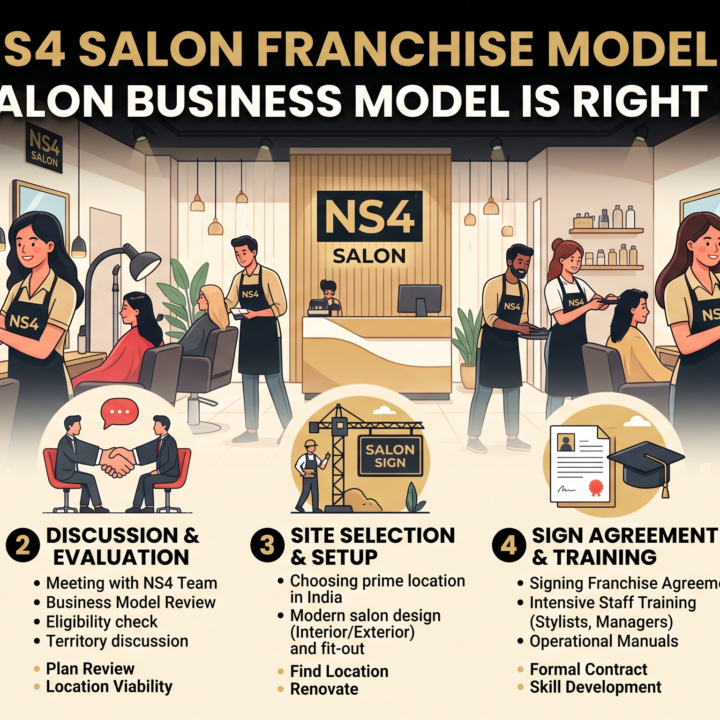
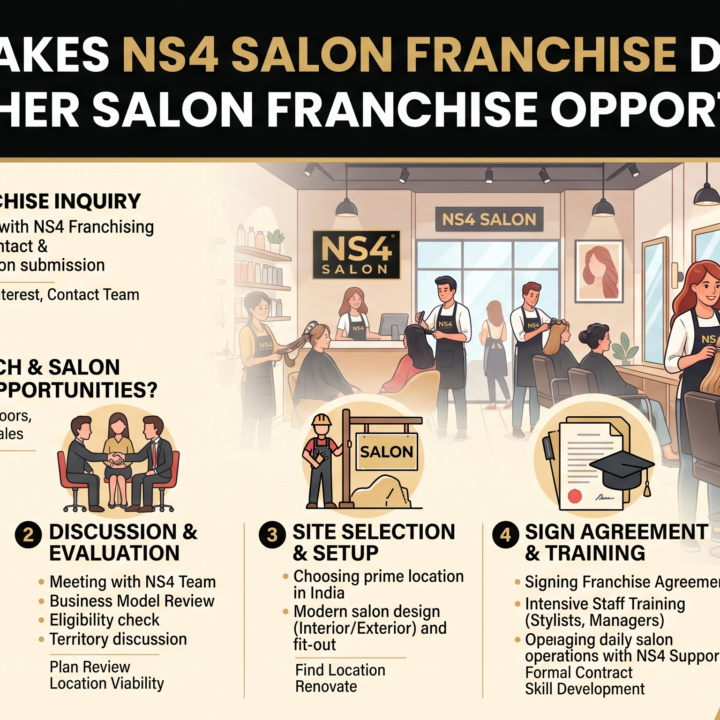
A salon franchise is an attractive option for beginners who want to start a business with an established brand.
Through a franchise model, we may receive support with:
-
Brand identity and recognition
-
Salon interior and setup guidance
-
Staff training and development
-
Service standards and operating procedures
-
Marketing and promotional support
-
Business planning and operational guidance
Brands such as NS4 Salon provide an opportunity for aspiring entrepreneurs to explore the salon franchise business model.
Choosing the right business structure depends on our budget, experience, preferred level of independence, and long-term expansion plans.
3. Prepare a Complete Salon Business Plan
A professional salon business plan provides direction and helps us manage the business efficiently.
Before investing money, we should prepare a detailed plan covering the following areas:
Business objectives: Decide whether we want to operate a neighbourhood salon, premium unisex salon, or multiple salon outlets.
Target audience: Identify our ideal customers based on age group, location, income level, lifestyle, and beauty requirements.
Services: Prepare a list of services we intend to offer and identify the most suitable service categories.
Pricing strategy: Research competitor pricing and establish service charges that cover operating expenses while remaining attractive to customers.
Investment planning: Calculate the expenses required for rent, interiors, equipment, products, salaries, registration, and marketing.
Revenue planning: Estimate customer visits, average billing value, monthly sales, and operating expenses.
Marketing strategy: Plan how we will attract new customers through Google Business Profile, Instagram, local promotions, referrals, and other channels.
We should also prepare a monthly cash-flow estimate to ensure sufficient funds are available for regular expenses.
A well-prepared salon business plan helps us make informed decisions and establish realistic financial expectations.
4. Select the Best Location for Your Salon
Location plays a major role in the success of a salon business.
Even a beautifully designed salon may struggle if it is difficult for customers to find or access.
When selecting a commercial location, we should consider:
-
Residential population in the surrounding area
-
Visibility from the main road
-
Availability of parking
-
Nearby shopping complexes and markets
-
Competition from existing salons
-
Accessibility through public transport
-
Rental expenses and maintenance charges
-
Availability of water and electricity
For beginners, a location near residential societies, commercial markets, shopping centres, or busy neighbourhoods can be a practical choice.
We should also consider the size of the salon. A small salon may operate comfortably in a compact commercial space, while a premium unisex salon may require separate service areas, styling stations, shampoo stations, reception, and waiting space.
The best salon location is not necessarily the most expensive one. It is the location that provides the right combination of customer demand, accessibility, visibility, and affordable operating costs.
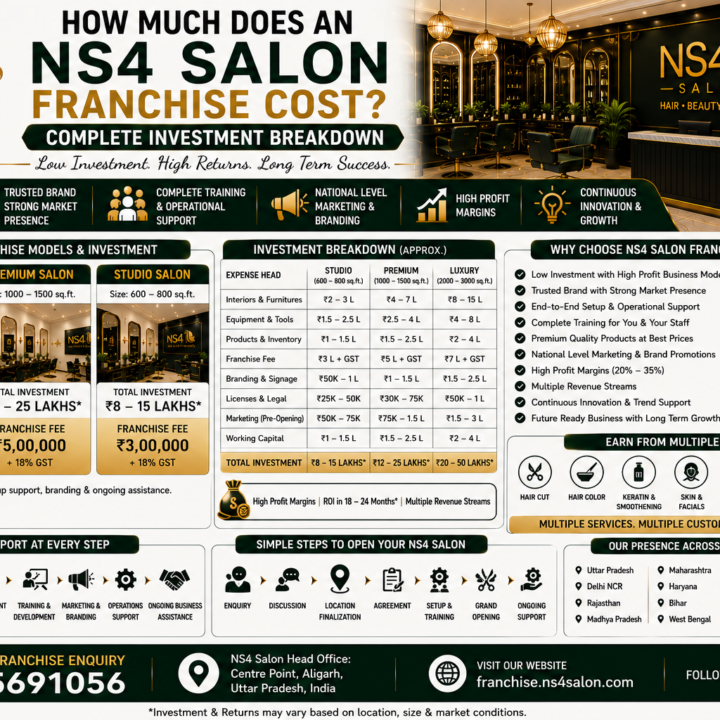
5. Calculate the Salon Business Investment in India
Understanding the total investment is essential before starting a salon.
The cost of opening a salon in India depends on its size, location, interior design, equipment quality, services, and business model.
Here is an illustrative investment estimate for different salon formats.
| Salon Type | Estimated Investment |
|---|---|
| Small Salon | ₹3–5 lakh |
| Standard Unisex Salon | ₹5–10 lakh |
| Premium Salon | ₹10–20 lakh |
| Luxury Salon | ₹20–40 lakh or more |
These are indicative planning ranges, not fixed market prices. Actual costs will vary depending on the city, property condition, rental deposit, equipment, and interiors.
Major Salon Setup Expenses
| Expense Category | Estimated Cost |
|---|---|
| Interior and Furniture | ₹1–4 lakh |
| Salon Equipment | ₹50,000–₹2 lakh |
| Beauty and Hair Products | ₹30,000–₹1 lakh |
| Rental Deposit | ₹50,000–₹2 lakh |
| Branding and Signage | ₹20,000–₹60,000 |
| Registration and Documentation | Varies |
| Initial Marketing | ₹15,000–₹50,000 |
| Working Capital | ₹50,000–₹1 lakh |
These expenses are examples for initial budgeting and may overlap with the overall investment ranges.
We should always maintain working capital for rent, electricity, staff salaries, product replenishment, and other monthly expenses.
It is important not to spend the entire budget on interiors. A salon needs sufficient financial resources to operate smoothly during its initial months.
6. Complete Salon Registration and Legal Requirements
Before opening a salon, we should understand the applicable business registration and local compliance requirements.
The specific requirements depend on the state, city, business structure, employee count, and services offered.
Common requirements may include:
-
Business registration as a proprietorship, partnership, LLP, or private limited company, as applicable.
-
Shop and Establishment registration under the relevant state law.
-
Municipal trade licence, wherever required.
-
GST registration when applicable under prevailing GST rules.
-
PAN and business banking arrangements.
-
Employee-related registrations and compliance, wherever applicable.
-
Fire safety compliance, where required.
-
Appropriate agreements for rented commercial premises.
We should also maintain proper invoices, employee records, supplier bills, and financial documentation.
If we plan to offer specialised beauty or wellness services, we should verify whether additional permissions or professional requirements apply.
Taking advice from a qualified accountant or business consultant can help us complete the registration process correctly.
7. Purchase Professional Salon Equipment and Products
Salon equipment directly influences service quality, staff efficiency, and customer experience.
We should invest in professional-grade equipment that is suitable for our planned services.
Essential Hair Salon Equipment
-
Professional styling chairs
-
Hair cutting scissors
-
Hair dryers
-
Hair straighteners
-
Curling machines
-
Shampoo stations
-
Hair wash units
-
Hair colour bowls and brushes
-
Professional mirrors
-
Hair styling trolleys
Essential Beauty Salon Equipment
-
Facial beds
-
Facial steamers
-
Magnifying lamps
-
Wax heaters
-
Manicure and pedicure stations
-
Beauty trolleys
-
Sterilisation and sanitisation equipment
-
Makeup chairs and lighting
Professional Beauty Products
We should select authentic professional haircare and skincare products from reliable suppliers.
Product quality is important because customers expect consistent results, safe application, and professional treatment experiences.
We should also maintain an inventory system to monitor product usage, stock levels, expiry dates, and purchasing costs.
Buying unnecessary equipment at the beginning can increase investment without generating additional revenue. Therefore, we should prioritise equipment according to our initial service menu.
8. Hire Skilled Salon Staff and Provide Professional Training
The quality of salon services depends heavily on the knowledge, technical skills, and behaviour of employees.
We should recruit professionals according to the services offered by the salon.
A standard salon team may include:
-
Salon manager
-
Senior hairstylist
-
Junior hairstylist
-
Professional beautician
-
Makeup artist
-
Nail technician
-
Receptionist
For a small salon, we may initially operate with a smaller team and increase staffing as customer demand grows.
However, technical knowledge alone is not enough. Employees should also understand customer communication, hygiene, product knowledge, service consultation, and professional behaviour.
Why Salon Staff Training Matters
Regular training helps employees improve their technical abilities and maintain consistent service quality.
Training should cover:
-
Modern haircutting techniques
-
Hair colouring and chemical treatments
-
Skin analysis and facial procedures
-
Bridal and party makeup
-
Product application
-
Customer consultation
-
Hygiene and sanitation
-
Upselling and service recommendations
We should also organise periodic skill-development sessions to introduce new trends and improve service standards.
A professionally trained team can improve customer satisfaction, encourage repeat visits, and strengthen the salon’s reputation.
9. Create a Strong Salon Marketing Strategy
Marketing is essential for attracting customers, building brand awareness, and generating regular appointments.
Even a salon located in a busy market needs a proper marketing strategy to stand out from competitors.
We should focus on both online and offline promotion.
Google Business Profile for Local Salon Marketing
Google Business Profile is an important tool for local businesses.
We should create and optimise our salon profile with:
-
Correct salon name and address
-
Updated contact information
-
Business operating hours
-
Professional salon photographs
-
Complete service descriptions
-
Appointment information
-
Genuine customer reviews
When people search for terms such as “salon near me,” “best salon in my area,” or “hair salon in [city name],” a properly maintained business profile can help improve local visibility.
Instagram and Facebook Marketing
Social media platforms help salons showcase their work and connect with potential customers.
We should regularly publish:
-
Before-and-after transformations
-
Haircut and hairstyling videos
-
Hair colour results
-
Bridal makeup photographs
-
Customer testimonials
-
Seasonal beauty offers
-
Festival promotions
-
Professional haircare tips
High-quality reels and authentic service photographs can help build trust and encourage appointment enquiries.
Promotional Offers and Packages
Special introductory offers can encourage new customers to visit the salon.
Examples include:
-
Haircut and hair spa packages
-
Facial and cleanup combinations
-
Bridal makeup packages
-
Hair treatment offers
-
Monthly grooming memberships
-
Referral discounts
-
Festival beauty packages
We should design offers carefully to maintain profitability rather than competing only on low prices.
Customer Referral Marketing
Satisfied customers are one of the most valuable sources of new business.
We can introduce referral programmes that reward existing customers for recommending our salon to friends and family.
Consistent service quality and positive customer experiences can create long-term brand loyalty.
10. Focus on Customer Experience and Long-Term Business Growth
Opening a salon is only the beginning. Building a successful salon requires consistent service quality and effective management.
We should establish professional operating procedures to maintain a positive experience throughout the customer journey.
Important areas include:
Cleanliness: Maintain clean workstations, fresh towels, sanitised tools, and hygienic service areas.
Consultation: Understand customer requirements before recommending hair or beauty treatments.
Transparency: Clearly communicate service prices, treatment procedures, and expected results.
Appointment Management: Use a booking system to reduce waiting times and manage staff schedules.
Customer Feedback: Collect feedback and address complaints professionally.
Service Consistency: Ensure customers receive reliable service regardless of which professional handles their appointment.
We should regularly monitor business performance through important indicators such as:
-
Monthly revenue
-
Number of customers
-
Average customer billing
-
Repeat customer percentage
-
Service-wise profitability
-
Product consumption
-
Employee productivity
-
Monthly operating expenses
These measurements help us identify profitable services and areas that require improvement.
As the salon develops, we can introduce additional services, expand the team, improve interiors, and explore opportunities to open more branches.
How Much Profit Can a Salon Business Make in India?
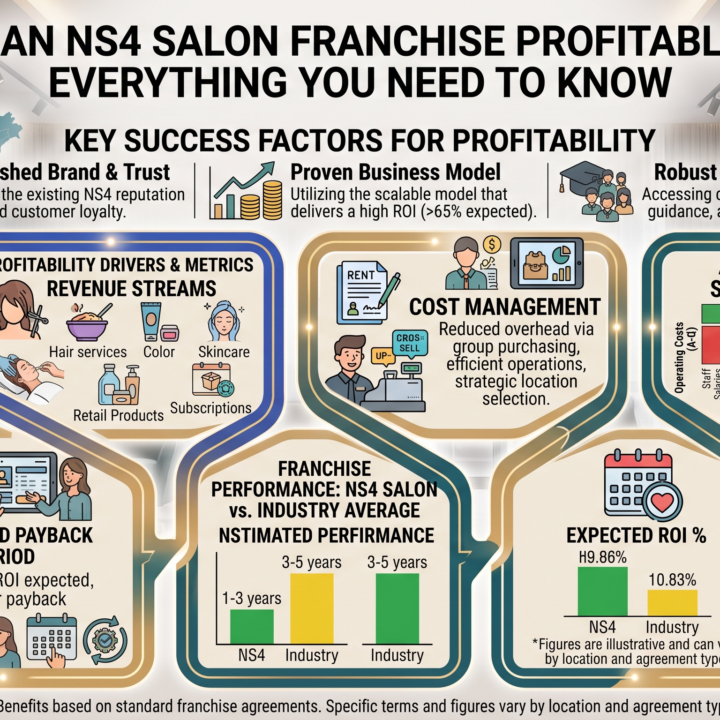
Salon profitability depends on location, customer volume, service pricing, operating expenses, staff productivity, and business management.
A salon can generate revenue through multiple service categories rather than depending on a single treatment.
For example, a salon offering haircuts, hair colouring, facials, hair spa, smoothening, makeup, and grooming services can serve different customer requirements throughout the year.
Consider the following hypothetical monthly revenue calculation:
| Business Metric | Example |
|---|---|
| Average Customers Per Day | 15 |
| Average Customer Bill | ₹600 |
| Working Days | 26 |
| Estimated Monthly Revenue | ₹2,34,000 |
This example assumes 15 paying customers every working day and an average bill of ₹600.
However, revenue is not the same as profit.
We must deduct rent, salaries, electricity, product costs, marketing, maintenance, taxes, and other operating expenses before calculating actual net profit.
A salon’s financial performance should be evaluated using realistic monthly expenses rather than revenue figures alone.
Common Mistakes to Avoid When Starting a Salon Business
Many beginners make avoidable mistakes because they focus more on opening the salon than building a sustainable business.
We should avoid the following:
-
Choosing the Wrong Location: A location without sufficient customer demand can affect regular bookings.
-
Ignoring Market Research: We should understand local competitors and customer preferences before finalising services.
-
Overspending on Interiors: Expensive interiors should not consume the entire investment budget.
-
Hiring Untrained Employees: Poor service quality can damage customer trust.
-
Using Low-Quality Products: Product quality and authenticity are important for professional treatments.
-
Ignoring Digital Marketing: Customers increasingly discover salons through Google and social media.
-
Setting Incorrect Prices: Service prices should account for products, staff time, and operating expenses.
-
Poor Financial Management: We should track daily sales, expenses, inventory, and monthly profitability.
-
Ignoring Customer Feedback: Customer complaints should be addressed quickly and professionally.
-
Operating Without a Business Strategy: A clear plan is necessary for managing growth and maintaining service standards.
Avoiding these mistakes can help us build a more organised and sustainable salon business.
Is a Salon Franchise a Good Option for Beginners in India?
Starting an independent salon requires us to build the brand, develop operating procedures, create marketing campaigns, and establish customer trust from the beginning.
For beginners without previous salon management experience, a salon franchise business can be an alternative worth exploring.
A franchise model may provide access to an established brand identity, business guidance, training, salon setup assistance, and marketing support.
Before selecting a franchise, we should carefully evaluate:
-
Initial franchise investment
-
Franchise fees and royalty structure
-
Brand reputation
-
Franchise agreement terms
-
Training facilities
-
Interior and setup support
-
Marketing assistance
-
Product sourcing arrangements
-
Ongoing operational support
-
Expected operating expenses
We should also speak with existing franchise partners and understand their experiences before making an investment decision.
Explore NS4 Salon Franchise Opportunities
NS4 Salon is a brand opportunity for entrepreneurs interested in entering the professional salon and beauty industry.
For individuals planning to start a salon business, exploring an established franchise model may provide a structured approach to salon setup and operations.
Depending on the franchise package and agreement, important areas to evaluate include:
-
Salon setup and infrastructure guidance
-
Brand identity and professional positioning
-
Staff training and skill development
-
Salon operations and management guidance
-
Marketing and promotional support
-
Service standards and customer experience
For beginners, the availability of business guidance and operational support can make the salon launch process easier to organise.
Before proceeding, we should request complete franchise details, understand the investment requirements, review the agreement, and evaluate the business model carefully.
How Long Does It Take to Start a Salon Business in India?
The time required to open a salon depends on the location, property condition, registration requirements, interior work, equipment availability, and staff recruitment.
An illustrative salon launch timeline may look like this:
| Activity | Estimated Time |
|---|---|
| Market Research and Planning | 1–2 Weeks |
| Location Selection | 1–3 Weeks |
| Registration and Documentation | Depends on approvals |
| Interior and Salon Setup | 2–5 Weeks |
| Equipment and Product Purchasing | 1–2 Weeks |
| Staff Recruitment and Training | 1–3 Weeks |
| Marketing and Launch Preparation | 1–2 Weeks |
Some activities can take place simultaneously. Therefore, a salon may be ready to launch within approximately 1–3 months, depending on the complexity of the project.
We should complete the necessary compliance requirements before commencing business operations.
Future Opportunities in the Indian Salon Business
The Indian beauty and wellness market continues to offer opportunities for entrepreneurs who understand changing customer expectations.
Several developments are creating new possibilities for salon businesses.
Personalised Beauty Services: Customers increasingly seek treatments based on their individual hair and skincare requirements.
Professional Hair Treatments: Hair spa, keratin, smoothening, colouring, and repair treatments offer opportunities to expand service menus.
Men’s Grooming: Professional grooming services create opportunities for specialised men’s salons and unisex salons.
Bridal and Occasion Makeup: Weddings, festivals, and celebrations generate demand for professional makeup and hairstyling.
Premium Salon Experiences: Customers may be willing to pay more for professional consultation, skilled employees, quality products, and comfortable surroundings.
Salon Franchising: Entrepreneurs can explore franchise models to enter the industry with an established business structure.
By understanding these opportunities, we can develop a salon business that responds to customer needs and adapts to industry trends.
Conclusion: Start Your Salon Business with the Right Strategy
Starting a salon business in India can be a promising entrepreneurial opportunity for individuals interested in beauty, grooming, and customer service.
However, long-term success requires proper planning, financial discipline, professional staff, quality products, effective marketing, and excellent customer experiences.
By following these 10 essential steps to start a salon business in India, we can develop a clear roadmap for launching and managing a salon.
From selecting the right location and calculating investment to completing registration, purchasing equipment, recruiting employees, and promoting services, every step contributes to building a strong business foundation.
For beginners who want additional business guidance, exploring a salon franchise such as NS4 Salon can also be a practical starting point.
The key is to begin with a realistic business plan, understand the local market, deliver consistent services, and focus on building lasting customer relationships.
A successful salon is not built only on beautiful interiors. It is built on professional skills, customer trust, service quality, and smart business management.
Frequently Asked Questions (FAQs)
1. How much investment is required to start a salon in India?
A small salon may require approximately ₹3–5 lakh, while a standard unisex salon may require ₹5–10 lakh. Premium and luxury salons can require ₹10–40 lakh or more, depending on location, interiors, equipment, and business requirements.
2. Is the salon business profitable in India?
A salon can be profitable when it has consistent customer demand, suitable service pricing, skilled employees, controlled operating expenses, and effective marketing. Actual profitability depends on the individual business model and location.
3. Can we start a salon business without experience?
Yes. Beginners can enter the salon industry by hiring experienced professionals, completing relevant training, learning salon management, and seeking professional business guidance.
4. Which salon business is best for beginners?
A small beauty salon, unisex salon, or salon franchise can be suitable options. The right choice depends on investment capacity, local demand, business experience, and long-term objectives.
5. What equipment is required to open a salon?
Essential equipment includes styling chairs, mirrors, hair dryers, straighteners, shampoo stations, facial beds, steamers, wax heaters, manicure stations, and professional salon tools.
6. How can we attract customers to a new salon?
We can attract customers through Google Business Profile, Instagram reels, Facebook promotions, introductory offers, referral programmes, local advertising, and excellent customer service.
7. Is a salon franchise better than starting an independent salon?
A franchise may provide brand recognition, training, setup guidance, and operational support. An independent salon offers greater control over branding and business decisions. We should compare investment, agreements, support, and operating costs before choosing.
8. What is the best location for opening a salon?
Residential areas, commercial markets, shopping complexes, and busy neighbourhoods can be suitable locations, provided they offer sufficient customer demand, visibility, and accessibility.
9. What licences are required to open a salon in India?
Depending on the location and business structure, requirements may include Shop and Establishment registration, municipal permissions, GST registration when applicable, and other relevant local compliance.
10. How can we expand a salon business in India?
We can expand through additional service categories, customer loyalty programmes, digital marketing, staff development, improved operations, additional branches, and franchise opportunities.